2026 Best Safety Hand Gloves for Global Buyers?
Choosing the best Safety Hand Gloves for global buyers in 2026 requires more than comparing price, thickness, or color. The International Labour Organization reported nearly three million work-related deaths worldwide each year, with hundreds of millions of non-fatal injuries. Hand protection cannot solve every hazard. It can, however, reduce exposure when selected correctly and used consistently.
Real procurement begins with the task, not the catalogue. A warehouse worker handling wet cartons may need a breathable nylon liner with a nitrile palm. A metal fabricator may require cut resistance, impact protection, and suitable heat performance. Chemical handling demands verified permeation data, not vague claims such as “industrial strength.” Standards matter. EN ISO 21420 covers general glove requirements, while EN 388 evaluates mechanical risks, including abrasion, blade cuts, tearing, and puncture. ANSI/ISEA 105 provides another widely used performance framework for North American buyers.
Small details often decide performance. A loose cuff can catch on equipment. A sweaty glove may be removed before the shift ends. A coated glove may grip poorly after repeated oil exposure. Worker feedback should therefore sit beside laboratory certificates and supplier audits. Useful evidence includes test reports, traceability records, factory quality controls, and documented sizing data. The European Agency for Safety and Health at Work repeatedly emphasizes risk assessment and correct personal protective equipment selection. Still, no ranking is perfect. Standards differ by market, testing does not fully reproduce every workplace, and the cheapest glove may create higher replacement costs. This guide compares practical protection, comfort, compliance evidence, and total value for buyers sourcing across industries and regions in 2026.
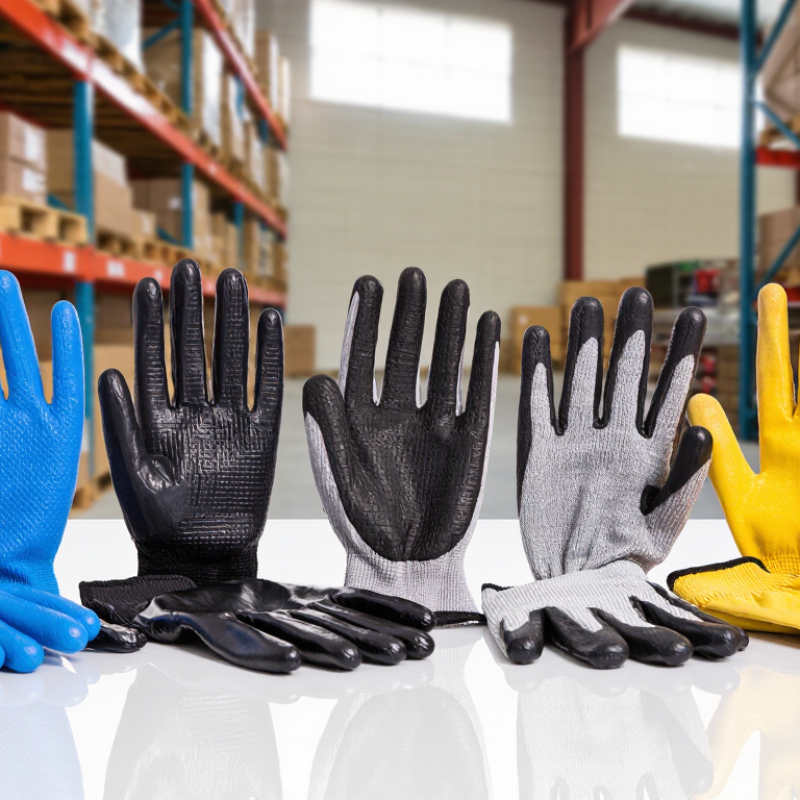
Global Safety Glove Categories and 2026 Buyer Selection Criteria
2026 Best Safety Hand Gloves for Global Buyers?
Global Safety Glove Categories and 2026 Buyer Selection Criteria
Safety gloves should match the hazard, not merely the job title. Common categories include cut-resistant, impact-resistant, chemical-resistant, heat-resistant, cold-weather, disposable, and general handling gloves. Each category solves a different problem. A warehouse picker may need abrasion resistance and grip, while a metalworker may require cut protection and impact coverage. One glove rarely fits every task.
Begin with a documented hazard assessment. Check contact risks, temperature, sharp edges, liquids, machinery, and working duration. Review verified test reports and conformity documents for the destination market. Standards such as EN or ANSI/ISEA can support comparison, but buyers should confirm current local requirements. Material selection also matters. Nitrile, leather, aramid, and coated fabrics offer different balances of protection, comfort, and dexterity. Small details count. A long cuff can protect the wrist, while a textured palm can improve control on oily tools.
Sizing deserves practical attention. Measure the hand, then test several sizes with real tools. Poor fit causes fatigue and may reduce grip. I have seen thicker gloves appear safer, yet workers removed them during precise tasks. That weakness was not obvious on a product sheet. Ask for samples, batch traceability, abrasion data, wash guidance, packaging details, and worker feedback. Compare total use cost, not only unit price. A lower-priced glove may fail faster. Some selection decisions remain imperfect; conditions change, and field feedback can challenge laboratory expectations.
EN 388 Ratings: 100–8,000 Abrasion Cycles and 10–150 N Puncture Force
For global buyers, EN 388 ratings offer a practical starting point when comparing safety hand gloves. Abrasion resistance ranges from 100 to 8,000 test cycles. Higher cycles usually indicate better protection against rubbing, scraping, and repeated handling.
Puncture resistance measures the force needed to penetrate the glove material. Results may range from 10 to 150 newtons. A higher value can suit work involving sharp edges, rough metal, or wooden splinters. However, puncture performance is not the same as protection from needles or extremely fine points. The test method and workplace hazard must match. An experienced buyer should request the complete test report, not only a printed rating. Real use can differ because moisture, oils, stretching, and poor fit may reduce protection. Ratings help, but they are not guarantees.
Tips: Compare abrasion cycles with the task’s daily friction. Check puncture force against the sharpest contact expected. Ask for recent laboratory records and sample several sizes. A glove that feels stiff may test well but reduce safe handling. That detail is easy to overlook. Also inspect seams, coating coverage, and cuff strength before ordering large quantities. Some purchasing decisions still focus too heavily on the highest number. That can be a mistake. Comfort, dexterity, cleaning needs, and replacement frequency matter too. Make the final choice from tested performance and actual worker feedback.
ANSI/ISEA 105 Cut Levels A1–A9: 200–6,000 g Cut Resistance
For global buyers, the best safety hand gloves are selected by measured performance, not appearance. ANSI/ISEA 105-2016 classifies cut resistance from A1 to A9, using force values from 200 to 6,000 grams. A1 covers 200–499 g, while A5 reaches 2,200–2,999 g. A9 requires at least 6,000 g. These figures come from standardized cut testing, including ASTM F2992 methods.
The right level depends on the task. A1 or A2 may suit light assembly and packaging. Metal handling, glass processing, and sharp-part fabrication often require A4 to A7. A8 or A9 can support extreme cut hazards, but higher resistance does not guarantee better grip, dexterity, or puncture protection. The National Safety Council’s Injury Facts reports millions of workplace injuries each year, reminding buyers that glove selection must match real exposure, not only a catalog rating. One weakness remains common: buyers sometimes compare levels without checking the test method or coating durability.
Tips: Request the test report and confirm the ASTM F2992 result. Check fit with actual tools. Test grip after oil, dust, or coolant exposure. Replace gloves after visible damage. An A9 glove can still fail in poor conditions. Pair cut resistance with puncture, abrasion, heat, and chemical requirements when the work demands it.
2026 Best Safety Hand Gloves for Global Buyers
ANSI/ISEA 105 Cut Levels A1–A9: 200–6,000+ g Cut Resistance
The chart shows the minimum cut resistance force required to reach each ANSI/ISEA 105 cut level. Values are measured in grams-force using the standardized cut resistance test. A9 represents 6,000 grams-force or higher, making it an open-ended category.
Glove Materials Compared: Nitrile, Latex, Leather, HPPE, and Kevlar
Choosing the best safety hand gloves in 2026 starts with the work, not the material’s popularity. I have tested gloves around oily bolts, sharp sheet edges, and wet tools. Small differences become obvious after several hours.
Nitrile offers strong grip and useful resistance to oils, many chemicals, and punctures. Disposable nitrile suits inspection and light assembly, while coated versions handle heavier tasks.
Latex feels flexible and comfortable, especially during detailed handling. However, latex sensitivity remains a serious concern for some workers.
Leather gives reliable abrasion protection and warmth. It feels durable, but it can become stiff when soaked or exposed to certain chemicals.
HPPE provides high cut resistance with a lightweight feel, making it practical for glass handling and metal fabrication. It does not automatically resist heat, chemicals, or punctures.
Kevlar performs well near heat and repeated abrasion, but it may feel less flexible and can require a protective coating. Neither material is a universal answer.
Check the glove’s tested performance, size range, coating, seam quality, and supplier documentation. Ratings should match the actual hazard, not only the product description. A glove that survives a sharp edge may still fail against a hot surface. I once preferred a thinner glove for dexterity, then noticed hand fatigue after a full shift. That choice needed more testing. Workers should trial gloves with the exact tools, oils, temperatures, and movement patterns used daily.
ISO 21420 Fit, Sizing, Chemical Tests, and Global Compliance Requirements
Global buyers need more than a cut-resistance number when selecting safety gloves in 2026. ISO 21420 sets baseline expectations for design, comfort, marking, and information. Fit deserves practical attention. A glove should sit close around the fingers without squeezing the knuckles. Loose fingertips can catch on tools. Tight cuffs can restrict movement. I measure hand length and palm circumference, then compare both with the supplier’s size chart. Do not assume medium means the same everywhere. It often does not.
Sizing trials should include dry and damp hands, since sweat changes grip and comfort. Ask workers to hold a metal handle, turn a small valve, and lift a carton. Watch for wrinkles across the palm. They reveal poor fit. A field trial is more useful than a photograph. Still, one fitting session may miss seasonal swelling or different hand shapes. That limitation should remain in the purchasing record.
Chemical protection requires separate evidence, not general glove claims. Request test reports showing permeation, penetration, and degradation results for the exact chemical and contact time. A glove that resists brief splashes may fail during immersion. Check temperature, concentration, breakthrough time, and replacement instructions. For global shipments, verify labeling, technical files, declarations, and market-specific conformity requirements before ordering. Documents must match the supplied model and production material. Translation quality matters too. A confusing warning can become a workplace error. Ask an independent laboratory or qualified safety professional to review uncertain results, especially when mixed chemicals or repeated exposure is involved.
