Blog
2026 Top Gate Valve Types for Global Buyers
Choosing the right gate valve in 2026 requires more than comparing sizes, prices, and connection standards. Global buyers now evaluate pressure class, temperature range, fluid behavior, materials, actuation, and maintenance access. A valve that performs well in clean water may struggle with abrasive slurry, steam, or corrosive chemicals. The operating environment decides the design.
This guide examines rising gate valve types for industrial plants, energy projects, water networks, and process facilities. It compares resilient-seated, metal-seated, wedge, parallel-slide, slab, and cryogenic designs. Each option has practical strengths and limitations. Some offer tight shutoff. Others tolerate heat, solids, or repeated cycling better. None is ideal everywhere.
Valve engineer Richard W. Greene is often associated with a useful principle: “Valve selection is an engineering decision, not a catalog exercise.” That idea still matters for international purchasing teams. Buyers should verify standards, body materials, bonnet construction, stem design, testing records, and supplier support. Small details can cause large failures. A poorly chosen coating may blister. An undersized actuator may stall during emergency operation. I have also seen product comparisons overstate service life without explaining testing conditions. That deserves caution.
The following overview helps readers connect valve type with real operating demands. It also highlights overlooked questions, including installation direction, spare-part availability, inspection access, and total lifecycle cost. Price matters. Reliability matters more.
Gate Valve Fundamentals and Key Selection Criteria
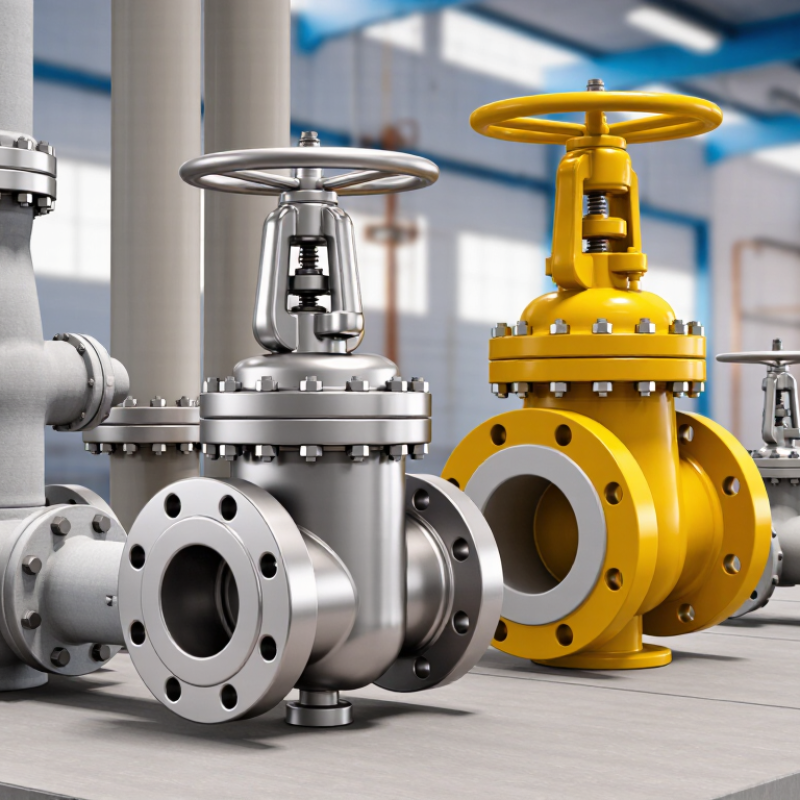
A gate valve controls flow by moving a gate perpendicular to the pipeline. When fully open, it creates limited resistance and supports efficient fluid movement. When fully closed, it provides dependable isolation. It is not normally suitable for throttling. Partial opening can cause vibration, seat damage, and uneven wear.
Small details matter.
Common designs include wedge, slab, rising-stem, and non-rising-stem valves.
Wedge gates suit many water, steam, and industrial services. Slab gates are often selected for pipelines requiring a clear, low-turbulence passage.
A rising stem gives visible position confirmation. A non-rising stem saves space, but its condition is harder to check.
Selection should begin with medium, pressure, temperature, and pipe size. Confirm the valve body and trim materials against corrosion risks.
Metal seats handle demanding temperatures, while resilient seats often provide tighter sealing in cleaner services. Check the end connection, face-to-face dimension, actuator torque, and available installation space.
Manual operation may suit small valves, but larger sizes can require a gearbox or powered actuator. Review applicable testing and safety standards for the destination market.
A neglected point is maintenance access. A valve that fits the line may still be impractical to service.
The final choice is rarely perfect. Recheck the data.
Rising-Stem and Non-Rising-Stem Gate Valve Designs
2026 Top Gate Valve Types for Global Buyers
Rising-stem and non-rising-stem gate valves serve different installation needs. Rising-stem designs show valve position clearly. When the handwheel turns, the stem moves upward with the gate. This movement helps operators confirm whether the valve is open or closed. It also exposes the stem threads to dust, rain, and impact. These valves need overhead clearance, especially in crowded pump rooms.
A protective coating and routine thread inspection can reduce wear. However, no coating lasts forever. Field teams should check for corrosion, bent stems, and stiff operation during scheduled maintenance.
Non-rising-stem gate valves keep the stem inside the body. The stem rotates while the gate moves vertically. Their compact height suits underground chambers, narrow pipelines, and low-ceiling equipment rooms.
Position is less obvious, though. Operators may need a visual indicator or a verified operating record. Internal threads can collect sediment in wet or dirty environments. Correct lubricant selection matters. Small details matter.
Global buyers should compare pressure ratings, temperature limits, body materials, seat designs, and end connections. Rising-stem valves require accurate clearance measurements. Non-rising-stem valves require careful attention to internal contamination.
Resilient seats often support tight shutoff in clean services, while metal seats may handle harsher conditions. Selection should not depend on price alone. A cheaper valve can create higher maintenance costs later.
Review drawings, inspection records, and recognized testing requirements before ordering. Ask for clear data, not attractive promises.
Wedge, Parallel-Slide, and Slab Gate Valve Types
2026 Top Gate Valve Types for Global Buyers
Wedge, Parallel-Slide, and Slab Gate Valve Types
Wedge gate valves use a tapered disc to create tight shutoff between two seats. They suit water, steam, oil, and general process lines. Their simple design handles high pressure well. However, seat wear can increase when the valve operates under heavy flow or frequent cycling. Wedge valves are usually better for isolation than throttling. Do not use them as control valves without technical confirmation.
Parallel-slide gate valves use two parallel discs, often supported by a spring or spreading mechanism. They can reduce jamming caused by thermal expansion. This makes them useful on steam and high-temperature pipelines. Their sealing performance depends strongly on pressure direction, seat condition, and correct installation. Slab gate valves use a flat plate and are common in oil, gas, and transmission systems. They offer a full-bore passage, which helps reduce pressure loss and supports pipeline cleaning tools. Field conditions still matter. Poor alignment can damage the sealing surfaces.
Tips: Confirm pressure class, temperature range, end connection, body material, and seat material before ordering. Request pressure-test records and material traceability documents. Check whether the valve needs rising-stem or non-rising-stem operation. A compact valve is not always the best choice. Review maintenance access around the handwheel, actuator, and bonnet.
Materials, Pressure Ratings, Ends, and Global Standards
For global buyers, gate valve selection starts with the fluid, temperature, and operating pressure. Carbon steel suits many water, steam, and hydrocarbon services. Stainless steel performs better against corrosive media. Duplex alloys may help in chloride-rich environments, but they require careful welding control. Fit matters. A material name alone does not confirm service suitability.
Pressure ratings need close attention. Class 150, 300, and 600 are not direct pressure values. Their allowable pressure changes with temperature and body material. PN16 and PN40 follow a different designation system. ASME B16.34 supports pressure-temperature evaluation, while API 600 and API 603 cover common steel valve designs. A practical warning: never replace a Class rating with a PN rating without checking the design basis. That shortcut causes avoidable failures.
End connections also affect installation reliability. Flanged ends support routine maintenance and may follow ASME B16.5 or EN 1092-1 dimensions. Butt-weld ends reduce external leakage points on permanent pipelines. Socket-weld and threaded ends suit smaller sizes, but wall thickness and vibration deserve review. Leakage testing may reference API 598 or ISO 5208, depending on the project. Small details matter. Check face-to-face dimensions, marking, certificates, and inspection records before shipment. Standards can overlap, but they are not automatically interchangeable. A less obvious issue is documentation quality; even a correctly manufactured valve becomes difficult to verify when heat numbers or pressure-test records are incomplete.
How to Choose the Best Gate Valve for Each Application
Choosing the best gate valve starts with the medium, not the catalog photograph. Rising-stem wedge valves suit clean water, hydrocarbons, and isolation duties. Their visible stem position helps operators confirm whether the line is open or closed. Parallel-slide valves can perform well under thermal cycling and steam service. Knife gate valves are often selected for slurry, pulp, and wastewater lines. Abrasive solids can still damage their seats quickly. It happens.
A 2024 MarketsandMarkets industrial valves report forecasts approximately 5% annual market growth through 2029. The report identifies water, power, and process industries as major demand sectors. These applications require different valve bodies, trims, seals, and actuation systems. For high-temperature service, engineers should verify pressure-temperature ratings under ASME B16.34. API 598 and ISO 5208 provide recognized inspection and leakage-testing frameworks. A lower-cost valve may become expensive after repeated maintenance.
Field experience also shows that valve orientation and pipeline cleanliness matter. A gate valve should normally operate fully open or fully closed. It is rarely the right choice for continuous throttling. For corrosive fluids, confirm body and trim compatibility using concentration and temperature data. For buried systems, consider stem extension, coating quality, and access for inspection. Do not select by pressure class alone. The difficult truth is that even a technically correct valve can fail when installation space, torque, or maintenance access is overlooked.
2026 Top Gate Valve Types for Global Buyers - How to Choose the Best Gate Valve for Each Application
| Gate Valve Type | Typical Size Range | Typical Pressure Range | Common Materials | Best Applications | Main Advantages | Main Limitations | Key Selection Check |
|---|---|---|---|---|---|---|---|
| Rising Stem Gate Valve | DN15–DN1200 ½–48 in | PN10–PN420 Class 150–2500 | Carbon steel, stainless steel, alloy steel, ductile iron | Water, steam, power generation, oil and gas, process pipelines | Clear visual indication of valve position; suitable for frequent inspection; robust shutoff design | Requires additional overhead clearance; exposed stem may be affected by corrosion or impact | Confirm available vertical space, operating temperature, bonnet design and end connection standard |
| Non-Rising Stem Gate Valve | DN15–DN600 ½–24 in | PN10–PN250 Class 125–1500 | Ductile iron, cast iron, carbon steel, stainless steel | Municipal water networks, fire-protection systems, underground pipelines, utility services | Compact installation height; protected stem; suitable for valve chambers and buried service | Valve position is not obvious from the stem; stem threads may contact the process fluid | Use a position indicator where required; verify stem protection and corrosion resistance |
| Wedge Gate Valve | DN15–DN1500 ½–60 in | PN10–PN420 Class 150–2500 | Cast iron, ductile iron, carbon steel, stainless steel, alloy steel | General isolation, water, hydrocarbons, steam and high-pressure process lines | Strong shutoff; relatively low pressure loss when fully open; broad material availability | Not intended for throttling; wedge and seat can be damaged by high-velocity flow or suspended solids | Select wedge material and angle for temperature, pressure, thermal cycling and fluid cleanliness |
| Parallel Slide Gate Valve | DN50–DN1000 2–40 in | PN16–PN420 Class 150–2500 | Carbon steel, stainless steel, chrome-moly alloy steel | Steam systems, boiler lines, power plants, high-temperature pipelines | Good performance under thermal cycling; no wedging action; suitable for high-temperature isolation | May require higher seating force; less suitable for dirty fluids and throttling service | Check minimum differential pressure, spring or seat design, thermal expansion and fluid cleanliness |
| Slab Gate Valve | DN50–DN1050 2–42 in | Class 150–1500 | Carbon steel, low-temperature carbon steel, stainless steel, corrosion-resistant alloys | Oil and gas transmission, wellhead systems, pipeline isolation, piggable pipelines | Full-bore passage; supports pipeline pigging; low turbulence and low pressure drop when open | Not suitable for control service; sealing surfaces require clean, compatible operating conditions | Confirm full-bore dimensions, pigging requirements, fugitive-emission needs and seat sealing direction |
| Knife Gate Valve | DN50–DN1600 2–64 in | PN6–PN25 Class 150 commonly available | Cast iron, ductile iron, carbon steel, stainless steel; elastomer-lined options | Pulp and paper, mining slurry, wastewater, ash handling and dry bulk service | Thin gate cuts through fibrous, abrasive or suspended solids; compact face-to-face dimensions | Usually lower pressure capability; seat and gate wear can be significant in abrasive service | Evaluate solids concentration, particle size, abrasion rate, seat material and installation orientation |
| Soft-Seated Resilient Gate Valve | DN40–DN1200 1½–48 in | PN10–PN25 Class 125–300 | Ductile iron body; EPDM, NBR or other approved elastomer seat coatings | Potable water, irrigation, HVAC water, fire-protection and municipal distribution | Reliable bubble-tight shutoff; corrosion-resistant coated wedge; low operating torque | Elastomer limits temperature and chemical compatibility; unsuitable for severe abrasive solids | Verify drinking-water approval, elastomer compatibility, temperature range and coating thickness |
| Cryogenic Gate Valve | DN15–DN600 ½–24 in | PN16–PN420 Class 150–2500 | Austenitic stainless steel, nickel alloys, low-temperature materials | Liquefied natural gas, liquid oxygen, nitrogen, hydrogen and other cryogenic fluids | Extended bonnet protects packing; designed for low-temperature sealing and reduced heat transfer | Higher purchase cost; requires specialized testing, handling and installation procedures | Confirm minimum design temperature, bonnet length, oxygen cleanliness, leakage class and material toughness |
| Expanding Gate Valve | DN50–DN600 2–24 in | Class 300–2500 | Carbon steel, stainless steel, corrosion-resistant alloys | High-integrity oil and gas isolation, pipeline stations and pressure-boundary applications | Positive mechanical seating; can provide double-blocking capability in suitable designs | More complex mechanism; higher torque and maintenance requirements than basic wedge designs | Check double-block-and-bleed requirements, cavity relief, actuator sizing and applicable pipeline standards |
Practical Gate Valve Selection Guide
| Selection Factor | What to Confirm | Typical Recommendation |
|---|---|---|
| Service Function | The valve should isolate flow rather than continuously regulate it. | Use a gate valve for fully open or fully closed service; select a control valve for throttling. |
| Fluid and Solids | Check viscosity, corrosiveness, abrasiveness, suspended solids and cleanliness. | Use resilient-seated valves for clean water and knife gate valves for many slurry or fibrous services. |
| Pressure and Temperature | Specify design pressure, maximum and minimum temperature, pressure cycling and differential pressure. | Select the pressure class and body, trim, gasket and seat materials from the applicable rating tables. |
| Installation Space | Allow for face-to-face length, stem travel, handwheel or actuator clearance and maintenance access. | Choose non-rising stem designs for restricted height and rising stem designs where visual position indication is important. |
| Standards and Testing | Confirm design, face-to-face, end dimensions, pressure testing, fire-safe and emissions requirements. | Common references include API 600, API 602, API 603, API 6D, ASME B16.10, ASME B16.34, ISO 5208 and EN 1074, depending on service. |
| Actuation | Calculate breakaway and running torque, operating frequency, fail position and available power supply. | Use manual operation for infrequent isolation; consider electric, pneumatic or hydraulic actuation for remote or automated systems. |
Note: Size, pressure class, temperature limits and material suitability vary by design, standard and manufacturer. Final selection should be verified against the project datasheet, applicable codes and the valve manufacturer's certified rating tables.