Blog
2026 Top Natural Gas Boiler Manufacturers for Global Buyers
Choosing a Natural Gas Boiler manufacturer in 2026 requires more than comparing prices or reading polished product brochures. Global buyers must examine thermal efficiency, combustion control, heat-exchanger materials, service coverage, and documented safety testing. A boiler may perform well in a factory showroom, yet struggle with hard water, unstable gas pressure, or winter temperatures in another market.
Details matter. Energy expert Fatih Birol has repeatedly emphasized, “Energy efficiency is the first fuel.” This principle remains highly relevant when evaluating modern Natural Gas Boiler suppliers. Efficient equipment can reduce fuel consumption, operating costs, and unnecessary emissions, but efficiency figures need context. Test conditions, installation quality, modulation range, and maintenance schedules can change real-world results.
This 2026 guide reviews leading manufacturers for international buyers, including established brands and competitive regional producers. It considers product reliability, output flexibility, controls, warranty support, spare-parts access, certifications, and distributor competence. A factory with advanced technology is not always the best partner if replacement parts take months to arrive. A lower-priced model may also become expensive after repeated service visits.
No ranking is perfect. Market conditions change quickly. Some manufacturers disclose extensive performance data, while others provide limited technical evidence. That difference deserves attention. Buyers should verify current certifications, local fuel compatibility, installer qualifications, and after-sales commitments before signing contracts. The aim is practical guidance, not a universal verdict. Real projects involve compromises, and even a carefully selected Natural Gas Boiler can underperform without correct sizing and commissioning.
Natural Gas Boiler Basics and Core Technologies
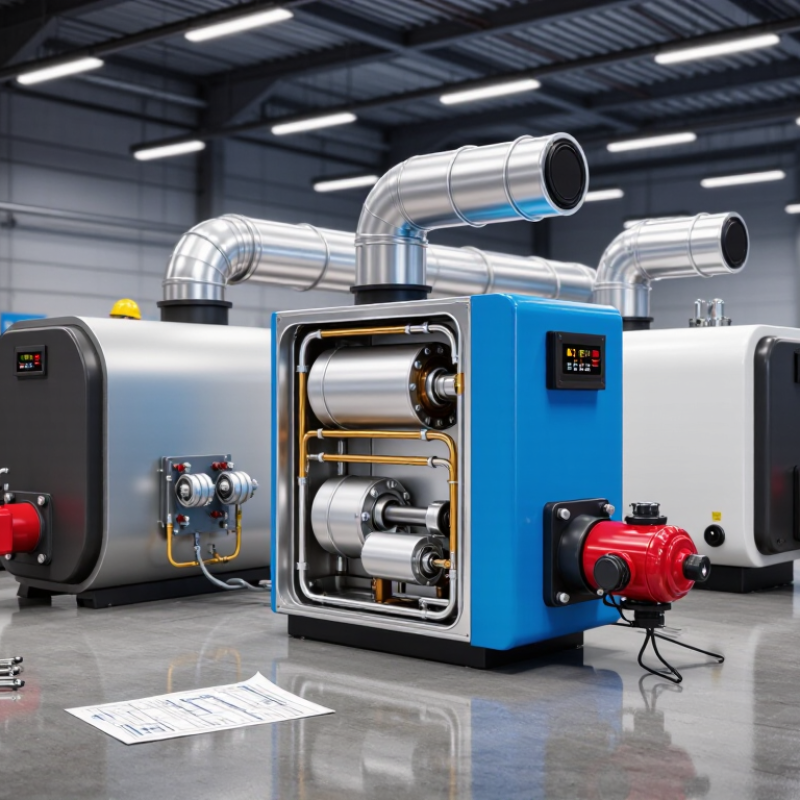
A natural gas boiler burns methane-based fuel to heat water or produce steam. The heated water travels through pipes to radiators, underfloor loops, or air-handling coils. A sealed combustion chamber draws outdoor air and sends exhaust through a dedicated flue. This design reduces indoor contamination risks and supports stable operation.
The heat exchanger transfers energy from combustion gases into the water circuit. Stainless steel and coated aluminum are common choices, but material performance depends on water quality and operating temperature. A condensing boiler captures latent heat from water vapor in the exhaust. It needs a cool return temperature, often below 55°C, to condense effectively. Without proper system design, the claimed efficiency can remain mostly theoretical.
Modern burners adjust gas input to match heating demand. This modulation reduces cycling, temperature swings, and unnecessary fuel use. Oxygen sensors can refine combustion, while pressure switches monitor airflow and flue conditions. Essential safeguards include flame detection, automatic shutoff valves, overheat protection, and low-water controls. Installation teams should verify gas pressure, altitude settings, condensate drainage, and local code requirements. Hard water can damage components faster than expected. A specification sheet rarely shows that weakness. Even advanced controls need careful commissioning, because incorrect sensor placement can make an efficient boiler perform poorly.
Key Criteria for Evaluating Global Boiler Manufacturers
Choosing a natural gas boiler manufacturer for 2026 requires more than comparing prices. Global buyers should examine proven engineering, documented testing, and dependable after-sales support. Ask for combustion efficiency reports, pressure-test records, and clear warranty terms. A credible manufacturer should explain how its boilers perform under different water qualities, gas pressures, and climate conditions.
Experience matters in practical details. Can the supplier provide installation drawings, spare-part lists, and remote troubleshooting? Check whether its products meet the target market’s safety, emissions, and energy-efficiency requirements. Request references from facilities with similar heating loads. A factory visit can reveal assembly discipline, calibration equipment, and quality-control routines. Photos alone are not enough. No supplier is flawless. Honest answers about past failures often indicate stronger reliability than polished promises.
Tips: Compare lifecycle cost, not only purchase price. Review fuel consumption, maintenance intervals, shipping protection, and technician training. Confirm response times in writing. Keep technical questions specific. “Suitable for export” is too vague.
Buyers should also assess communication quality before signing. Slow replies may become serious delays during commissioning. Ask for a sample operating manual and service schedule. The best evaluation combines certificates, field evidence, technical conversations, and careful skepticism. A slightly imperfect document can be corrected. Missing evidence should not be ignored.
2026 Top Natural Gas Boiler Manufacturers for Global Buyers - Key Criteria for Evaluating Global Boiler Manufacturers
| Evaluation Dimension | Measurable Data or Benchmark | Why It Matters to Global Buyers | Recommended Verification Evidence | Relevant Reference |
|---|---|---|---|---|
| Product Capacity Range | Residential wall-hung boilers commonly cover approximately 12–35 kW; larger commercial systems extend beyond 70 kW. | The correct output range reduces oversizing, cycling losses, and installation limitations in different building types. | Rated input and output tables, minimum modulation output, heating-load calculation data, and certified test reports. | EN 15502 series; applicable national installation codes. |
| Seasonal Energy Efficiency | Compare seasonal space-heating efficiency rather than only nominal combustion efficiency; condensing models generally achieve higher seasonal efficiency than non-condensing models when operated at suitable return-water temperatures. | Seasonal performance better reflects annual fuel consumption under part-load operating conditions. | Third-party test reports, product fiche, declared seasonal efficiency, and operating-temperature assumptions. | EU Ecodesign Regulation (EU) No. 813/2013; EN 15502 series. |
| Modulation Ratio | Use the maximum-to-minimum heat-output ratio as the comparison metric. A stated 10:1 ratio means the boiler can modulate from its maximum output down to approximately one-tenth, subject to the manufacturer’s test conditions. | A lower minimum output can reduce short cycling and improve comfort in low-load periods. | Independent output curves, minimum continuous output, control-system compatibility, and test conditions. | Manufacturer technical documentation; EN 15502 performance testing. |
| NOx Emissions | For gas boilers tested under EN 15502-1, the lowest EN 15502 NOx class is Class 6, with a limit of 56 mg/kWh under the applicable test conditions. | Lower NOx emissions support compliance with stricter urban air-quality and building requirements. | Certified NOx test report, declared emission class, fuel specification, and operating-load conditions. | EN 15502-1. |
| Gas-Type Compatibility | Confirm compatibility with the target gas family, gas group, inlet-pressure range, calorific value, and gas-quality variation; these parameters are market-specific and are not globally uniform. | Incorrect gas specification can affect safety, combustion stability, efficiency, and certification validity. | Gas-category declaration, approved injector or valve configuration, inlet-pressure limits, and conversion instructions. | EN 437; local gas-safety regulations. |
| Hydrogen-Blend Readiness | Do not treat “hydrogen-ready” as a universal rating. Require a documented allowable blend percentage, approved gas quality, conversion procedure, and safety assessment. | Hydrogen blending policies and gas-network limits differ by country and may change during the product life cycle. | Written manufacturer declaration, test evidence, installation limits, and applicable certification for the stated blend. | Applicable national gas-network rules; EN 15502 series where relevant. |
| Safety and Protection Functions | Check flame-failure protection, overheat protection, pressure monitoring, flue-gas safety, frost protection, and condensate management. | A complete protection package reduces operational hazards and supports approval by local authorities. | Safety-function list, risk assessment, fault-code documentation, type-test reports, and installation manual. | EN 15502 series; local gas-appliance safety requirements. |
| Pressure and Temperature Operating Limits | Compare maximum heating-system working pressure, minimum and maximum flow temperature, domestic hot-water flow rate, and permissible ambient conditions. | Operating limits determine compatibility with local hydraulic designs, radiators, underfloor heating, and climate conditions. | Technical datasheet, pressure-temperature charts, hydraulic diagrams, and climate suitability statement. | Product technical documentation; local plumbing and heating codes. |
| Conformity and Market Access | The required approval depends on the destination market. Examples include CE marking for applicable European products, UKCA or other national requirements, and North American certifications such as CSA or ANSI-based approvals where applicable. | Correct conformity documentation is essential for customs clearance, installation approval, and legal sale. | Declaration of conformity, valid certificates, test reports, marking photographs, and certificate scope matching the exact model. | Destination-market legislation and certification schemes. |
| Quality Management | ISO 9001 certification demonstrates that a quality-management system is established; it does not by itself certify boiler performance or product safety. | A controlled production system can improve consistency, traceability, corrective action, and change management. | Current ISO 9001 certificate, certification scope, audit validity, inspection plan, and batch-traceability samples. | ISO 9001:2015. |
| Service and Spare-Parts Capability | Evaluate documented spare-parts availability, service response time, technician training, warranty process, and parts-support period rather than relying only on a warranty duration. | Heating equipment requires local technical support throughout its operating life, especially during winter demand. | Service-network list, parts catalogue, response-time commitment, training records, warranty terms, and escalation procedure. | Contractual terms and destination-market consumer or commercial warranty law. |
| Technical Documentation | Require complete manuals covering installation, commissioning, fault codes, wiring, flue design, condensate drainage, servicing, and permissible accessories. | Accurate documentation reduces installation errors and enables safe maintenance across language and regulatory environments. | Controlled English manual, local-language versions, revision history, drawings, parts list, and commissioning checklist. | Applicable product-safety, language, and installation-documentation requirements. |
| Total Cost of Ownership | Compare purchase price, freight, installation, commissioning, fuel use, maintenance, replacement parts, warranty exclusions, and expected service life. | The lowest purchase price may not produce the lowest lifetime cost if efficiency, service access, or spare-parts availability is poor. | Five- to ten-year cost model using verified efficiency data, local fuel prices, service rates, replacement-part prices, and usage assumptions. | Buyer-specific lifecycle-cost analysis; local energy and service-market data. |
Note: Performance values and certification requirements must be checked against the exact boiler model, fuel category, test conditions, and destination-market regulations before procurement.
2026 Leading Natural Gas Boiler Manufacturers by Market
The strongest natural gas boiler manufacturers in 2026 differ by regional demand, regulations, and installation habits. The IEA’s Gas 2024 report projects global gas demand growth of about 2.5% annually through 2029. Asia-Pacific is expected to provide much of this increase. Manufacturers serving China, Southeast Asia, and South Asia therefore emphasize compact units, fast servicing, and flexible gas compatibility.
Europe follows a stricter path. The European Commission’s Ecodesign rules push manufacturers toward higher seasonal efficiency, lower emissions, and better controls. Buyers often compare condensing performance, standby losses, hydrogen-readiness, and spare-parts availability.
In North America, DOE efficiency requirements and colder winter loads influence product selection. Large commercial buyers usually request verified combustion data, factory quality records, and independent certification.
Local fit matters more than impressive brochures. A boiler designed for mild climates may underperform in a northern industrial plant. Field engineers should check altitude, water hardness, gas pressure, flue design, and technician coverage before ordering.
The IEA also identifies energy efficiency as a major factor in reducing gas demand, making controls and modulation increasingly important. No ranking is perfect. Some manufacturers publish limited long-term failure data, which deserves careful questioning during tenders.
Testing reports, warranty terms, and documented service response times remain practical evidence for global buyers.
Efficiency, Emissions, Safety, and Compliance Standards
For global buyers, natural gas boiler selection now depends on measurable efficiency, emissions, and compliance. The International Energy Agency reports that buildings consume about 30% of global final energy. They also create roughly 26% of energy-related emissions. Boiler performance directly affects both figures.
EU Ecodesign rules require many gas boilers below 70 kW to reach at least 86% seasonal space-heating efficiency. Condensing operation can improve performance when return-water temperatures stay low. However, an efficiency label is not a guarantee. Poor sizing, short cycling, dirty heat exchangers, and incorrect controls can reduce real-world results. Details matter. Buyers should request verified test data, seasonal efficiency values, and part-load performance.
The IPCC’s 2006 Guidelines assign natural gas a default emission factor of 56.1 kg CO2 per gigajoule. Nitrogen oxide limits still vary by market and installation category. EN 15502 testing, local gas codes, and applicable EU or national requirements should be checked before purchase. Safety reviews should include flame supervision, gas-train certification, flue integrity, ventilation, condensate drainage, and carbon-monoxide protection. NFPA 54 offers widely referenced fuel-gas installation guidance in applicable jurisdictions. Commissioning records are essential. They should document combustion readings, operating pressure, leak checks, and technician qualifications. Some supplier documents remain incomplete, so buyers must challenge unclear claims rather than trust attractive specifications.
2026 Top Natural Gas Boiler Manufacturers for Global Buyers
Efficiency, emissions, safety, and compliance benchmarks for international procurement
Chart: Gas boiler efficiency benchmarks used in major procurement and certification frameworks.
EU Ecodesign requires a minimum seasonal space-heating efficiency of 86% for applicable gas boilers. The U.S. federal minimum for residential gas hot-water boilers is 84% AFUE, while ENERGY STAR gas hot-water boilers require at least 95% AFUE. Buyers should also verify NOx emissions, applicable safety certification, pressure-equipment requirements, installation codes, and local fuel-efficiency regulations before purchasing.
Purchasing, Installation, Maintenance, and After-Sales Support
Global buyers should evaluate natural gas boiler manufacturers through the entire equipment lifecycle, not only the quoted price. Request verified efficiency data, production records, warranty terms, and compliance documents for the destination market. Ask whether spare parts remain available after several years. A low purchase price can mislead. That assumption fails.
Installation quality strongly affects safety, efficiency, and service life. Confirm that the selected boiler matches local gas pressure, water conditions, electrical standards, and heating demand. Use qualified technicians for flue design, combustion checks, leak testing, and control calibration. Keep commissioning records, including measured exhaust values and operating settings. Experienced suppliers should provide clear manuals, training, and remote technical guidance. Yet, some documents remain too generic for unusual buildings. Buyers should challenge unclear instructions before installation.
Maintenance plans should include annual inspection, burner cleaning, heat-exchanger checks, safety-valve testing, and combustion analysis. In dusty or hard-water environments, inspections may need greater frequency. Ask the manufacturer to define response times, service coverage, and replacement-part procedures in writing. Reliable after-sales support includes trained local technicians, traceable service reports, and accessible communication channels. Test these channels before purchasing. A delayed reply during winter can become an expensive operational problem. Buyers should also review how warranty claims are handled, because unclear responsibilities often create avoidable disputes.