Blog
2026 Top Portable Gas Detectors Which One Is Best?
Choosing the best Portable Gas Detector is not a spec-sheet exercise. It is a decision about whether a worker can trust an alarm in a noisy plant, a dim utility vault, or a poorly ventilated work area. The International Labour Organization’s 2023 report estimates nearly three million work-related deaths worldwide each year. NIOSH’s confined-space guidance also warns that would-be rescuers have accounted for a large share of confined-space fatalities. These figures make clear why dependable detection, correct sensor selection, and routine checks matter.
NIOSH Director Dr. John Howard has consistently emphasized prevention in occupational safety. Put into practical terms, that means identifying atmospheric hazards before workers are exposed—not relying on an instrument after conditions become dangerous. This is a paraphrase of his prevention-focused message, not a verbatim quotation. A detector can support that goal, but it cannot replace training, maintenance, or a clear response plan.
This 2026 guide compares leading portable models by sensor coverage, alarm design, durability, battery life, calibration needs, and ease of use. A bright screen helps in low light. A loud, distinct alarm matters beside running machinery. And a device that is awkward to clip onto a belt may stay in a case when it is needed most. No single model fits every task. Even careful comparisons have limits: performance depends on the gases present, the environment, and upkeep. The right choice is the one workers can use correctly, every shift.
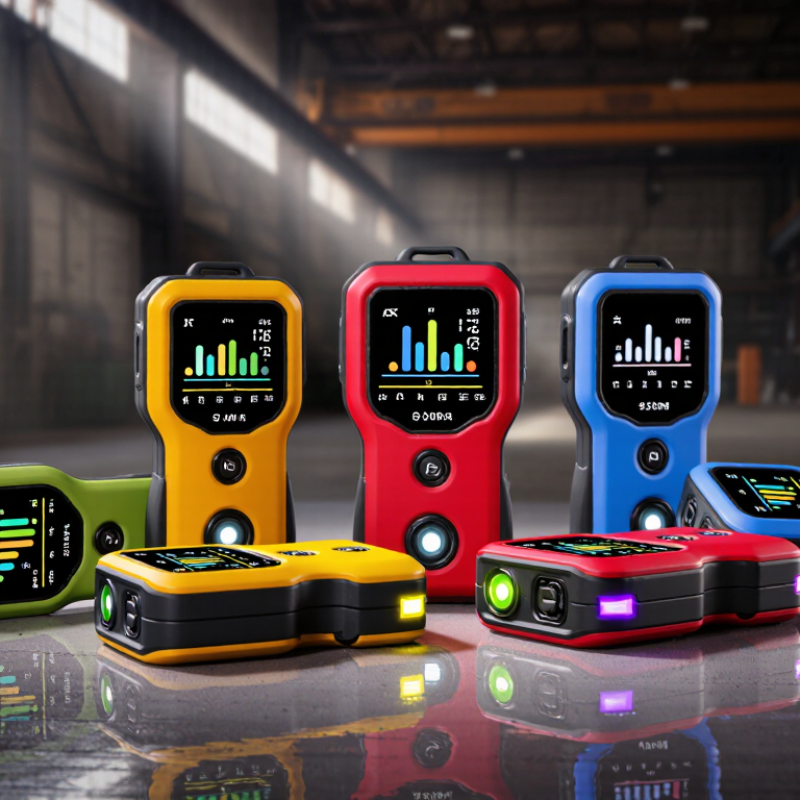
How Portable Gas Detectors Detect Hazardous Gases
2026 Top Portable Gas Detectors Which One Is Best?
How Portable Gas Detectors Detect Hazardous Gases
Portable gas detectors measure gases in the air around a worker. Diffusion models rely on air reaching their sensors; pumped models draw samples through a probe or tube. Different sensors respond to different hazards. Electrochemical cells commonly measure toxic gases, catalytic sensors detect combustible gases, and infrared sensors identify some gases by how they absorb light. No single sensor detects everything. OSHA’s confined-space guidance recommends testing oxygen first, then combustible gases, and then toxic contaminants.
Numbers need context. The NIOSH Pocket Guide lists hydrogen sulfide’s IDLH concentration as 100 ppm and carbon monoxide’s as 1,200 ppm. IDLH means immediately dangerous to life or health; it is not a recommended alarm setting. OSHA defines an oxygen-deficient atmosphere as below 19.5% oxygen. A detector’s reading can also be affected by calibration, sensor condition, temperature, and sampling time. A neat display can still mislead.
Before use, check the instrument and follow its calibration and function-test instructions. Sample different levels in a space when gases may collect unevenly, and allow time for readings to stabilize. Tubing can delay results. One stable reading is only a clue, not proof that an area is safe. Detector choice should match the gases expected, the work setting, and the limits of each sensor.
Key Features to Compare in 2026 Models
Comparing 2026 portable gas detectors starts with the gases you need to measure, not the screen or housing. A worker entering a utility vault may need oxygen, flammable-gas, and toxic-gas readings; a maintenance technician may need only one target gas. Check sensor technology, detection range, and stated accuracy against the expected atmosphere. A wide range is not automatically a useful one.
Response time matters when conditions change quickly. Compare the published T90 time, alarm thresholds, and how clearly the unit signals in noise. Vibration, bright LEDs, and audible alarms can complement each other. Test buttons with gloves. A menu that feels simple indoors may become awkward in rain or cold. There is no perfect device.
Battery life should cover a full shift with alarms and wireless features enabled, not just a low-power estimate. Check battery options, charging time, bump-test and calibration procedures, and service records. Dust- and water-resistance ratings matter near washdown areas, but confirm they suit actual exposure. Data logging and connectivity can aid review; they also add setup and maintenance. That trade-off is easy to miss. Ask for test documentation and verify approvals for the intended worksite and region.
Leading Portable Gas Detector Types and Their Uses
Portable gas detectors serve different jobs, so the best type depends on the gas and work setting. Single-gas units monitor one known hazard, such as carbon monoxide in a boiler room. Multi-gas meters commonly track oxygen, combustible gases, and selected toxic gases around tanks or utility spaces. They offer broader coverage. But more sensors do not mean every hazard is covered.
Electrochemical sensors are widely used for oxygen and many toxic gases. Catalytic sensors detect many combustible gases, but need oxygen to work properly. Infrared sensors can measure certain combustible gases without oxygen; however, many do not detect hydrogen. Photoionization detectors can screen for many volatile organic compounds during leak checks or site surveys. They do not identify every compound, and readings depend on the substance and instrument settings. That detail is easy to overlook.
Match the sensor list to the task, not just the meter’s size or display. A compact unit may be handy, until its battery runs low during a long shift. Check operating range, response time, alarm volume, and whether gloves make the buttons difficult to use. Follow the manufacturer’s instructions for calibration and pre-use bump tests. A bump test checks that gas reaches the sensor and alarms respond; it does not replace calibration. Even a well-chosen detector can miss a hazard if it is poorly maintained or used in the wrong location.
How to Choose the Best Detector for Your Needs
Choose a detector by the gases your work may expose you to, not by its sensor count. A four-gas model can suit many routine checks, but it may miss chemicals specific to a site. Review process materials, safety data sheets, and past monitoring results with a qualified safety professional. Then check each sensor’s range, response time, cross-sensitivity, and suitability for the expected temperature and humidity. Small details matter.
NIOSH’s Pocket Guide lists a recommended carbon monoxide exposure limit of 35 ppm as a time-weighted average, with a 200 ppm ceiling. These figures are exposure guidance, not universal alarm settings; follow your site’s risk assessment and procedures. For flammable gases, check whether the instrument’s performance is evaluated against IEC 60079-29-1. Also confirm calibration intervals, bump-test instructions, battery life, alarm visibility, and whether readings can be recorded. A screen that is hard to read in bright sunlight is a real drawback. Easy to overlook.
Think about how the detector will be carried and used. A pocket clip, glove-friendly controls, and clear vibration or audible alerts can matter during a noisy inspection. Match the device to the task, and verify its performance before use. Specifications alone do not tell the whole story; sensor aging, maintenance habits, and local conditions can change how dependable readings are.
2026 Portable Gas Detectors: Choosing the Right Configuration
Typical number of gas channels in common portable detector configurations.
A standard four-gas monitor commonly measures oxygen, combustible gases, carbon monoxide, and hydrogen sulfide. Choose additional channels based on the gases identified in your workplace risk assessment; available configurations vary by model.
Safe Operation, Calibration, and Maintenance Practices
Portable gas detection is only as dependable as its last check. Before entering a work area, inspect the inlet, filter, battery, and sensor openings for dust, moisture, or damage. Expose the instrument to certified test gas and confirm that its alarms respond. The Industrial Safety Equipment Association recommends a bump test or calibration check before each day’s use. If the detector fails, calibrate it; if calibration fails, remove it from service. Small steps matter.
Calibration should follow the sensor’s specified gas, concentration, flow rate, and interval—not a convenient substitute. Record the test-gas expiry date and results, and watch for sensor drift over time. OSHA defines oxygen levels below 19.5% as oxygen-deficient and levels above 23.5% as oxygen-enriched in its permit-required confined-spaces standard, 29 CFR 1910.146. Readings near these limits deserve caution. Keep sensors clean and dry, and retest after impact, water exposure, or unexplained alarms. It is easy to rush this part. A logbook alone cannot confirm safe air; sound sampling and a properly checked detector must support the decision.
2026 Top Portable Gas Detectors Which One Is Best? - Safe Operation, Calibration, and Maintenance Practices
| Detector Type | Typical Gas Coverage | Common Sensor Technology | Typical Measurement Range | Typical Use Case | Key Selection Consideration | Calibration and Maintenance Practice |
|---|---|---|---|---|---|---|
| Single-gas personal monitor | One target gas, commonly oxygen, carbon monoxide, hydrogen sulfide, or a specified toxic gas | Electrochemical for many toxic gases; electrochemical or other application-specific technology for oxygen | Gas- and sensor-dependent; oxygen monitors commonly measure approximately 0–25% volume | Personal exposure monitoring and task-specific work areas | Choose the target gas, alarm limits, sensor range, and approvals required by the worksite risk assessment. | Perform a function or bump test before use according to the manufacturer’s instructions and site policy. Calibrate when required by the test result, service history, or applicable procedure. |
| Four-gas personal monitor | Commonly oxygen, combustible gas, carbon monoxide, and hydrogen sulfide | Usually electrochemical sensors for oxygen and toxic gases, plus a catalytic-bead or infrared sensor for combustibles | Typical configurations include oxygen near 0–25% volume, toxic-gas ranges in ppm, and combustibles displayed as %LEL | General industrial work, confined-space entry support, and emergency response screening | Confirm that the combustible sensor is suitable for the expected gases and that sensor limitations, oxygen dependence, and poisoning risks are understood. | Check alarms, battery, sensor status, and inlet before use. Bump-test and calibrate using the specified test gas, regulator, tubing, and procedure. |
| Multi-gas monitor with expanded sensor options | Several toxic gases, oxygen, and combustible gases; sensor combinations vary by configuration | Electrochemical, catalytic-bead, infrared, or other sensor technologies selected for the target gases | Depends on the installed sensors; ranges may be expressed in ppm, %LEL, or % volume | Industrial facilities with changing hazards or multiple target gases | Match every installed sensor to the hazard assessment; additional channels do not guarantee detection of every gas. | Maintain a sensor inventory and calibration record. Use compatible certified test gas and check cross-sensitivity, sensor life, and calibration status. |
| Combustible-gas monitor | Flammable gases or vapors, reported as a percentage of the lower explosive limit (%LEL) | Catalytic-bead or infrared, depending on gas, environment, and application | Commonly 0–100% LEL; the actual range and response depend on the instrument and target gas | Leak checks, hot-work area checks, and flammable-atmosphere assessment | Verify response to the target gas. Catalytic sensors can be affected by some poisons and may require sufficient oxygen; infrared sensors do not measure every combustible gas. | Use the specified calibration gas and correction factors where applicable. Keep the inlet clean and follow the prescribed bump-test and calibration schedule. |
| Photoionization detector (PID) | Many volatile organic compounds (VOCs); response varies by compound and lamp energy | Ultraviolet photoionization sensor | Often displayed in ppm, with range and resolution dependent on the instrument configuration | VOC screening, leak investigation, and industrial hygiene surveys | A PID is not a universal VOC identifier. Check the compound’s ionization potential, correction factor, humidity effects, and whether the lamp energy is suitable. | Zero and calibrate with the specified gas. Inspect and clean the lamp and sensor chamber as directed, and replace damaged or contaminated components. |
| Infrared gas monitor | Selected gases detectable by the instrument’s infrared absorption method, often including certain hydrocarbons or carbon dioxide | Non-dispersive infrared (NDIR) or another application-specific infrared method | Gas-specific; may be displayed in ppm, % volume, or %LEL | Applications where infrared detection is appropriate, including some oxygen-deficient or sensor-poisoning environments | Confirm the target gas is detectable by the selected infrared sensor. Infrared instruments generally do not detect hydrogen. | Follow gas-specific calibration instructions. Keep optical paths and sample openings clear, and check the device after exposure to dust, moisture, or impact. |
| Pumped portable monitor | One or more gases, depending on the fitted sensors and sampling configuration | Sensor technology varies; an internal pump draws a sample through a probe or tubing | Determined by the installed sensors; sample response time depends on tubing length, flow, and gas properties | Remote sampling of tanks, pits, vessels, and other locations that cannot be safely approached directly | Use the correct tubing and probe. Allow for transport and sensor response time, and never enter a hazardous area solely to collect a sample. | Perform a flow or blockage check before sampling. Inspect tubing, filters, water traps, and pump alarms; bump-test and calibrate the monitor as specified. |
Selection and safe-use note: No detector type is best for every application. Select equipment based on a documented hazard assessment, target gases, required approvals, environmental conditions, alarm settings, and applicable regulations. The ranges above are typical examples, not product specifications; verify all limits and procedures in the instrument manual and site safety program. A portable gas detector is an aid to hazard assessment, not a substitute for safe entry procedures or suitable respiratory protection.