Blog
10 Best Heavy Duty Pallet Racks for Warehouses?
A warehouse pallet rack carries more than boxes; it supports inventory, equipment, and daily workflow. Choosing among heavy duty pallet racks requires more than comparing prices or advertised load ratings. This guide examines ten practical systems for demanding warehouse environments, including selective, drive-in, push-back, and cantilever designs. Each option is considered through usable capacity, beam strength, aisle width, forklift access, installation quality, and long-term maintenance. Small details matter. A bent upright or overloaded beam can disrupt an entire storage lane.
The recommendations reflect warehouse planning experience, manufacturer documentation, and accepted safety practices, while recognizing that site conditions differ. Floor flatness, seismic exposure, pallet dimensions, corrosion risk, and turnover rates can change the right choice. Load labels should match verified engineering data, not guesswork. The strongest-looking rack is not always the safest or most efficient. That deserves attention. Some products may appear similar in photographs, yet differ in steel thickness, connection design, coating, or replacement-part support. This comparison balances strength with accessibility, adjustability, inspection needs, and total ownership cost. Readers should confirm specifications with qualified rack professionals before installation, especially in high-traffic facilities or unusual layouts. No ranking can replace a site survey. Use this overview as a careful starting point for selecting reliable storage equipment that protects products, workers, and operational continuity.
Heavy-Duty Pallet Rack Fundamentals: ANSI MH16.1 Load and Safety Criteria
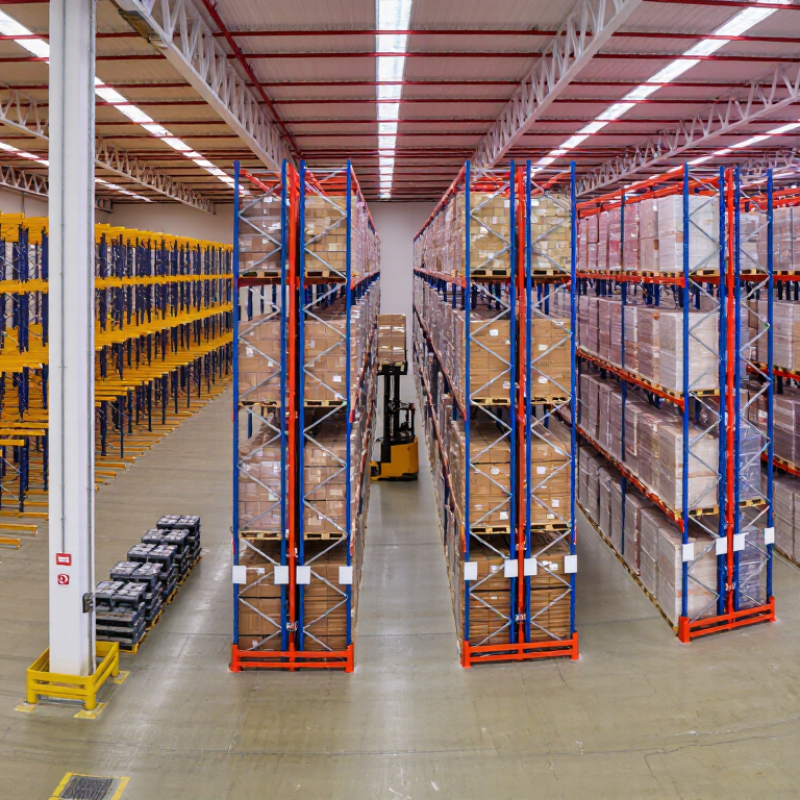
Choosing among the 10 best heavy-duty pallet racks for warehouses starts with ANSI MH16.1, not appearance. The current specification addresses design loads, frame stability, beam connections, deflection, anchorage, and seismic forces. Every rack should display a clear load plaque. It should match the actual pallet weight, beam spacing, and storage height. Do not rely on a supplier’s maximum capacity alone. Capacity changes when the rack layout changes.
The U.S. Bureau of Labor Statistics recorded 976 fatal work injuries across transportation and warehousing in 2023. That figure covers the wider sector, not pallet racks alone, but it shows why control measures matter. OSHA guidance also emphasizes protecting workers from struck-by hazards and unstable storage. In practical inspections, damaged uprights are often treated too casually. A bent frame is not cosmetic. It can alter load paths. Remove damaged components from service, isolate the bay, and obtain a competent engineering assessment. Small mistakes become expensive.
ANSI MH16.1 also supports disciplined installation and regular inspection. Check anchors, base plates, beam locks, aisle clearance, and visible impact damage. Keep heavier pallets lower whenever the operation allows it. Store loads evenly. Never assume a rack is safe because it has stood for years. That assumption needs challenging. Personnel changes, forklifts, floor conditions, and pallet quality can all change the risk profile. A documented inspection schedule, supported by training records and incident data, creates stronger evidence than verbal reassurance.
How to Compare 10 Rack Systems by Capacity, Density, Access, and Throughput
Comparing ten heavy-duty pallet rack systems starts with the load, not the aisle map. Selective racking offers the fastest access, but it uses more floor space. Double-deep storage improves density while reducing direct pallet access. Drive-in and drive-through racks suit large batches of identical products. Push-back racks store several pallets deep with strong selectivity. Pallet-flow racks support high throughput when pallets follow a first-in, first-out pattern. Mobile racks increase density, though movement adds waiting time. Shuttle racks reduce forklift travel and work well for repetitive loads. Very-narrow-aisle systems save space but require compatible handling equipment. Automated storage and retrieval systems can deliver excellent throughput, yet they demand careful integration. A mezzanine-supported rack layout adds usable levels, but it needs detailed structural review.
Capacity should be checked at every beam level, not guessed from appearance. Confirm pallet weight, load dimensions, frame height, beam deflection, floor strength, and seismic conditions.
A 1,000-kilogram pallet may require different spacing when its load is unstable or uneven. Access is more than “pallets per aisle.” Measure retrieval paths, forklift turning space, replenishment time, and blocked locations.
Density-first decisions can look clever and still slow daily work.
Throughput should reflect real operating patterns. Count inbound pallets, outbound orders, peak-hour demand, and average travel distance. In practice, the busiest aisle often reveals the weakest design. I would not treat calculated capacity as guaranteed performance. Damaged pallets, changing inventory, and operator habits can alter results. Leave room for inspection and adjustment. That small allowance is often overlooked.
Selective Racks: 85% SKU Access for Standard 48-Inch Pallets
Selective pallet racks remain a practical choice for warehouses handling standard 48-inch pallets. Their major advantage is direct access to about 85% of stored stock locations.
That access supports mixed inventory, frequent picking, and faster replenishment. In a recent warehouse layout review, operators reached most pallets without moving neighboring loads. A clear 10-foot aisle helped forklifts turn safely around loaded positions. Beam levels were adjusted to leave space above each pallet. Small details matter.
However, the 85% figure is not automatic. It depends on aisle planning, pallet height, product rotation, and accurate slotting data. Overloaded beams create serious risks, even when the rack appears stable. Each bay should display its rated capacity and receive routine visual inspections. Damaged uprights require immediate isolation and professional assessment. My own layout estimates have missed seasonal inventory changes before. That mistake reduced access and increased travel time. Leave room for revision. A selective system works best when warehouse teams review SKU movement regularly and adjust levels without compromising load stability.
10 Best Heavy-Duty Pallet Rack Configurations for Warehouses
Typical SKU access benchmarks for standard 48-inch pallets. Actual performance depends on aisle width, storage depth, inventory mix, and warehouse operating rules.
Key insight: Selective pallet racks provide broad SKU accessibility while maintaining direct access to individual pallets. Higher-density systems generally trade accessibility for greater storage capacity.
Drive-In, Push-Back, and Pallet Flow Racks: 2–10 Pallet-Deep Storage
Choosing among the 10 best heavy duty pallet racks depends on pallet depth, product rotation, and forklift access. Drive-in racks support two to ten pallets deep, using fewer aisles and more vertical space. They suit large quantities of similar products, especially when last-in, first-out storage is acceptable. However, deeper lanes can hide older inventory. That weakness matters.
Push-back racks also provide two to ten pallet positions in depth. Each pallet moves on inclined rails when a forklift loads another behind it. This design improves selectivity and reduces aisle space compared with standard selective racks. In daily warehouse use, operators should control pallet speed carefully. Damaged rails, uneven pallets, or poor loading habits can create unstable movement.
Pallet flow racks use rollers and gravity to move pallets toward the picking face. They support first-in, first-out rotation and work well for dated goods. Clear lane labels help operators identify the next pallet quickly. Tips: Confirm the heaviest pallet weight, load dimensions, and forklift reach before choosing a system. Leave practical clearance around beams and sprinklers. Inspect frames, connectors, rails, and guards on a regular schedule. A rack may meet its rated capacity on paper, yet perform poorly when pallets are inconsistent. Ask a qualified storage engineer to verify floor conditions, seismic needs, and the final configuration before installation.
| Rank | Rack Configuration | Storage Depth | Loading Method | Inventory Flow | Typical Unit Load Capacity | Direct Pallet Selectivity | Typical Aisle Requirement | Space Utilization | Best Warehouse Application | Important Design Consideration |
|---|---|---|---|---|---|---|---|---|---|---|
| 1 | Double-Deep Selective Rack | 2 pallets deep | Reach truck or double-deep reach truck | LIFO by rack position | 900–2,500 kg per pallet | Medium | Approximately 3.0–3.5 m | Higher than single-deep selective rack | High-volume storage where the same SKU is held in two pallet positions and moderate selectivity is acceptable. | Requires compatible double-reach equipment and careful load placement to avoid blocking rear pallets. |
| 2 | Two-Deep Drive-In Rack | 2 pallets deep | Forklift enters the storage lane | LIFO | 1,000–2,500 kg per pallet | Low to Medium | Approximately 3.2–4.0 m | High | Bulk storage of a limited number of SKUs with multiple pallets per SKU. | The forklift must travel inside the rack structure, so rail protection, operator training, and rack impact control are essential. |
| 3 | Two-Deep Pallet Flow Rack | 2 pallets deep | Forklift loads from the rear; pallets move on rollers | FIFO | 800–1,500 kg per pallet | High | Approximately 3.0–3.5 m | High | Perishable goods, date-sensitive inventory, and operations requiring automatic pallet presentation. | Roller pitch, lane slope, pallet quality, braking rollers, and separators must be matched to the actual load. |
| 4 | Three-Deep Push-Back Rack | 3 pallets deep | Forklift pushes pallets on carts or nested rails | LIFO | 900–1,500 kg per pallet | Medium | Approximately 3.2–3.8 m | High | Medium-turnover products that need more density than selective rack but faster access than deep drive-in storage. | Pallets must be compatible with cart dimensions, rail clearances, and the required push-back force. |
| 5 | Three-Deep Drive-In Rack | 3 pallets deep | Forklift enters each storage lane | LIFO | 1,000–2,500 kg per pallet | Low | Approximately 3.5–4.5 m | Very high | Dense reserve storage for stable, non-perishable SKUs with large batch quantities. | Best suited to facilities with relatively few SKUs and predictable replenishment and retrieval sequences. |
| 6 | Four-Deep Push-Back Rack | 4 pallets deep | Forklift pushes pallets along inclined rails | LIFO | 900–1,500 kg per pallet | Medium | Approximately 3.2–3.8 m | Very high | High-density storage for palletized goods with several pallets per SKU and moderate rotation. | Greater depth increases retrieval sequencing requirements and can make inventory inspection more difficult. |
| 7 | Four-Deep Pallet Flow Rack | 4 pallets deep | Rear loading and front picking with gravity rollers | FIFO | 800–1,500 kg per pallet | High | Approximately 3.0–3.5 m | Very high | FIFO case-pallet operations, food and beverage distribution, and high-throughput order fulfillment. | Requires accurate lane replenishment, reliable pallet construction, and regular inspection of rollers and brakes. |
| 8 | Six-Deep Drive-In Rack | 6 pallets deep | Forklift enters the lane from one open face | LIFO | 1,000–2,500 kg per pallet | Low | Approximately 3.5–4.5 m | Very high | Maximum-density reserve storage for low-SKU-count inventories and large uniform batches. | Not ideal for frequent SKU changes; rack geometry must account for forklift mast clearance and load overhang. |
| 9 | Six-Deep Push-Back Rack | 6 pallets deep | Forklift loads and unloads from one aisle | LIFO | 900–1,500 kg per pallet | Medium | Approximately 3.2–3.8 m | Very high | Dense storage where each SKU occupies a complete lane and rapid front access is valuable. | Lane depth should be selected according to turnover, batch size, pallet stability, and acceptable retrieval complexity. |
| 10 | Ten-Deep Pallet Flow Rack | 10 pallets deep | Rear replenishment and front picking through gravity flow lanes | FIFO | 800–1,500 kg per pallet | High | Approximately 3.0–3.5 m | Maximum | High-volume FIFO distribution centers handling long production runs and large quantities of uniform pallets. | Long lanes require engineered braking, pallet separators, end stops, load controls, and precise pallet-quality standards. |
OSHA 1910.176(b) Compliance, Flue Space, Inspections, and ROI Metrics
The 10 best heavy-duty pallet racks are not chosen by height alone. They must support documented loads, stable pallets, clear aisles, and controlled flue spaces. OSHA 1910.176(b) requires stored materials to remain secure and not create hazards. It also requires clear, appropriately marked aisles and passageways. A rack layout should show beam capacity, upright protection, aisle width, and floor conditions. Guesswork is expensive.
Flue space matters during a fire. Vertical and horizontal gaps can help sprinkler water reach burning cartons. Requirements depend on commodity class, rack depth, storage height, and sprinkler design. NFPA 13 should guide the final arrangement, with approval from the local authority having jurisdiction. Do not treat a small gap as automatic compliance. MHI’s 2024 Annual Industry Report found that 83% of supply-chain leaders planned to maintain or increase technology investment. Inspection technology can support that direction, but trained people remain essential.
A practical inspection program records bent frames, missing pins, impact damage, overloaded beams, and unsafe pallets. OSHA’s warehousing guidance identifies falling materials and rack damage as recurring hazards. Weekly visual checks are useful. A documented expert inspection should follow site risk and local requirements. For ROI, compare installed cost against added pallet positions, labor savings, reduced travel distance, and avoided damage. MHI reports that 55% of surveyed leaders expected increased supply-chain technology investment, yet the payback calculation is often weak. That is the uncomfortable part. A cheaper rack can become the costliest choice. Track occupancy, damage incidents, inspection findings, and payback monthly. Reconsider assumptions when operations change.
Related Posts
-
How to Choose Heavy Duty Pallet Racks for Your Warehouse?
-
China Best Warehouse Racking System Suppliers?
-

2026 Top Trends in Pallet Racking Innovations and Solutions?
-
2026 Best Heavy Duty Pallet Racks for Industrial Storage Solutions?
-
Best Pallet Rack Beams for Global Buyers in China?
-
What Are the Top Warehouse Racking Manufacturers in China?