10 Best Industrial Racking Systems for Efficient Warehouse Storage?
In the world of logistics, efficient storage is paramount. Industrial racking systems play a critical role in optimizing warehouse space. Choosing the right system can enhance productivity and reduce operational costs.
Different industries have unique storage needs. Selecting the ideal racking system requires understanding your specific requirements. This needs careful evaluation of your inventory type, space dimensions, and future growth. Neglecting this can lead to wasted resources and suboptimal storage solutions.
Investing in high-quality racking systems can yield significant benefits. They improve accessibility and organization. However, it’s crucial to consider the weight capacity and durability. A mismatched system could lead to issues, from collapsed racks to damaged goods. This overview highlights the ten best industrial racking systems, crucial for efficient warehouse management and sustainable growth.
Understanding the Importance of Industrial Racking Systems in Warehousing
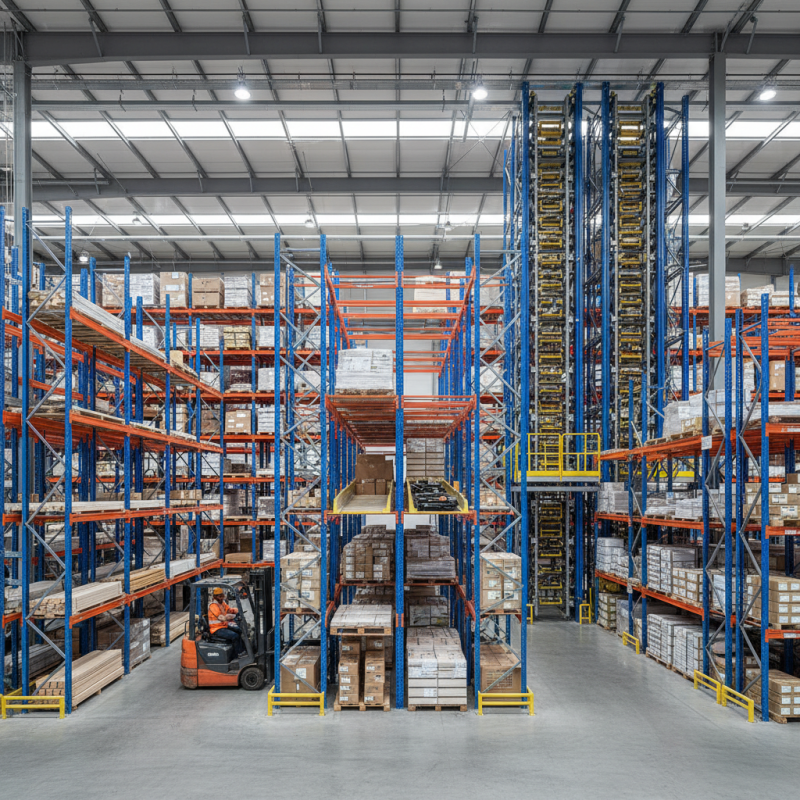
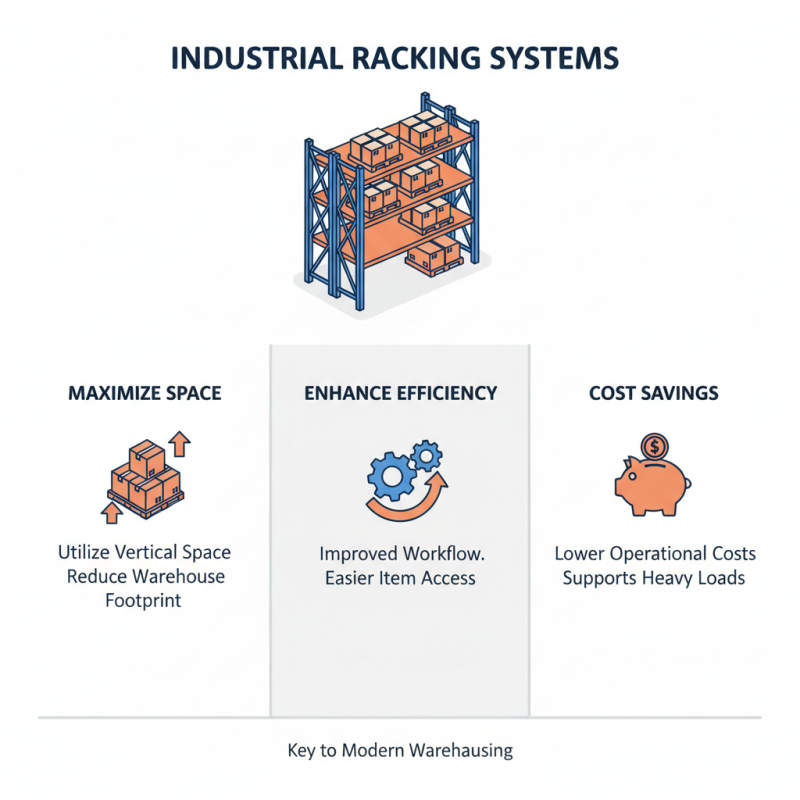
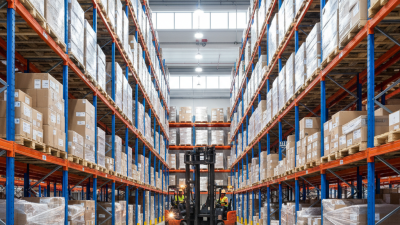
In the realm of warehousing, industrial racking systems play a vital role in maximizing storage space and enhancing operational efficiency. These systems are designed to support heavy loads while ensuring convenience in accessing items. Properly utilizing vertical space can significantly reduce the footprint of a warehouse. By doing so, companies save on costs and improve workflow processes.
Selecting the right racking system should not be a hasty decision. It's essential to consider various factors, such as the types of goods stored, the frequency of access, and safety regulations. A well-planned system minimizes clutter. However, the design must accommodate changing inventory needs. Ignoring these details can lead to inefficiencies and potential hazards.
Moreover, poor implementation of racking systems can backfire. If employees struggle to navigate the setup, productivity may suffer. Regular assessments of the racking system's effectiveness are crucial. Understanding how it aligns with warehouse objectives can prevent costly mistakes. Engaging with experts in the field can provide valuable insights and ensure the selected system meets specific requirements.
Key Types of Industrial Racking Systems and Their Utilization
Industrial racking systems are essential for optimizing warehouse storage. Various types cater to different needs, enabling efficient space utilization. Selective racking is one of the most common types. It provides easy access to each pallet, making it ideal for warehouses with a diverse range of products. According to Supply Chain 24/7, selective racks can improve picking efficiency by 15-30%.
Drive-in and drive-thru racking systems are also noteworthy. They maximize storage density by allowing forklifts to enter the racks. This design is particularly useful for bulk storage and high-volume items. However, potential challenges include limited accessibility to individual pallets and difficulty in inventory tracking. A recent report from the Warehousing Education and Research Council highlighted that adapting to these systems can lead to a 20% increase in storage capacity.
Mobile racking systems provide another innovative solution. They consist of racks mounted on mobile bases, allowing aisles to be created or removed as needed. This flexibility is beneficial for warehouses with fluctuating inventory levels. Yet, operational training is crucial for staff to navigate these systems safely and effectively. Companies have noted that without proper training, efficiency can suffer significantly, emphasizing the need for a well-thought-out implementation strategy.
Evaluating Warehouse Space: Factors Influencing Racking System Selection
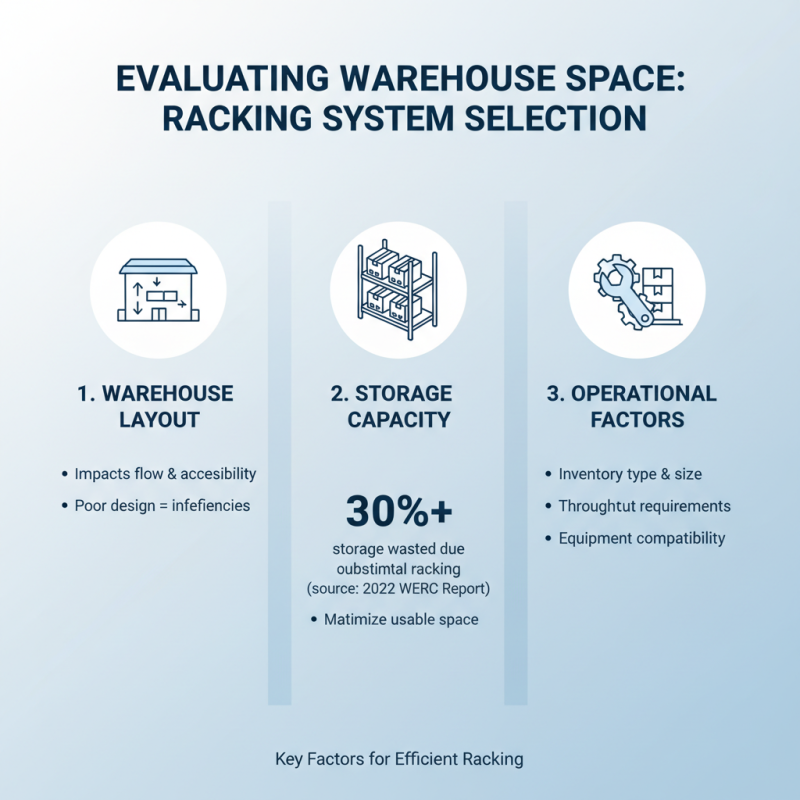
In evaluating warehouse space for racking systems, several factors play crucial roles. The layout of the warehouse significantly impacts the choice of racking. A poorly designed layout can lead to inefficiencies. According to a 2022 Warehousing Education and Research Council report, more than 30% of storage capacity is often wasted due to suboptimal racking configurations.
Another essential aspect is the product type being stored. Items vary in size, weight, and turnover rates. For instance, heavy goods require robust racking systems that can withstand higher loads. On the other hand, fast-moving items benefit from selective racking to enhance pick speeds. A study by Logistics Management highlighted that warehouses optimizing for item turnover could improve operational efficiency by up to 25%.
Lastly, inventory management practices influence racking needs. Real-time tracking systems can help determine the best racking solution. However, not all facilities have adopted these technologies, leading to potential mismanagement. The absence of such data can result in poor racking choices. Gathering accurate data is vital for avoiding costly mistakes in warehouse layouts and racking systems.
Best Practices for Maximizing Efficiency with Industrial Racking Systems
Maximizing efficiency in warehouse storage requires strategic use of industrial racking systems. A well-planned layout can significantly enhance accessibility and workflow. For example, placing frequently accessed items at eye level can reduce retrieval time. Use vertical space to your advantage by implementing multi-tier racking systems. This can help you store more products without expanding your floor area.
Regular audits of your inventory can help identify slow-moving stock. Consider using adjustable racks. They allow for flexibility as your inventory needs change. If racking systems are improperly loaded, it can lead to safety hazards. Ensure all team members are trained on load limits and proper stacking techniques. Working in a clutter-free environment not only boosts productivity but also minimizes the risk of accidents.
Incorporating technology into your racking systems can also enhance operations. For instance, barcode scanning can streamline inventory tracking. However, keep in mind that integrating tech solutions requires proper training and ongoing maintenance. Evaluating your current practices regularly can highlight inefficiencies. Small adjustments, like reconfiguring shelves, can lead to significant improvements. Balancing technology with human oversight is crucial for long-term success.
Warehouse Storage Efficiency of Different Racking Systems
Impact of Racking Systems on Inventory Management and Safety Compliance
The role of racking systems in warehouses extends beyond simple storage. Efficient racking enhances inventory management significantly. When products are organized systematically, it minimizes retrieval time. This efficiency directly impacts order fulfillment. Employees spend less time searching for items. A well-organized racking system reduces clutter, making it easier to count stock accurately.
Safety compliance is another crucial aspect to consider. Properly installed racking systems can prevent accidents. Overloaded shelves pose risks that are often overlooked. Regular inspections should be conducted to ensure racking stability. Training employees on safe practices is essential. Many facilities assume all is well, but this assumption can lead to safety violations.
Individuals may underestimate the need for customized solutions. Not all racking styles fit every warehouse. Analyzing the specific needs of a facility is vital. Effective inventory management is an ongoing process. Evaluate your racking options periodically. Reflecting on current practices can uncover areas for improvement. Balancing efficiency and safety will lead to a more productive warehouse environment.
10 Best Industrial Racking Systems for Efficient Warehouse Storage
| Racking System Type |
Load Capacity (lbs) |
Adjustable |
Common Use Cases |
Safety Compliance Rating |
| Selective Pallet Racking |
3,000 - 5,000 |
Yes |
General warehousing, Retail |
A |
| Drive-In Racking |
4,000 - 6,000 |
No |
High-density storage |
B |
| Mobile Racking |
2,500 - 4,000 |
Yes |
Small item storage |
A+ |
| Push-Back Racking |
6,000 - 7,000 |
No |
Bulk storage |
A |
| Cantilever Racking |
1,500 - 3,000 |
Yes |
Lumber, pipes, long goods |
A |
| Automated Racking Systems |
Varies |
Yes |
High-efficiency warehouses |
A+ |
| Skinny Racking |
3,000 - 4,500 |
Yes |
Narrow aisles storage |
B+ |
| Steel Shelving |
500 - 3,000 |
Yes |
Parts storage |
B |
| Mezzanine Floors |
Varies |
Yes |
Additional storage |
A |
| Bin Racking |
1,000 - 2,500 |
Yes |
Small parts and inventory |
B+ |