Blog
2026 Best Screw Nut Types for Global Buyers?
As global manufacturing expands, buyers need more than a low unit price when selecting Screw Nuts. Thread fit, material grade, coating, and traceability can determine whether a fastener survives vibration, moisture, or repeated assembly. The 2024 Grand View Research Fasteners Market report estimates the global fasteners market at approximately USD 90 billion in 2023. It also identifies construction, automotive, and industrial machinery as major demand sectors. MarketsandMarkets reports similar growth expectations, supported by infrastructure investment and vehicle production. These figures provide useful direction, but they do not replace engineering judgment.
Small details matter. A stainless steel nut may resist corrosion, yet it can gall during installation without suitable lubrication. A high-strength carbon steel nut may perform well under load, but its coating and hydrogen-management controls require careful review. ISO, DIN, ASTM, and ASME references help buyers compare dimensions, grades, and testing requirements across suppliers. Still, standards are not identical in every application. A DIN dimension should not be accepted automatically as an ASTM equivalent. That shortcut can create costly problems.
This 2026 guide compares common nut types, including hex nuts, lock nuts, flange nuts, wing nuts, and cage nuts. It considers load behavior, installation speed, corrosion exposure, sourcing consistency, and total lifecycle cost. The ranking is not absolute. A cheaper nut can become expensive after one failed assembly. Reported market growth also hides regional differences, freight costs, and supplier quality variation. Buyers should verify certificates, sample batches, thread gauges, and inspection records before placing large orders. Practical testing remains essential. That part is easy to underestimate.
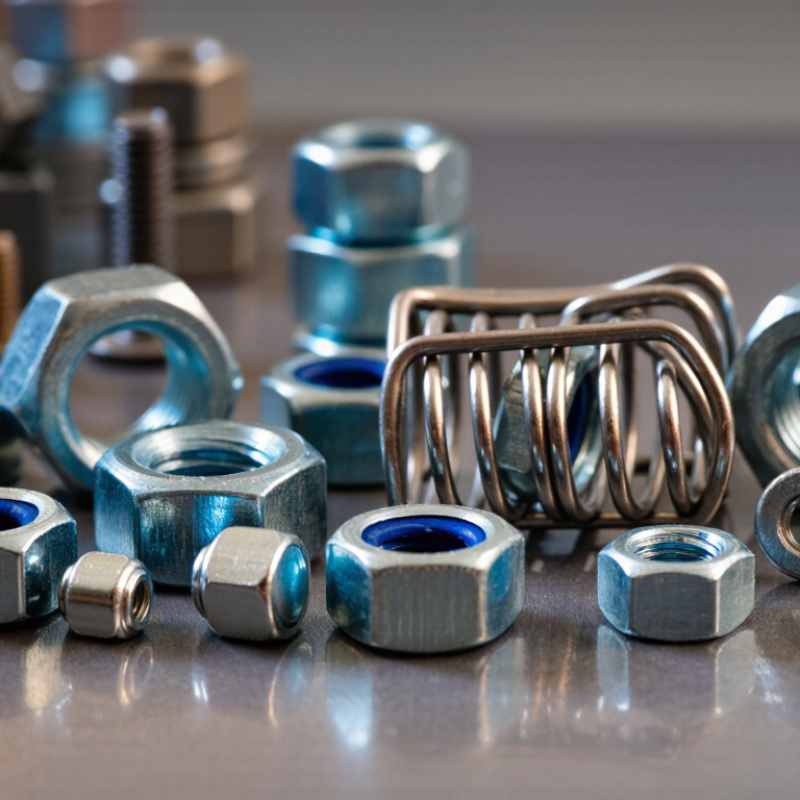
What Defines a Screw Nut: Threads, Materials, Grades, and Standards
2026 Best Screw Nut Types for Global Buyers?
What Defines a Screw Nut: Threads, Materials, Grades, and Standards
A screw nut has internal threads that match a bolt or screw. Thread form, diameter, and pitch define its fit. An M8 × 1.25 nut has an 8-millimeter diameter and 1.25-millimeter pitch. Inch threads use systems such as UNC or UNF. Pitch changes performance. Fine threads offer better adjustment, while coarse threads tolerate dirt more effectively. Small mismatches can cause costly assembly failures. A 2024 Grand View Research analysis estimated the global fasteners market near USD 94 billion in 2023, showing the scale of this purchasing decision.
Material selection depends on load, temperature, moisture, and galvanic risk. Carbon steel suits general structural work. Stainless steel performs better in wet or corrosive environments, but it can gall during tightening. Brass supports electrical and decorative applications. Nylon reduces weight and electrical conductivity, though heat resistance remains limited.
I have seen buyers choose stainless steel by appearance alone. That approach needs more scrutiny.
Mechanical grades require equal attention. ISO 898-2 defines property classes for many carbon and alloy steel nuts, including classes 8, 10, and 12. ISO 3506 covers selected stainless-steel fasteners. ISO 965 addresses metric thread tolerances. ASTM F594 covers many stainless-steel nuts in North American specifications.
Buyers should verify markings, certificates, coating thickness, and test values. “High strength” is not a complete specification. Surface coatings also matter, especially when dissimilar metals meet. Even experienced teams sometimes overlook installation torque, which can damage threads or distort the joint.
Compare Hex, Lock, Flange, Wing, Cap, and Coupling Nuts by Use
Global buyers need more than a familiar shape. The 2024 Grand View Research report estimated the global fastener market at about USD 90 billion in 2023, making specification discipline increasingly important. Nut selection affects assembly speed, vibration resistance, clearance, and service access.
Specification Performance
Hex nuts remain the practical baseline for general steel structures and machine frames. They fit standard tools and usually offer the broadest availability.
Lock nuts suit vibrating joints, but their locking effect can weaken after repeated removal.
Flange nuts spread clamping pressure across thin brackets, reducing local deformation. They are useful under equipment panels and automotive-style assemblies.
Wing nuts support tool-free adjustment, although their grip is limited. Do not use them where high preload or tamper resistance matters.
Cap nuts cover exposed threads, protecting users and reducing corrosion entry around the stud end.
Coupling nuts join threaded rods over longer distances, but alignment must be checked carefully.
ISO 898-2 defines mechanical property classes for metric nuts, including proof-load requirements. That standard should guide strength matching, not appearance alone.
ASTM F594 also covers corrosion-resistant stainless steel nuts and helps buyers verify material requirements.
In my procurement reviews, buyers often overvalue low unit price. That choice can increase installation labor and replacement risk.
Small detail. A washer, coating, or thread tolerance may change the result.
Product drawings, test certificates, and batch traceability remain essential, especially when suppliers span several regions.
Evaluate Proof Loads and Property Classes Under ISO 898-2
For global buyers, nut selection should begin with proof load, not appearance or thread size alone. Under ISO 898-2, proof load indicates the axial force a nut should withstand without unacceptable permanent deformation. Property classes, such as 5, 8, 10, and 12, help identify mechanical performance. However, the class number is not a direct promise of unlimited working strength.
That distinction matters. A class 10 nut should be assessed against the bolt grade, thread pitch, diameter, and joint design. Fine-pitch threads may require different verification than coarse threads. In procurement reviews, I check the test report, production lot, heat treatment details, and marking consistency. A clear certificate should identify the standard edition and test method. Vague paperwork creates avoidable risk.
Test conditions also deserve attention. Proof-load testing normally uses calibrated equipment and controlled loading, while actual service may involve vibration, repeated stress, corrosion, or elevated temperatures. A nut that passes one test can still fail in a poorly designed joint. Measure the lot. Do not rely only on samples from a supplier’s previous shipment. I have seen buyers focus on the highest property class, then overlook thread engagement and washer seating. That decision looks efficient, but it may weaken the assembly. ISO 898-2 is a valuable reference, not a substitute for engineering judgment.
Match Nut Choices to ASTM, ASME, DIN, and ISO Compliance Needs
Global buyers need more than a familiar nut shape. Compliance begins with the complete specification.
Standard hex nuts suit general bolted joints, while flange, lock, dome, and square nuts solve different installation problems. ASTM requirements often define material, strength, testing, and surface condition. For stainless nuts, ASTM F594 may apply. High-temperature or pressure assemblies may require ASTM A194 grades. ASME documents commonly guide pressure equipment design and material selection, but they do not replace the required product specification.
DIN and ISO standards usually focus on dimensions, threads, tolerances, and product geometry. DIN 934 and ISO 4032 hex nuts can look nearly identical, yet their dimensions or tolerance details may differ. Check thread pitch, across-flats size, height, and mating bolt class. Do not assume interchangeability.
A practical purchasing file should list the nut type, nominal diameter, thread system, material grade, property class, coating, and inspection documents. Request certificates with heat numbers and test results. Small details matter.
One common mistake is choosing by appearance. Another is accepting “DIN” without the exact standard number. I have seen specifications that ignored plating thickness and washer contact, creating installation problems later. Standards reduce risk, but only when the buyer verifies the full chain from drawing to shipment. Clearance, corrosion exposure, and tightening method still deserve review. No standard can correct a vague requirement.
2026 Best Screw Nut Types for Global Buyers? - Match Nut Choices to ASTM, ASME, DIN, and ISO Compliance Needs
| Nut Type | Typical Standards | Common Materials or Grades | Typical Size Range | Thread System | Best-Fit Applications | Compliance and Selection Notes |
|---|---|---|---|---|---|---|
| Hex Nut | ASME B18.2.2 ISO 4032 DIN 934 ASTM A563 | ASTM A563 Grade A/B/C ISO property classes 8/10 A2-70 or A4-80 stainless | M3–M36 commonly stocked; inch sizes commonly from #2 through 1-1/2 in | Metric coarse/fine; UNC, UNF, and other Unified threads | General machinery, structural assemblies, maintenance, and equipment fastening | Use ASME B18.2.2 for inch dimensions and ISO 4032 for standard metric hex dimensions. Confirm nut strength is compatible with the bolt assembly. |
| Heavy Hex Nut | ASME B18.2.2 ASTM A563 ASTM A194 | ASTM A563 Grade DH ASTM A194 Grade 2H Carbon or alloy steel | Commonly 1/4–1-1/2 in; larger sizes available by specification | Unified inch threads; metric versions require a stated dimensional standard | High-strength bolting, structural steelwork, pressure equipment, and flanged joints | ASTM A194 Grade 2H is commonly specified for pressure-vessel and piping service. Do not substitute a regular hex nut where heavy-hex geometry is required. |
| High Hex Nut | ISO 4033 DIN 934-related applications | Carbon steel classes 8/10 Stainless steel A2/A4 | M3–M30 commonly used | Metric coarse or fine threads | Assemblies requiring additional thread engagement or higher prevailing load capacity | ISO 4033 has a greater nut height than ISO 4032. Check the available wrench clearance and the required thread engagement before selection. |
| Thin Hex Nut | ISO 4035 DIN 439 ASME B18.2.2 | Carbon steel Stainless steel A2/A4 | M3–M30 commonly used; inch thin nuts available to specified dimensions | Metric coarse/fine; Unified threads when ordered to inch specifications | Jam-nut arrangements, adjustment mechanisms, limited-height assemblies, and locknut pairs | Thin nuts are not normally a direct replacement for full-height structural nuts. They are generally used as jam nuts or where the design specifically permits reduced height. |
| Prevailing-Torque Non-Metallic Insert Nut | ISO 7040 DIN 985 ASME B18.16.6 | Zinc-plated carbon steel Stainless steel Polyamide insert | M3–M24 commonly used; #2–1 in common in inch series | Metric, UNC, and UNF threads | Vibration-resistant equipment, automotive assemblies, electrical enclosures, and general machinery | Temperature capability depends on the insert material. Do not use a nylon-insert nut where continuous temperature, chemical exposure, or reuse requirements exceed the insert specification. |
| All-Metal Prevailing-Torque Nut | ISO 2320 DIN 980 ASME B18.16.6 | Carbon or alloy steel Stainless steel Heat-resistant alloys by specification | M4–M24 commonly used; inch sizes available in Unified threads | Metric coarse/fine; UNC and UNF | Higher-temperature service, engines, industrial machinery, and assemblies requiring repeated environmental exposure | Verify prevailing torque, reuse limits, temperature rating, and installation direction. ISO 2320 covers functional requirements and test methods for prevailing-torque nuts. |
| Flange Nut | ISO 4161 DIN 6923 ASME B18.2.2 | Carbon steel class 8/10 Stainless steel A2/A4 | M4–M20 commonly used; inch flange nuts available to specified dimensions | Metric coarse/fine; UNC and UNF | Automotive components, sheet-metal assemblies, equipment frames, and joints needing load distribution | The integrated flange spreads the clamping load and may eliminate a separate washer. Confirm flange diameter, serration requirements, and mating-surface protection. |
| Capped or Acorn Nut | DIN 1587 ASME B18.2.2 | Carbon steel Stainless steel Brass | M4–M20 commonly used | Metric coarse; UNC and UNF versions available | Exposed fasteners, guards, furniture, architectural hardware, and applications requiring a covered thread end | Check the internal depth against the bolt protrusion. A capped nut should not be forced onto a bolt when the thread end bottoms inside the cap. |
| Square Nut | ASME B18.2.2 DIN 557 ASTM A563 | Carbon steel Stainless steel Brass | M3–M24 commonly used; inch sizes available | Metric, UNC, and UNF threads | Wood or channel assemblies, captive-nut designs, restoration work, and applications requiring increased wrench resistance | The four-sided profile provides greater resistance to rotation than a round component in some applications. Confirm corner clearance and the specified across-flats dimension. |
| Weld Nut | DIN 929 DIN 928 SAE J995-related material practice | Low-carbon steel Stainless steel | M3–M12 commonly used | Metric coarse; inch versions require a defined weld-nut specification | Sheet-metal fabrication, vehicle bodies, enclosures, brackets, and inaccessible rear-side fastening points | Select the nut geometry according to the weld process and sheet thickness. Welding procedures, corrosion protection, and post-weld thread condition must be controlled. |
| T-Nut or Tee Nut | Product-specific dimensional specification ISO thread designation | Zinc-plated steel Stainless steel Carbon steel | M4–M12 commonly used in panel and profile systems | Metric coarse; inch threads available for designated systems | Machine guarding, modular profiles, woodworking, furniture, and thin-panel fastening | T-nut dimensions are often application-specific rather than covered by one universal ISO or ASME nut standard. Specify flange size, prong geometry, panel thickness, and thread class. |
| Non-Ferrous Hex Nut | ASTM F467 ASME B18.2.2 ISO 4032 | Aluminum alloys Copper alloys Silicon bronze | M3–M24 commonly used; inch sizes available | Metric or Unified threads | Electrical, marine, corrosion-sensitive, lightweight, and non-magnetic assemblies | ASTM F467 covers non-ferrous nuts and specifies applicable alloy and mechanical requirements. Check galvanic compatibility, torque limits, and required electrical conductivity. |
| Stainless-Steel Hex Nut | ASTM F594 ISO 4032 ASME B18.2.2 | A2 / 304-type stainless A4 / 316-type stainless ASTM F594 Group 1 or 2 | M3–M30 commonly used; inch sizes available | Metric coarse/fine; UNC and UNF | Outdoor equipment, food-processing environments, marine service, chemical exposure, and clean installations | ASTM F594 addresses stainless-steel nut requirements. Match the nut and bolt corrosion resistance, and consider galling risk during installation. |
Select 2026 Nut Types by Corrosion Resistance, Cost, and Supply Risk
2026 Best Screw Nut Types for Global Buyers?
Nut selection now depends on corrosion resistance, landed cost, and supply risk. Zinc-plated carbon-steel nuts suit dry indoor equipment and controlled storage. They usually offer the lowest purchase cost. However, salt air, condensation, and damaged plating can expose steel quickly. ISO 898-2 helps buyers verify mechanical properties, while coating thickness still requires inspection.
For coastal, chemical, or outdoor applications, stainless steel nuts provide stronger corrosion protection. A2 stainless fits many general environments; A4 is more suitable for chloride exposure. Yet stainless costs more and may gall during installation. Use compatible lubrication and controlled tightening. The International Stainless Steel Forum reported global stainless crude-steel production at about 60 million tonnes in 2023, showing broad capacity, but regional availability still varies.
Supply risk deserves equal attention. The World Steel Association reported approximately 1.88 billion tonnes of crude steel production in 2024, with China producing about 1.01 billion tonnes. This concentration can affect lead times, freight routes, and quotations. The USGS Mineral Commodity Summaries 2025 also identifies nickel supply as heavily concentrated in a few producing countries, relevant to stainless grades. Carbon steel may be easier to source, but not always safer in corrosive service. That assumption can fail. Buyers should compare two approved grades, regional stock, mill certificates, coating tests, and six-month price exposure. A cheaper nut can become expensive after rework, rust claims, or delayed assembly.