
Blog
What Is the Best Solid State Diode Laser in 2026?
Choosing the best Solid State Diode Laser in 2026 starts with a basic distinction: the phrase can describe a diode laser or a diode-pumped solid-state laser. They are not interchangeable. Their output, beam quality, cooling needs, and maintenance can differ sharply. That matters when a compact unit must mark metal, process tissue, or deliver a stable beam on a production line.
Industry figures offer context, not a universal winner. MarketsandMarkets estimated the broader laser technology market at USD 17.3 billion in 2023 and forecast USD 20.6 billion by 2028, a 3.6% compound annual growth rate. This category includes many laser types; it does not measure solid-state diode lasers alone. Treat it as evidence of continued investment, not proof that one design leads every application. Check the report’s scope before comparing its figures with specialist market estimates.
Theodore H. Maiman, the physicist behind the first working laser, is often associated with this practical warning: “A laser is a solution looking for a problem.” The line is a useful reminder, though buyers should verify its original sourcing. Define the job first. Then compare wavelength, average and peak power, pulse duration, beam quality, operating life, and service support. Ask for test data under your real duty cycle. A brochure is not a bench test. There is no single best model. A slightly imperfect choice may still be the right one when it fits the application, budget, and maintenance capacity.
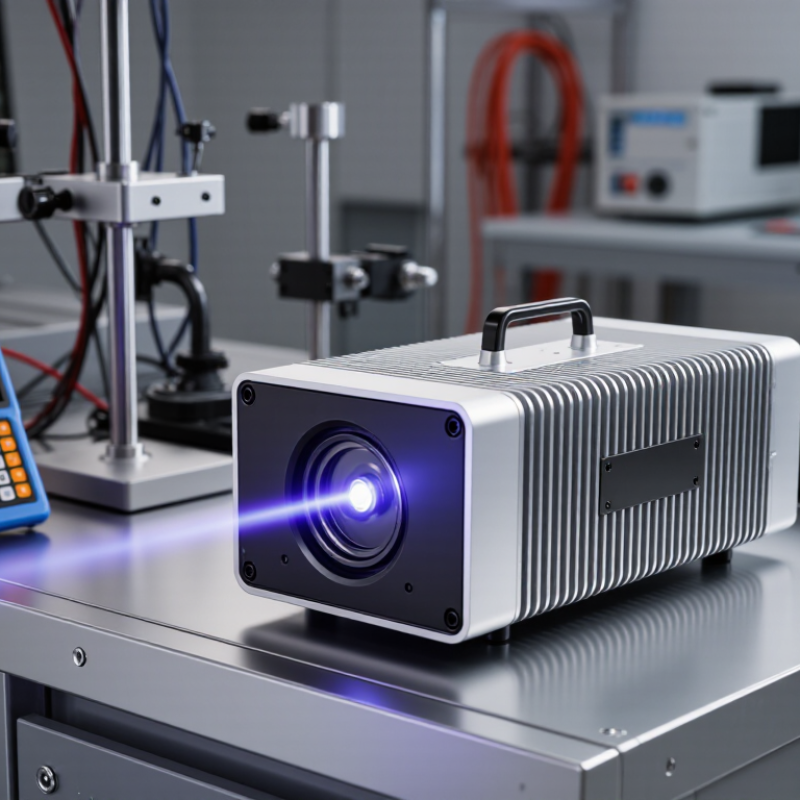
What Is a Solid-State Diode Laser?
A solid-state diode laser produces light through a solid material rather than a gas or liquid. The term can describe a direct diode laser, where an electrical current drives a semiconductor chip to emit light. It can also be used loosely for a diode-pumped solid-state laser, which uses a diode to energize a separate crystal. The wording is not always tidy, so checking the device’s construction matters.
In a direct diode design, the semiconductor chip is the light-generating medium. Its output depends on factors such as wavelength, electrical drive, cooling, and optical alignment. A tiny chip may sit beside a heat sink and a focusing lens. It looks simple. But heat can shift performance, and a lens can change the beam’s shape or focus.
A diode-pumped solid-state design works differently. The diode supplies pump light to a crystal, which then produces the laser output. This arrangement can offer beam qualities that suit some precision tasks, though it adds components and alignment requirements. For a 2026 comparison, look beyond the label: check the stated wavelength, output stability, cooling method, and intended application. A specification sheet is useful, but actual performance can depend on setup and operating conditions.
What Is the Best Solid-State Diode Laser in 2026? — What Is a Solid-State Diode Laser?
“Solid-state diode laser” can refer to either a semiconductor diode laser or a diode-pumped solid-state (DPSS) laser. They are related but different technologies. The best choice depends on the material, wavelength, required beam quality, power, and budget.
| Laser Type | How It Works | Typical Wavelengths | Key Advantages | Considerations | Best-Fit Applications |
|---|---|---|---|---|---|
| Direct semiconductor diode laser | Electrical current produces light directly in a semiconductor active region. | Depends on the semiconductor material; available wavelengths include violet/blue, red, and near-infrared. | Compact, efficient, and electrically simple; can be designed for direct output or combined into higher-power sources. | Beam quality, wavelength, and output power vary with design. Some applications require beam shaping or additional optics. | Diode-based illumination, sensing, alignment, pumping, and selected material-processing tasks. |
| Diode-pumped solid-state (DPSS) laser | Diodes optically pump a solid gain medium, such as a crystal; the gain medium generates the laser output. | Common examples include 1064 nm infrared, 532 nm green from frequency-doubled 1064 nm light, and 355 nm ultraviolet from frequency-tripled light. | Can provide a narrow spectrum and a well-controlled beam; frequency conversion can produce visible or ultraviolet output. | Typically has more optical components than a direct diode laser. Conversion stages add alignment, efficiency, and maintenance considerations. | Precision marking, inspection, metrology, and processing tasks that benefit from green or ultraviolet light. |
| Fiber laser (solid-state laser) | Diodes pump a rare-earth-doped optical fiber that acts as the gain medium. | Common industrial outputs include near-infrared wavelengths around 1 μm; exact wavelength depends on the active dopant and design. | High beam quality and efficient heat management are available in many industrial configurations. | Near-infrared output may be poorly absorbed by some materials. Enclosure, extraction, and laser-safety requirements depend on the system. | Industrial cutting, welding, engraving, and marking where the material and process suit near-infrared light. |
| Best choice for high-throughput processing | Select the architecture according to the material’s absorption and the required processing speed. | Choose a wavelength based on material response; do not select by wavelength or power alone. | A matched wavelength and beam profile can improve energy coupling and process consistency. | Compare delivered power at the workpiece, spot size, duty cycle, cooling, and total operating cost. | Often a direct diode or fiber system for suitable industrial tasks; a DPSS system may suit processes needing a specific converted wavelength. |
| Best choice for precision or short-wavelength work | Use a DPSS system when a solid-state gain medium and frequency conversion are useful for producing a required wavelength. | Green 532 nm and ultraviolet 355 nm are established frequency-converted examples. | Shorter wavelengths can be better absorbed by some materials and may support smaller focused spots under suitable optical conditions. | Actual results depend on the material, pulse duration, repetition rate, optics, and process settings. | Fine marking, microprocessing, or inspection where the selected wavelength offers a practical advantage. |
Practical takeaway: There is no single best solid-state diode laser for every application. For a meaningful comparison, specify the work material, required wavelength, continuous-wave or pulsed operation, output power at the workpiece, beam quality, and applicable safety requirements. Laser classifications and safety controls depend on the complete product and its intended use.