
Blog
How to Choose the Best Glass Machinery for Your Business?
Choosing the best Glass Machinery starts with understanding the work your business actually handles. A small fabricator producing custom shower doors has different needs from a high-volume insulating glass plant. Consider daily output, glass thickness, product dimensions, and the space available on your production floor. These details shape the equipment shortlist.
Look closely at each machine’s capabilities. Cutting accuracy, edge quality, cycle time, and changeover requirements can affect both product consistency and labor costs. Ask suppliers for technical specifications, operator training details, and maintenance schedules. A live demonstration using glass similar to yours can reveal practical limits that a brochure may not show. Watch how sheets move through the line. Listen for unusual vibration. Small clues matter.
Price is only one part of the decision. Installation, tooling, energy use, spare parts, and service response can change the long-term cost. Request references from businesses with comparable production needs, and confirm what the warranty covers in writing. If possible, review the equipment with your operators and maintenance team before committing. They may notice workflow issues that managers miss.
There is no perfect machine for every shop. Some features may be useful later, not today. And forecasts can be wrong. Compare options against realistic production goals, verify supplier claims, and leave room for maintenance and growth. A careful choice should fit your current workflow while supporting the products you genuinely plan to make.
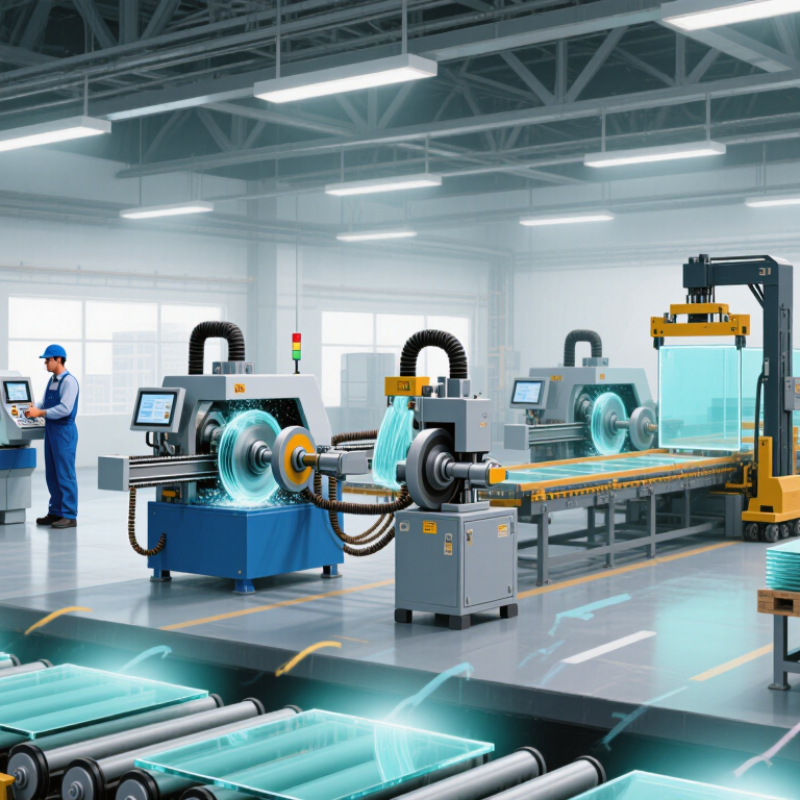
Define Your Glass Production Requirements
Define Your Glass Production Requirements
Start with the orders. List the products you expect to make: clear or coated panels, insulated units, shower screens, or custom shapes. Record thickness ranges, maximum sheet size, edge finish, hole locations, and required tolerances. A machine’s advertised maximum capacity matters less if most orders need frequent size changes or delicate handling. Note daily output by product, not just total square metres. That reveals whether cutting, edging, washing, or tempering will become the bottleneck.
Demand forecasts should shape capacity, too. The UNEP and GlobalABC 2023 Global Status Report for Buildings and Construction estimates that buildings and construction produced 37% of global energy- and process-related CO2 emissions in 2022. For architectural glass suppliers, this adds weight to energy-efficient glazing requirements. Translate those specifications into actual process needs, such as coating compatibility, heat-treatment capacity, or tighter quality checks. Then confirm that the equipment can meet them consistently across your planned product mix.
Measure the factory floor before requesting quotations. Check usable line length, loading access, power supply, compressed air, water, and space for finished racks. Include operator skills, maintenance coverage, and expected changeover time. A forecast is rarely clean; customers revise sizes, and early volume estimates can be optimistic. That matters. Test a realistic order mix with suppliers, including small batches and awkward dimensions. A machine that excels on one standard panel may struggle when production shifts twice in a day. Keep some capacity for variation, but avoid paying for throughput your orders cannot support.
| Production Requirement | Information to Define | Example Planning Range | Machinery Implication |
|---|---|---|---|
| Glass products | Identify the products you plan to make, such as architectural panels, insulated glass units, shower doors, furniture glass, or vehicle glass. | Single-pane cut glass; tempered panels; laminated or insulated units. | Product type determines whether you need cutting, edging, washing, tempering, laminating, or insulating equipment. |
| Glass composition | Specify the glass type and any coatings or interlayers that the process must handle. | Clear or tinted soda-lime glass; low-emissivity coated glass; laminated glass with a polymer interlayer. | Confirm equipment compatibility with coated surfaces, interlayers, and the handling requirements of each material. |
| Thickness range | List the minimum and maximum thicknesses used in regular production, including the thickness of each pane in a finished unit. | Common flat-glass processing ranges vary by machine; stock glass may be approximately 3–19 mm, depending on the product and process. | Check the machine’s stated thickness limits and whether tooling, heating settings, or handling systems need adjustment. |
| Maximum workpiece size | Record the largest sheet or finished unit that must pass through each process. | Measure the maximum width and length of planned jobs; architectural projects may require large-format sheets. | Match table, furnace, washer, and conveyor dimensions to the largest required piece, with allowance for safe loading and unloading. |
| Required processes | Map each product to its process steps, including cutting, breaking, grinding, drilling, washing, heat treatment, or assembly. | Example: cutting → edge grinding → washing → tempering. | Choose individual machines or an integrated line based on process sequence, product mix, and available floor space. |
| Daily output and product mix | Estimate production by shift, working days, and product type. Separate peak demand from typical demand. | Set a target in pieces or square metres per shift; include expected changeovers and non-production time. | Compare rated throughput with realistic operating output. Bottlenecks often occur at loading, inspection, or downstream processes. |
| Quality requirements | Define acceptable edge finish, dimensional tolerance, flatness, visual quality, and any applicable safety or product standards. | Requirements depend on the product, customer specification, and destination market. | Ask for process capability details, inspection options, and sample runs using representative glass and specifications. |
| Automation and labor | Assess available operators, material-handling methods, changeover frequency, and desired automation level. | Options may include manual loading, assisted lifting, automatic positioning, or line integration. | Automation can reduce repetitive handling, but requires suitable controls, maintenance support, and compatible upstream and downstream equipment. |
| Utilities and site conditions | Confirm electrical supply, compressed air, water, extraction, drainage, ventilation, and building access. | Requirements vary by machine model and process; verify voltage, power, air pressure, water quality, and connection locations with the supplier. | Review the technical specification and site layout before purchase. Include machine footprint, service access, and safe material routes. |
| Budget and operating costs | Consider purchase price alongside installation, tooling, energy, consumables, maintenance, training, and downtime. | Compare total cost of ownership over the expected service period rather than equipment price alone. | Request clear information on routine maintenance, spare parts, warranty coverage, and expected utility consumption. |
| Future capacity | Estimate likely changes in order volume, product dimensions, or product range over the next few years. | Plan for a realistic growth scenario, including additional shifts or new product types. | Consider modular equipment, expandable lines, and controls that can support planned upgrades without overbuying capacity today. |
| Installation and support | Define commissioning, operator training, maintenance response, spare-parts access, and technical support needs. | Confirm installation requirements and service arrangements before finalizing the equipment specification. | Include installation readiness and after-sales support in the selection criteria, not just machine performance. |
| Planning note: Example ranges are for initial assessment only. Confirm operating limits, throughput, utilities, and compliance requirements against the technical documentation for the specific machine and your production process. | |||