Blog
How to Choose the Best Logistics Trolleys for Your Business?
Choosing the right Logistics Trolleys can influence handling speed, worker comfort, product protection, and daily operating costs. A trolley is not merely a frame with wheels. Its load capacity, wheel design, platform height, braking system, and turning radius must match the real working environment.
The MHI Annual Industry Report 2024 found that 76% of supply chain professionals planned to increase technology investment. However, basic handling equipment still matters. Employees may push loaded trolleys across concrete floors, narrow aisles, ramps, or uneven thresholds for several hours. Small design flaws become expensive quickly. A weak caster can create vibration. A poor handle can cause awkward posture. An unsuitable platform may slow picking and increase product damage.
DHL’s Logistics Trend Radar 7.0 highlights automation, sustainability, and workforce-related pressures across logistics operations. These trends make trolley selection more demanding. Businesses should assess actual load weights, movement distances, aisle widths, cleaning requirements, and storage conditions before comparing suppliers. Ergonomic guidance from the U.S. National Institute for Occupational Safety and Health also supports reducing excessive pushing and pulling forces wherever possible. Yet specifications alone can mislead. A trolley rated for 500 kilograms may perform poorly if its wheels are too small for warehouse joints. That is an easy mistake to overlook. Practical trials, maintenance records, and feedback from operators provide stronger evidence than catalogue claims. The following guide explains how to evaluate Logistics Trolleys with a balanced focus on safety, efficiency, durability, and long-term value.
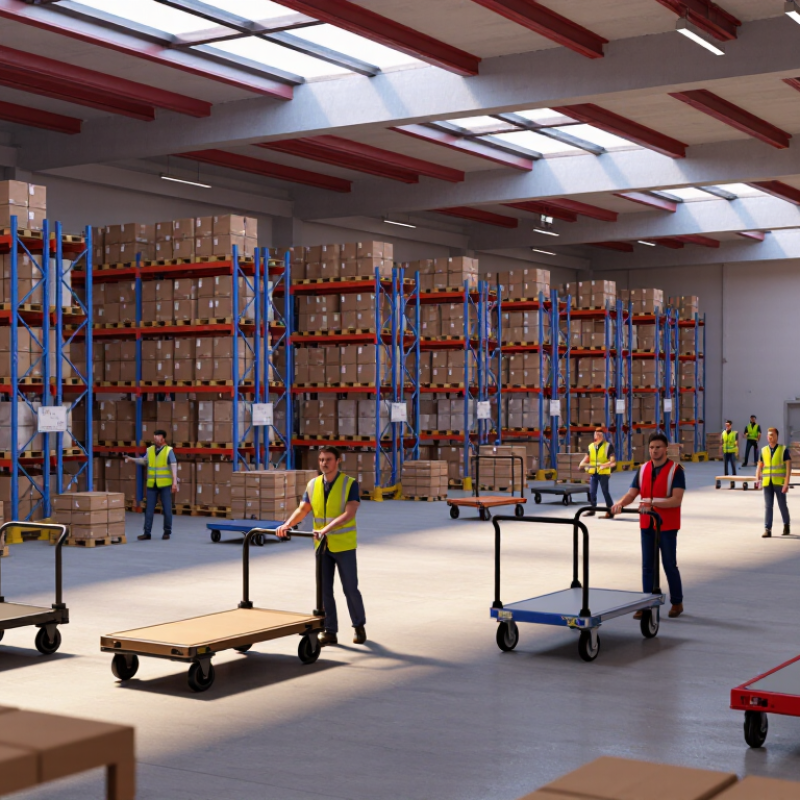
Understanding Logistics Trolley Types and Their Business Applications
How to Choose the Best Logistics Trolleys for Your Business?
Understanding Logistics Trolley Types and Their Business Applications
Logistics trolleys serve different jobs, so one design rarely fits every operation. Platform trolleys suit boxed goods, equipment, and awkward loads on level floors. Cage trolleys add security for loose parcels and reduce items falling during movement. Shelf trolleys support picking tasks when workers need several product levels nearby. Small warehouse teams often prefer nesting models because they save valuable aisle space.
Match the trolley to the work, not just the advertised capacity. Check the load rating, platform size, wheel material, turning radius, and brake performance. A four-wheel trolley may feel stable, while a two-wheel hand truck handles narrow routes better. In busy facilities, swivel casters can improve maneuverability, but poor floor surfaces may increase vibration. Test the trolley with real cartons.
That trial matters. I have seen teams choose a strong trolley that could not pass their tightest doorway. Measure corridors, lifts, ramps, and storage gaps before purchasing. Operators should also assess handle height and pushing force during a full shift. A trolley that looks efficient may cause fatigue when repeatedly overloaded. It is wise to record inspection results, wheel wear, brake faults, and repair times. No trolley is perfect. Even a careful selection can fail when workflows change, so review performance after several weeks of daily use.
How to Choose the Best Logistics Trolleys for Your Business? - Understanding Logistics Trolley Types and Their Business Applications
| Trolley Type | Typical Load Capacity | Typical Dimensions | Main Features | Best Business Applications | Key Selection Considerations |
|---|---|---|---|---|---|
| Platform Trolley | 150–500 kg | 900–1,500 mm long; 600–900 mm wide | Flat deck, open access, high load flexibility, often fitted with four swivel or fixed castors | Warehouses, manufacturing areas, maintenance departments, and general material handling | Check deck strength, wheel diameter, turning radius, and whether a handle or brakes are required |
| Shelf Trolley | 100–300 kg total | 800–1,200 mm high; 400–700 mm wide | Two to five shelves, organized storage, improved visibility, and efficient vertical use of space | Order picking, stock replenishment, workshops, offices, and back-of-house retail operations | Confirm shelf spacing, evenly distributed load limits, aisle width, and shelf-lip requirements |
| Cage Trolley | 250–600 kg | 1,000–1,800 mm high; 600–1,200 mm long | Mesh sides, secure containment, high volume capacity, and optional doors or adjustable shelves | Parcel distribution, laundry handling, retail replenishment, recycling, and textile logistics | Assess mesh opening size, load stability, stackability, door access, and compatibility with loading docks |
| Platform Cage Trolley | 300–800 kg | 1,000–1,500 mm long; 700–1,200 mm wide | Flat base combined with removable or fixed mesh panels for bulky and loose goods | Industrial components, packaged goods, returns processing, and warehouse transfers | Select panel height, base construction, castor rating, and access points for loading and unloading |
| Roll Container Trolley | 300–600 kg | Approximately 1,200–1,900 mm high | Vertical frame, removable or folding sides, efficient use of floor space, and easy movement through standard aisles | Distribution centers, supermarkets, parcel hubs, and store delivery routes | Measure doorway and vehicle clearances, review nesting or folding options, and verify wheel durability |
| Bin Trolley | 100–250 kg total | 600–1,200 mm high; 400–800 mm wide | Multiple bins or containers, clear item separation, and quick access to small components | Parts storage, kitting, electronics assembly, repair centers, and maintenance stores | Consider bin size, labeling space, ergonomic reach height, and resistance to oils or chemicals |
| Heavy-Duty Trolley | 500–1,500 kg | 1,000–2,000 mm long; 800–1,500 mm wide | Reinforced frame, thick steel deck, high-capacity castors, and improved resistance to impact | Heavy manufacturing, machine shops, construction supply areas, and engineering facilities | Verify floor condition, load distribution, pushing force, wheel material, and braking performance |
| Stainless Steel Trolley | 100–400 kg | 800–1,500 mm long; 500–900 mm wide | Corrosion-resistant construction, smooth surfaces, and easier cleaning than painted steel | Food processing, healthcare, laboratories, hospitality, and clean production environments | Check required hygiene standards, weld quality, surface finish, cleaning chemicals, and drainage design |
| Picking Trolley | 80–250 kg | 900–1,600 mm high; 400–700 mm wide | Lightweight frame, ergonomic handle, shelves or bins, and optional writing surface or scanner holder | E-commerce fulfillment, spare-parts picking, pharmacy logistics, and inventory counting | Prioritize maneuverability, handle height, shelf access, battery or device storage, and operator comfort |
Selection note: Capacity figures are typical operating ranges and may vary according to frame design, deck construction, wheel configuration, load distribution, floor condition, and applicable workplace safety requirements. Always confirm the manufacturer’s rated capacity before purchase.
Assessing Load Capacity, Size, and Material Requirements
How to Choose the Best Logistics Trolleys for Your Business?
Load capacity should reflect real working conditions, not just the average package weight. Record the heaviest load, its dimensions, and how often it moves. Add a practical safety margin for uneven floors and sudden stops. A trolley rated for 300 kilograms may struggle when weight sits far from the center. Distribution matters.
Size affects both productivity and safety. Measure doorways, lift entrances, storage aisles, and loading bays before purchasing. The platform should hold the largest common item without excessive overhang. Smaller trolleys turn easily in crowded areas, while larger models reduce repeated trips. In warehouse assessments, I check turning space with a fully loaded trolley. Paper measurements can be misleading. Real movement reveals problems.
Material selection depends on the working environment. Powder-coated steel suits demanding warehouse use and heavier loads. Aluminum is lighter and easier to move, but it may not tolerate repeated impacts as well. Plastic platforms resist moisture and are simple to clean. However, some plastics become brittle in cold conditions. Check wheel quality, frame joints, and fasteners too. These details often fail before the platform. I once underestimated the effect of wet floors during a site review. The load rating was correct, but poor wheel traction slowed operations. Trial the trolley with representative loads, and record staff feedback before making a final decision.
Comparing Mobility, Safety, and Ergonomic Features
Choosing a logistics trolley starts with movement, not appearance. In warehouse assessments, I watch operators push loaded units through doorways, ramps, and tight aisles. A trolley that rolls easily when empty may become unstable under uneven weight. Measure turning space, floor gaps, and average load before selecting wheel size and frame strength. Keep it practical.
Mobility depends on more than four wheels. Swivel castors improve turning, while fixed castors support straight travel across longer routes. Brakes should lock the trolley firmly, even on slight slopes. Test the brake with a realistic load, not an empty frame. Handles need a comfortable height and rounded edges. Poor grip increases wrist strain during repeated trips. Noise also matters near offices or patient areas. Rubber wheels may reduce vibration, but they can wear faster on rough floors.
Safety features should protect both people and cargo. Raised edges, retaining straps, and balanced shelves help prevent boxes from sliding during turns. Check visibility around the handle and load; blocked sightlines invite collisions. Ergonomics deserves direct observation. Ask several users to push, pull, stop, and park the trolley. Their feedback can expose problems a specification sheet misses. I once approved a compact model that looked efficient, yet shorter workers struggled to reach its handle. That decision needed more testing. Choose adjustable features where tasks and users vary, and record inspection points for wheels, brakes, fasteners, and shelf damage. A simple log supports consistent maintenance.
How to Choose the Best Logistics Trolleys for Your Business?
Comparing mobility, safety, and ergonomic features across common trolley configurations.
The chart uses a normalized 1–10 evaluation scale based on typical design characteristics: wheel configuration, maneuverability, load stability, braking capability, handle control, and operator effort. Four-wheel platform trolleys generally provide the best stability, while two-wheel hand trucks are highly maneuverable in narrow spaces. Stair-climbing trolleys are designed for uneven access but require more operator control.
Matching Trolley Design to Your Workplace Environment
Choosing the best logistics trolley starts with observing the workplace, not browsing product photos. A trolley that performs well in a warehouse may struggle in a hotel corridor. Measure aisle width, door clearances, floor condition, and typical load weight before making a decision. Small details matter.
In warehouses, large pneumatic or solid wheels can handle uneven floors and loading areas. For smooth indoor floors, smaller swivel wheels may improve turning control. Narrow aisles require compact frames and responsive handles. I have found that excessive capacity often creates a practical problem: workers load more than they can safely move. A clear load limit and balanced platform help reduce strain.
Noise also affects trolley selection. Rubber wheels usually move more quietly across tiled floors, which suits hospitals, offices, and hospitality spaces. In damp or frequently cleaned areas, corrosion-resistant frames and easy-to-wash surfaces are sensible choices. Textured platforms can improve grip, but deep grooves may collect dirt. That trade-off is easy to overlook. Temperature, ramps, and storage space also deserve attention. A trolley may fit the route but fail at the storage point. Test a loaded unit on the actual route, including turns, thresholds, and ramps. One trial is useful, though not always enough. Staff feedback may reveal handling issues that measurements miss.
Evaluating Durability, Maintenance, and Total Cost of Ownership
How to Choose the Best Logistics Trolleys for Your Business?
Durability should be judged in daily conditions, not only through a product sheet. Check the frame joints, wheel mounts, handles, and load platform. These areas often receive repeated impact near loading bays. A trolley rated for 500 kilograms may perform poorly on uneven floors. Test it with your real load, including its shape and weight distribution. In warehouse trials, smooth casters reduced pushing effort, but they required suitable flooring. Corrosion-resistant finishes also matter in humid or frequently washed areas.
Tips: Inspect welds every month. Remove damaged wheels quickly. Keep a simple repair log. Compare downtime, spare parts, cleaning labor, and purchase price. A cheaper trolley can become expensive when one broken caster stops a delivery route. Choose models with accessible replacement parts and clear maintenance instructions. Standardized wheels can simplify stock control. However, fewer parts do not always mean lower costs. Some designs hide wear until a major failure occurs.
Total cost of ownership should cover five years, not just the invoice. Estimate repairs, inspections, staff handling time, and expected service life. Ask suppliers for test methods and load-rating conditions. Reliable information matters more than confident sales language. We once underestimated noise from rigid wheels, and staff avoided using the trolleys during early shifts. That mistake increased manual handling. It also showed that comfort and noise deserve a place in cost calculations. Recheck your assumptions after three months of real use. Planning is useful, but the warehouse will expose weak decisions.