How to Choose the Right Commercial Racking for Your Business?
Choosing the right commercial racking for your business is crucial. It directly affects warehouse efficiency and inventory management. Many factors come into play, including load capacity, layout, and accessibility. Selecting the wrong system can lead to significant operational issues.
Different industries require different solutions. A retail store has unique needs compared to a logistics company. Understanding your business requirements is essential. Consider the types of products you handle and their weight. This knowledge will guide you in selecting appropriate racking options.
Not every solution is perfect. Some racking systems may not optimize space effectively. Investing in a well-suited system can boost productivity and reduce costs. It's wise to consult experts or do thorough research. Balancing cost and functionality is key. Doing so can help avoid future regrets and challenges in your business operations.
Understanding Your Business Storage Needs
When considering commercial racking systems, understanding your business storage needs is crucial. Over 30% of warehouse space is often underutilized, resulting in lost efficiency. Evaluating what you store can provide clarity. Identify the types of products and their dimensions. For instance, pallets, small items, or large machinery each require different solutions.
Tip: Assess your peak inventory levels. This helps avoid overcrowding and ensures quick access to essential items. Flexibility is key. Businesses grow and change, so a modular racking system may be beneficial. A recent study indicated that adaptable storage solutions can increase efficiency by up to 20%.
Consider weight capacities and aisle widths. Heavy items need robust racks. According to industry standards, shelves should support at least 1,000 pounds per square foot. Choosing the right racking means evaluating your workflow. Analyze how products move in your space. This understanding guides you in selecting a system that enhances productivity while minimizing risks.
Evaluating Different Types of Commercial Racking Systems
When evaluating different types of commercial racking systems, it's important to consider your specific needs. There are several types, including pallet racking, cantilever racking, and drive-in racking. Each system has distinct advantages and limitations. For instance, pallet racking is ideal for warehouse settings with high inventory turnover. However, it may not be as effective for smaller, irregularly shaped items.
Cantilever racking is best suited for long or bulky items. This system allows for easy access, but it requires ample aisle space. Drive-in racking offers high-density storage and maximizes available space. Yet, it can complicate inventory management due to the last-in, first-out principle. Reflecting on your operational needs is crucial. You might prioritize flexibility or efficiency when choosing racking systems. Consider the floor space available and whether it can accommodate the chosen racks effectively.
In addition to space, think about the load-bearing capacity of each racking type. Safety is paramount, so understanding weight limits is essential. Look for systems that offer sturdy construction and comply with safety standards. It’s beneficial to consult with experts in the field to ensure a reliable choice. Assessing these factors diligently will lead to a racking solution that supports your business's growth and efficiency.
Comparison of Different Types of Commercial Racking Systems
Factors to Consider When Choosing Racking Materials
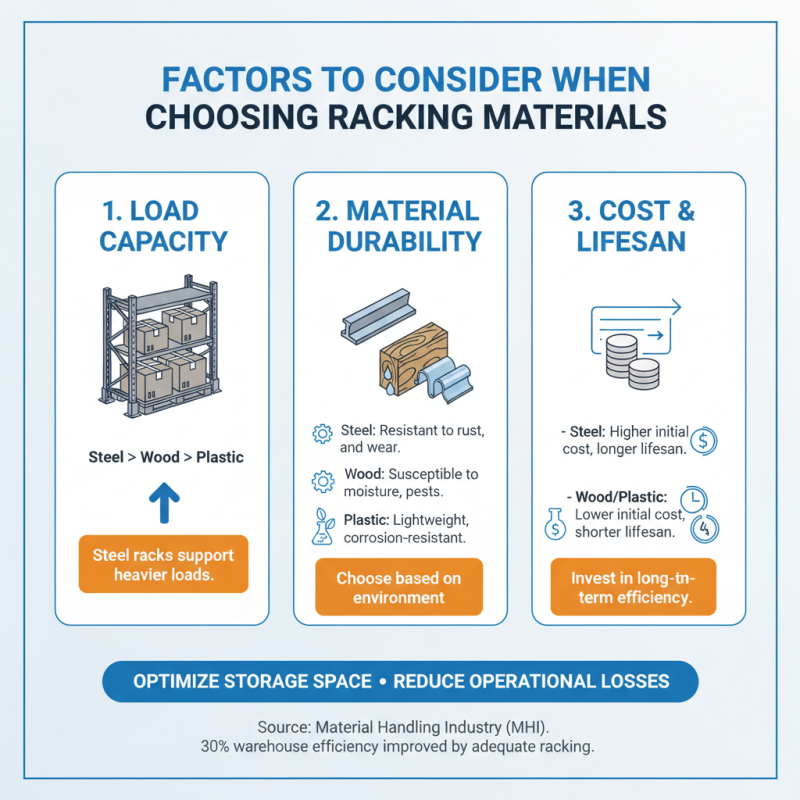
Choosing the right racking materials is essential for optimizing storage space in your business. Several factors determine which materials best fit your needs. Consider load capacity first. Steel racks typically support heavier loads than wood or plastic. According to the Material Handling Industry (MHI), about 30% of warehouse efficiency can be lost by not selecting adequate racking.
Durability plays a crucial role too. Metal racks resist wear and tear better than wood, which can warp over time. However, wood might offer benefits in certain environments, like retail, where aesthetics matter. A balance between functionality and appearance should be maintained. Ageing wood can present safety hazards, and this is often overlooked during the selection process.
Environmental factors also influence material choice. If you're in a humid area, galvanized steel or coated finishes can prevent rust. Hot temperatures can compromise the integrity of some plastics. Regular assessments are necessary to ensure your racking system meets ongoing demands. Realizing that a chosen racking system may not fit future needs is common and requires flexibility in planning and procurement. These details are pivotal in making informed decisions for your storage solutions.
Assessing Space and Layout for Optimal Racking Setup
Assessing your space and layout is crucial for an effective racking setup. According to the 2023 Warehousing and Logistics Report, 35% of warehouses fail to utilize vertical space efficiently. This inefficiency leads to wasted space and higher operational costs. Evaluate the height of your warehouse. Most racking systems can extend to 20 feet, accommodating various storage needs. By maximizing vertical space, businesses can reduce their footprint and increase storage capacity.
Consider your workflow and access requirements. A study from the Material Handling Industry Association indicates that 40% of racking failures occur due to poor layout planning. Identify high-traffic areas and ensure easy access to frequently used items. A well-planned layout enhances productivity. Employees can locate items quicker. Creating clear pathways can minimize bottlenecks during busy hours.
Review your inventory types as well. Some products require climate control or specialized storage. For instance, perishable goods need specific conditions that standard racking may not accommodate. Having the right racking setup is essential for both efficiency and compliance. While it may seem straightforward, many businesses overlook these nuances and end up with systems that do not meet their needs. Regularly reassess your space to avoid these pitfalls.
Budgeting for Purchase and Installation of Racking Systems
Budgeting for the purchase and installation of racking systems is vital for any business. Start by assessing your storage needs. Calculate the amount of inventory you plan to store. Consider the dimensions of your space. This helps determine the type and size of racking system required. It's easy to underestimate costs, so get quotes from multiple suppliers.
Installation costs can vary significantly. They depend on the complexity of the racking system. Are you choosing a simple shelving unit, or a more intricate high-density solution? Factor in the labor costs for installation. Hiring experts might raise your budget but can save time and avoid mistakes. Think ahead: will you need to adjust or expand your racking in the future? Planning for growth can prevent costly changes later.
Finally, consider ongoing expenses. Maintenance is often overlooked. Dust and wear can impact efficiency. Set aside a portion of your budget for repairs and upkeep. Reflect on these factors regularly. Adjusting your budget as needs change will keep your operations smooth and efficient.
How to Choose the Right Commercial Racking for Your Business? - Budgeting for Purchase and Installation of Racking Systems
| Racking Type |
Cost per Unit ($) |
Installation Cost ($) |
Capacity per Bay (lbs) |
Space Efficiency (%) |
| Selective Pallet Racking |
150 |
3000 |
3000 |
80 |
| Drive-In Racking |
200 |
3500 |
4000 |
90 |
| Push Back Racking |
250 |
4000 |
3500 |
85 |
| Cantilever Racking |
300 |
4500 |
5000 |
75 |
| Adjustable Shelving |
100 |
2000 |
1000 |
70 |