
Blog
How to Choose the Right Railway Wagon Adapter?
Choosing the right Railway Wagon Adapter begins with the interface, not the catalogue photograph. A wagon adapter transfers forces between different vehicle systems, so its geometry, load rating, coupling method, and braking compatibility require careful review. A few millimetres can affect alignment, clearance, or wheel-load distribution. Small errors matter.
The UNIFE World Rail Market Study 2024 identifies fleet renewal, digitalisation, and operational efficiency as major rail-sector priorities. The European Union Agency for Railways’ Railway Safety and Interoperability Report 2024 also reinforces the importance of compatible equipment, documented risk control, and dependable maintenance. These findings matter when comparing adapters for standard-gauge wagons, heavy freight vehicles, maintenance equipment, or temporary transfer arrangements. Weight is only one part of the decision. Dynamic loads, corrosion exposure, inspection access, and local operating rules can change the result.
Professor Simon Iwnicki, a recognised railway vehicle-dynamics expert, has stated, “The wheel–rail interface is the most important interface in the railway system.” His observation offers a useful warning: an adapter should support the complete vehicle system, not merely connect two components. This guide examines capacity, dimensional fit, material quality, certification evidence, and supplier support. It also questions a common assumption. Universal may not mean suitable. A polished specification sheet can still hide fatigue risks, unavailable spare parts, or unclear testing records. UIC technical guidance, ERA publications, and manufacturer documentation should be checked together. That process takes longer. It is usually safer.
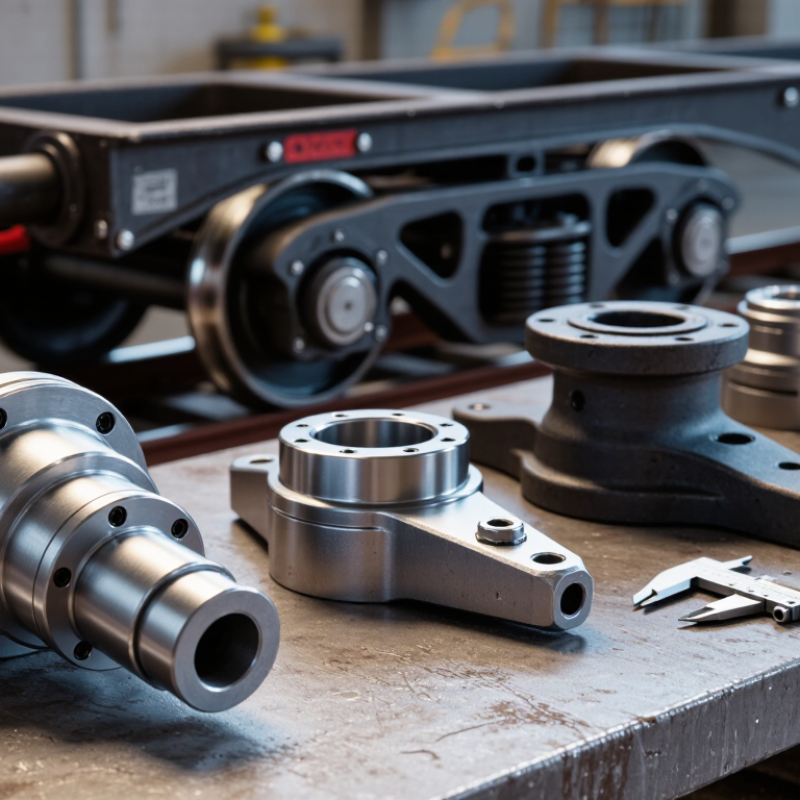
Define the Railway Wagon Adapter’s Purpose and Operating Conditions
How to Choose the Right Railway Wagon Adapter?
Define the Railway Wagon Adapter’s Purpose and Operating Conditions
Start by defining what the adapter must accomplish. Is it transferring load, connecting incompatible interfaces, or supporting a temporary arrangement? Each purpose demands different dimensions, materials, and safety margins. A wagon adapter should match the load path, not merely fit the available space. Check vertical forces, lateral movement, braking effects, and coupling loads. A neat specification can still be wrong.
Study the operating environment before selecting any design. Record the wagon type, maximum load, travel speed, curve radius, and expected service frequency. Consider rain, dust, snow, salt, temperature changes, and corrosion exposure. Inspect clearance around wheels, suspension parts, and brake equipment. The adapter must also tolerate vibration without loosening. In practice, field measurements often reveal problems missing from drawings. That detail matters.
Tips: Create a simple operating profile before comparing options. Include static load, shock load, contact surfaces, inspection access, and replacement intervals. Ask a qualified railway engineer to verify calculations against applicable railway standards and operating procedures. Check the locking method under realistic movement, not only in a workshop. Test fit carefully. Do not ignore awkward maintenance access; technicians may need tools beside the track. I would also review the design after initial service, because early assumptions can prove incomplete. Reliability grows through measured feedback, not confidence alone.
How to Choose the Right Railway Wagon Adapter? - Define the Railway Wagon Adapter’s Purpose and Operating Conditions
| Selection Dimension | Typical Requirement or Condition | Recommended Adapter Characteristics | Why It Matters |
|---|---|---|---|
| Primary purpose | Connecting wagons with different coupler, drawgear, or interface arrangements | Adapter designed specifically for the required mechanical interface and approved operating arrangement | The adapter must transfer tensile, compressive, and impact forces without creating an incompatible connection. |
| Wagon type | Freight wagon, tank wagon, flat wagon, hopper wagon, or service vehicle | Adapter geometry and mounting method matched to the wagon’s underframe, coupler pocket, and end structure | Different wagon structures impose different space, strength, clearance, and load-transfer requirements. |
| Coupler interface | Transition between compatible but different coupler or drawbar systems | Correct pin, lock, knuckle, shank, or drawbar interface; positive locking with visible inspection features | An incorrect interface can prevent full engagement or cause accidental uncoupling. |
| Rated tractive and buff load | Normal service loads plus starting, braking, shunting, and impact loads | Working load and proof-load ratings exceeding the calculated service forces, with documented design margins | The adapter is exposed to both pulling and pushing forces, especially during shunting and train braking. |
| Gross wagon mass | Light service wagons below 60 t; heavy freight wagons up to approximately 100–120 t, depending on the network | Capacity selected from the maximum permitted gross mass, not the average empty or payload mass | Using empty-wagon weight can significantly underestimate the forces transmitted through the adapter. |
| Operating speed | Low-speed yard shunting, typically up to 25 km/h; main-line service commonly up to 80–120 km/h, subject to approval | Adapter dynamically suitable for the intended speed, with secure retention and no interference with running gear | Higher speeds increase vibration, dynamic loads, stability requirements, and consequences of poor fit. |
| Curve radius and route geometry | Sharp yard curves, typically around 75–150 m, or broader main-line curves | Sufficient articulation, lateral clearance, and angular movement for the minimum route radius | An adapter that works on straight track may bind, foul, or overstress components on tight curves. |
| Vertical alignment | Coupler height variation caused by wagon loading, suspension movement, or mixed fleet operation | Correct working height and sufficient vertical articulation; no contact with rails, brake gear, or wagon structure | Poor vertical alignment can increase uncoupling risk and cause uneven force distribution. |
| Temperature range | Outdoor service commonly from approximately −40°C to +50°C, depending on the operating region | Low-temperature-tough steel, suitable seals and lubricants, and verified impact performance for the required climate | Cold temperatures can reduce material toughness and make locking or release mechanisms less reliable. |
| Weather and corrosion exposure | Rain, snow, standing water, salt spray, dust, and de-icing chemicals | Corrosion-resistant coating or treatment, protected moving parts, drainage provisions, and maintainable surfaces | Corrosion can reduce section thickness, restrict movement, and hide fatigue or locking defects. |
| Shock and vibration | Frequent coupling impacts, hump-yard operations, rough track, or irregular shunting | Impact-resistant construction, secure locking, fatigue-resistant details, and inspection points for wear | Repeated impacts can initiate cracks or loosen retaining components even when static loads are acceptable. |
| Brake and electrical compatibility | Wagons requiring air-brake continuity, electrical jumper connections, or other service lines | Clearance for hoses and cables, protected routing, and compatibility with the wagon’s operating connections | A mechanically secure adapter may still be unsuitable if it damages hoses or blocks brake continuity. |
| Clearance envelope | Operation within the applicable loading gauge and vehicle end-clearance limits | Compact profile that remains clear of adjacent vehicles, platforms, track components, and brake equipment | Excessive size can create collision, platform, or infrastructure-clearance hazards. |
| Installation and handling | Manual fitting in a yard or crane-assisted handling in a workshop | Manageable weight, lifting points where required, clear installation instructions, and positive retention after fitting | Simple and controlled installation reduces handling injuries, setup errors, and connection delays. |
| Inspection and maintenance | Routine pre-use checks and periodic detailed inspections | Visible wear limits, accessible locking parts, replaceable wear components, and inspection documentation | Easy inspection helps identify cracks, deformation, excessive wear, corrosion, and incomplete locking. |
| Regulatory and fleet approval | Use across one railway, multiple networks, or international interchange service | Documented compliance with the applicable railway authority, vehicle acceptance rules, and operating procedures | Technical suitability alone does not permit service use without the required operational approval. |