How to Find the Best Pulverizing Bowl in China?
Choosing the best Pulverizing Bowl in China requires more than comparing prices or polished product photos. The bowl directly affects sample contamination, grinding efficiency, particle-size consistency, and laboratory safety. In cement, mining, ceramics, metallurgy, and geological testing, even a thin residue layer can distort the next analysis. That detail matters.
The ASTM C702/C702M standard emphasizes representative sample preparation before testing. ISO/IEC 17025 also requires laboratories to control equipment, methods, and measurement reliability. These requirements make material selection important. Agate offers low contamination for many mineral samples, while tungsten carbide provides stronger wear resistance. Zirconia may suit applications requiring high chemical stability. The correct choice depends on hardness, moisture, target particle size, and analytical method.
Industry data supports this focus on reliable laboratory preparation. MarketsandMarkets’ 2024 Laboratory Automation Market report identifies growing automation demand, including automated sample-handling and preparation workflows. Grand View Research’s laboratory equipment market analysis also points to expanding investment in testing infrastructure across Asia-Pacific. China’s large manufacturing and research base creates many suppliers, but quality remains uneven. Not every catalog specification is independently verified.
Look closely.
A dependable Chinese manufacturer should provide material certificates, dimensional drawings, abrasion information, cleaning guidance, and batch traceability. Ask whether the bowl has been tested with your actual sample type. Check the lid seal, inner-wall finish, fastening system, and replacement-part availability. A low quotation can become expensive after cross-contamination, premature wear, or inconsistent results.
This guide compares these practical factors. It also acknowledges an uncomfortable point: the “best” Pulverizing Bowl is rarely universal. Selection improves when performance data, application experience, and supplier transparency are evaluated together.
What Is a Pulverizing Bowl and What Is It Used For?
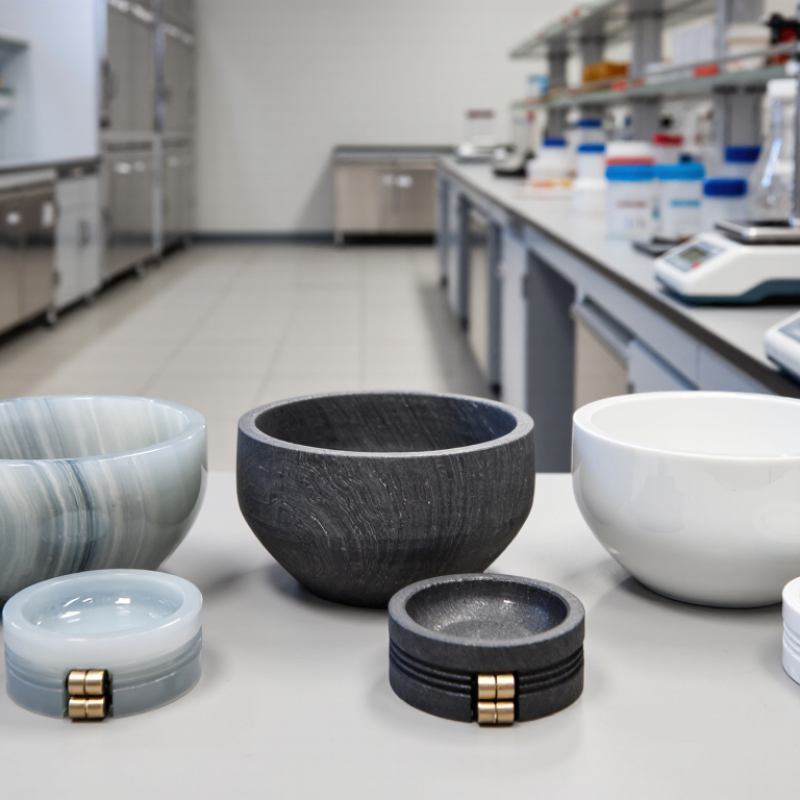
A pulverizing bowl is a rigid vessel designed to crush, grind, and homogenize solid samples. It is commonly paired with a pestle, manual press, or controlled laboratory grinder. The bowl holds material while pressure and friction reduce particles to a workable powder. This matters when testing requires even sampling. Uneven particles can distort moisture, chemical, mineral, or texture results. Common materials include porcelain, ceramic, agate, stainless steel, and hardened alloy. Each option behaves differently.
Pulverizing bowls support food testing, geological examination, cement analysis, and educational experiments. They also help prepare samples before weighing, sieving, or chemical observation. A smooth interior improves cleaning and reduces residue between batches. For heat-sensitive materials, manual grinding may limit temperature rise. However, hand pressure can vary. That weakness deserves attention. A controlled method may produce more consistent results.
When sourcing a bowl in China, verify its material composition, capacity, hardness, wall thickness, and surface finish. Request dimensional drawings and inspection records. A bowl may look smooth but still release unwanted particles. Test a sample with your actual material before placing a large order. Check how easily it cleans and whether the pestle fits comfortably. Price matters, but contamination control and repeatable performance matter more. There is rarely a perfect choice. The best bowl matches the sample, workload, cleaning process, and required accuracy.
How to Find the Best Pulverizing Bowl in China?
What Is a Pulverizing Bowl and What Is It Used For?
A pulverizing bowl is a laboratory vessel used with a pestle or mechanical pulverizer to crush, grind, and homogenize solid samples before analysis. Material selection depends on the required wear resistance, contamination control, impact tolerance, and sample type. The chart compares representative hardness and density values for commonly used bowl materials. Harder materials generally provide better abrasion resistance, while lower-density materials may be preferred when reducing handling weight is important.
Which Pulverizing Bowl Materials and Designs Suit Your Application?
How to Find the Best Pulverizing Bowl in China?
Choosing a pulverizing bowl starts with the sample, not the supplier’s catalogue. In my laboratory experience, agate suits geological powders when trace-metal contamination matters. Tungsten carbide handles hard ores and repeated impact better. Zirconia resists corrosion and offers cleaner preparation for many ceramic or chemical samples. Stainless steel is practical, but it may introduce iron.
Design changes performance. A ring-and-puck bowl supports fast, consistent grinding for routine mineral analysis. A mortar-and-pestle design gives better visual control for small, delicate samples. Deeper bowls reduce material loss during high-speed operation. However, excessive pressure can raise heat and alter moisture-sensitive materials. That detail is often missed.
The U.S. Geological Survey’s Mineral Commodity Summaries 2024 reports about 4.1 billion metric tons of cement production worldwide in 2023. This scale shows why repeatable sample preparation matters in mineral and construction testing. Still, that figure does not prove one bowl is universally better. It only highlights the need for fit-for-purpose equipment. ASTM C136/C136M also emphasizes controlled particle-size analysis, so bowl cleanliness and final fineness should be checked together.
Tips: Match hardness, contamination risk, batch size, and cleaning time before choosing materials. Ask for wear data, inner dimensions, and validated particle-size results. Request a sample test when possible. A shiny bowl can still perform poorly. My own preference is cautious: select the least contaminating material that survives your actual workload, then inspect wear after several cycles.
How to Evaluate Bowl Size, Compatibility, and Grinding Performance
How to Find the Best Pulverizing Bowl in China?
Bowl size should match both sample volume and the pulverizer chamber. A 50–100 mL bowl suits small laboratory batches, while 250 mL models support larger mineral or ceramic samples. Do not judge capacity alone. Leave roughly 20–30% free space for movement and impact. A crowded bowl often produces uneven particles and extra heat. Check the inner diameter, height, lid clearance, and locking position against your existing machine drawings. ISO 13320:2020 recommends controlled particle-size measurement, so ask Chinese suppliers for test results, not only catalog values.
Compatibility also depends on bowl material and operating speed. Tungsten carbide handles hard samples well, while hardened steel may offer lower replacement costs. Ceramic can reduce metallic contamination, but it may chip under severe impact. Ask for hardness data, wall thickness, sealing details, and wear-test records. ASTM C136/C136M can guide sieve-based particle-size checks after grinding. Compare the feed size, target size, cycle time, and noise level using the same sample. Small details matter.
Grinding performance needs evidence. The International Energy Agency’s Energy Efficiency 2024 report attributes about 37% of global final energy use to industry, making efficient size reduction worth measuring. Request energy use per batch and temperature rise. A 10-minute cycle is not automatically better. Some suppliers provide impressive fineness data, but omit moisture, sample hardness, or cleaning time. That gap deserves scrutiny. Test two or three bowls in China before committing to volume purchasing. One practical trial may expose more than a polished specification sheet.
How to Find the Best Pulverizing Bowl in China? - How to Evaluate Bowl Size, Compatibility, and Grinding Performance
| Bowl Material | Typical Internal Volume | Recommended Sample Load | Typical Particle-Size Range | Common Sample Types | Compatibility Considerations | Grinding Performance | Main Limitation |
| Agate | 50–500 mL | 10–150 g | Approximately 10–100 µm | Geological samples, ceramics, glass, pigments | Requires a mill with the same bowl diameter, height, locking method, and drive adapter | Very low metallic contamination; suitable for moderate grinding forces | Brittle and less suitable for hard, coarse feed materials or high-impact operation |
| Alumina Ceramic | 50–1,000 mL | 10–300 g | Approximately 5–100 µm | Minerals, oxide powders, ceramics, cement materials | Check the holder dimensions and the machine’s maximum operating mass | High hardness and good wear resistance for routine pulverizing | May introduce ceramic wear particles during prolonged high-energy grinding |
| Zirconia | 50–500 mL | 10–150 g | Approximately 1–50 µm | Electronic materials, pharmaceuticals, pigments, high-purity powders | Confirm bowl-seat geometry, clamping pressure, and counterweight requirements | High density improves impact energy and supports fine, uniform grinding | Higher purchase cost; excessive impact can increase media and bowl wear |
| Stainless Steel | 50–2,000 mL | 20–600 g | Approximately 20–200 µm | Soil, food ingredients, polymers, non-sensitive minerals | Verify corrosion resistance, bowl-wall thickness, and clamp clearance | Strong, durable, and suitable for general-purpose high-throughput grinding | May add iron, chromium, or nickel contamination to sensitive samples |
| Tungsten Carbide | 25–500 mL | 5–150 g | Approximately 1–50 µm | Hard ores, cement clinker, sintered materials, metallic powders | Needs a drive system and holder rated for high bowl weight and impact forces | Excellent resistance to abrasion and highly effective for very hard samples | Heavy and expensive; can cause tungsten or cobalt contamination |
| Polymer-Lined Bowl | 50–1,000 mL | 10–250 g | Approximately 20–300 µm | Soft minerals, plastics, biological materials, moisture-sensitive samples | Check maximum temperature, chemical resistance, and liner attachment method | Low noise and reduced metal contamination for softer materials | Lower wear and heat resistance; not recommended for highly abrasive feed |
Evaluation note: Actual capacity and final particle size depend on feed size, sample hardness, moisture, grinding time, grinding media, operating speed, and the pulverizing mill configuration. Confirm the bowl’s external dimensions, locking interface, maximum load, and operating speed before purchase.
How to Compare Chinese Manufacturers and Product Quality
How to Find the Best Pulverizing Bowl in China?
How to Compare Chinese Manufacturers and Product Quality
Comparing Chinese manufacturers requires more than checking catalog photos and the lowest quotation. Ask about bowl material, hardness, capacity, dimensions, and compatibility with your pulverizing equipment. A reliable supplier should provide clear technical drawings and material certificates. Check whether the contact surfaces are smooth, evenly finished, and free from visible cracks. Small defects can affect sample preparation and shorten service life.
Request a production sample before placing a large order. Measure its wall thickness with calipers and inspect the lid fit on your equipment. Ask how the manufacturer controls machining, heat treatment, cleaning, and final inspection. Useful records include batch numbers, inspection reports, and dimensional tolerances. An experienced manufacturer can explain these details without vague promises. Communication matters too. Slow or unclear answers may create costly misunderstandings later.
Do not trust appearance alone.
In practical testing, compare weight consistency, lid sealing, wear after repeated use, and cleaning time. If possible, use the same material and operating conditions for every sample. An independent inspection can confirm the supplier’s claims before shipment. However, even a careful process has limits. One test may not represent long-term performance, and laboratory conditions differ from factory conditions. I would also review packaging quality, replacement support, and delivery records. A strong manufacturer is not always the cheapest, but its evidence should be easy to verify.
