China Top 10 Exhaust End Pipe Manufacturers
China’s exhaust-parts sector serves vehicle brands, distributors, repair networks, and aftermarket buyers. This guide introduces ten Chinese manufacturers associated with Exhaust End Pipe production and explains what buyers should compare before requesting a quote. The list is a starting point, not a universal ranking; company capabilities and product ranges can change.
A suitable supplier should match the required vehicle fitment, outlet diameter, shape, finish, and production volume. Ask about material options, wall thickness, forming methods, welding quality, and corrosion-resistant finishing. Details matter. A polished sample can look convincing, yet still differ from the production batch. Request drawings, a representative sample, and documented inspection procedures where appropriate.
Manufacturer profiles should be assessed using verifiable information, including product catalogs, factory capabilities, quality-control processes, export experience, and customer references. Buyers may also confirm relevant certifications directly with the supplier and check whether those documents cover the specific facility and product. Compare lead times, minimum order quantities, packaging, and after-sales support—not price alone. A low quotation can exclude tooling, testing, or shipping costs.
There is no single best choice for every project. A supplier focused on custom fabrication may not suit a high-volume replacement program. Likewise, online claims do not replace sample testing or direct technical discussion. Use the following overview to shortlist candidates, then confirm specifications and commercial terms before placing an order. Verification takes effort. It can prevent avoidable fitment and consistency problems.
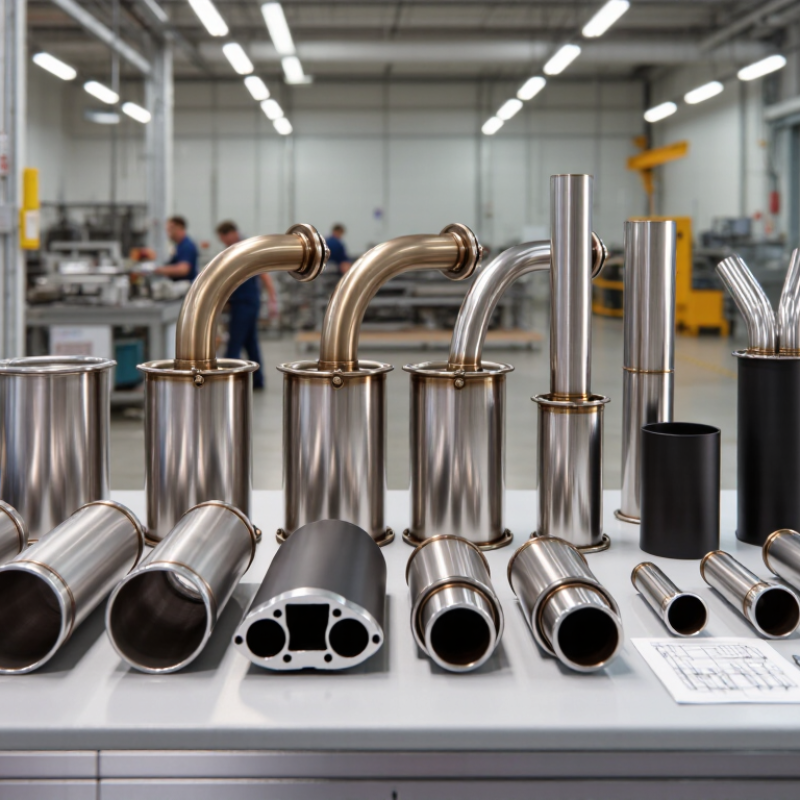
Exhaust End Pipes Defined: Tailpipe Types, Functions, and Vehicle Fitment
An exhaust end pipe is the visible outlet at the rear of a vehicle. It carries exhaust gases away from the body and shapes the system’s final appearance. Common styles include single, dual, rolled-edge, and angled-cut outlets. The outlet itself does not replace the catalytic converter or muffler. A polished tip may change the look, but usually does not create a meaningful power gain.
Fitment depends on more than appearance. Check inlet diameter, overall length, outlet direction, and clearance from the bumper, axle, and heat-sensitive trim. OICA recorded about 93.5 million motor vehicles produced worldwide in 2023, illustrating the broad range of vehicle layouts that replacement parts must accommodate. This production figure is not a tailpipe-market estimate, but it helps explain why “universal fit” can be imperfect. Small measurement errors matter.
Tips: Measure the existing pipe’s outside diameter and note how it attaches before ordering. Compare the new outlet’s position with the bumper opening. After installation, check that it feels secure and does not touch surrounding panels. A neat finish is useful; a tight clearance is not.
Exhaust End Pipes: Outlet Types, Functions & Typical Fitment
A comparison of common tailpipe outlet layouts by visible outlet count.
Single outlets are common across passenger cars and many SUVs; dual outlets appear on some performance vehicles and trucks; quad outlets are often used on performance-oriented models. Tailpipes route exhaust away from the vehicle and shape its visible exit. Outlet count alone does not indicate engine output, and exact fitment depends on vehicle year, make, model, exhaust routing, and bumper clearance.
Materials Compared: Type 409 Stainless Steel at ~11% Chromium vs. 304 at ~18% Chromium
For exhaust end pipes, the chromium difference affects durability, appearance, and cost. Type 409 stainless steel contains about 11% chromium and is commonly used in exhaust systems. It handles heat and routine service well, though its surface may develop a light brown discoloration or surface rust, especially where road salt and moisture collect. That difference matters. Inspect the seam near the outlet, where trapped water can expose weaknesses sooner.
Type 304 contains roughly 18% chromium and generally resists corrosion better, making it a practical choice for vehicles regularly exposed to wet roads or coastal air. It often keeps a cleaner finish, but usually costs more; the upgrade may not pay off on a lightly used vehicle stored indoors. Not always. Chromium percentage alone does not predict service life: wall thickness, weld quality, drainage, and installation all matter.
When comparing parts, check material documentation and examine the cut edge and welds, not just the polished outside. A buyer can overvalue the number on a specification sheet; real-world exposure is less tidy than a lab comparison.
China’s 2023 Vehicle Output of 30.16 Million and Its Exhaust-Part Supply Chain
China produced 30.16 million vehicles in 2023, according to the China Association of Automobile Manufacturers. That volume supports a broad exhaust-parts supply chain, from steel processing and tube forming to surface finishing and final assembly. For exhaust end pipe manufacturers, steady access to metal, tooling, and nearby vehicle plants can help shorten production cycles.
But vehicle output does not translate directly into end-pipe demand. Different models use different exhaust layouts, and replacement needs follow separate patterns. Suppliers must manage varied dimensions, wall thicknesses, corrosion resistance, and finishing requirements. A useful quality check may include fitment trials and inspection of welded seams, not just a polished exterior. Small defects can become visible after installation.
Regional clusters can make coordination easier. A factory close to component makers may receive formed tubing quickly and adjust orders with less delay. Still, scale isn’t everything. Buyers should examine production capacity, inspection procedures, material traceability, and delivery consistency. Public production figures describe the market, not any one supplier’s performance. That distinction matters. With demand shifting across vehicle types, even experienced manufacturers may need to revise forecasts and keep some assumptions open to review.
China Top 10 Exhaust End Pipe Manufacturers - China’s 2023 Vehicle Output of 30.16 Million and Its Exhaust-Part Supply Chain | No. | Market Indicator | 2023 Data | Relevance to the Exhaust-Part Supply Chain |
| 1 | Total vehicle production in China | 30.16 million units | Provides the overall scale of China’s vehicle manufacturing market and its automotive component supply chain. |
| 2 | Total vehicle sales in China | 30.09 million units | Indicates the size of the domestic market served by vehicle manufacturers and component suppliers. |
| 3 | Passenger vehicle production | 26.12 million units | Passenger vehicles accounted for most vehicle output and represent a major application area for exhaust assemblies on vehicles with combustion engines. |
| 4 | Commercial vehicle production | 4.04 million units | Commercial vehicles use exhaust components designed for their vehicle class, operating conditions, and applicable emissions requirements. |
| 5 | New energy vehicle production | 9.59 million units | This category includes battery electric, plug-in hybrid, and fuel-cell vehicles; battery electric vehicles do not use a conventional tailpipe exhaust system. |
| 6 | New energy vehicle sales | 9.50 million units | Electrification changes the mix of demand: battery electric vehicles have no tailpipe exhaust, while plug-in hybrids retain an internal-combustion engine and exhaust system. |
| 7 | Vehicle exports | 4.91 million units | Export-oriented production requires component sourcing and specifications compatible with the destination vehicle design and market requirements. |
| 8 | Common exhaust-system functions | Gas routing, noise attenuation, heat management, and emissions-control support | An exhaust end pipe is the visible outlet component; it connects with the broader exhaust layout and must suit the vehicle’s packaging and operating conditions. |
| 9 | Common end-pipe material considerations | Corrosion resistance, heat resistance, formability, and finish | Material selection depends on the application, cost, appearance, durability targets, and the conditions the component is designed to withstand. |
| 10 | Typical supply-chain stages | Material processing, tube forming, cutting, joining, surface finishing, inspection, and delivery | These stages describe common manufacturing activities for exhaust components; the exact process varies by design and production requirements. |
| Data note: Vehicle figures are rounded from 2023 industry totals reported by the China Association of Automobile Manufacturers (CAAM). This table presents market and supply-chain context, not a ranked list of manufacturers: comparable, verifiable public data for ranking individual exhaust end-pipe manufacturers is not provided here. |
Supplier Evaluation: Material Certification, IATF 16949, Lead Time, and Export Support
When comparing China’s top 10 exhaust end pipe manufacturers, look beyond polished catalogs. Ask for material certificates that identify the stainless-steel grade, thickness, and batch. Then check whether incoming material records can be traced to finished parts. A certificate without traceability is less useful. Request a sample and inspect weld consistency, edge finishing, and fit against your vehicle drawings.
IATF 16949 certification can indicate structured automotive quality processes, but it is not a guarantee of flawless production. Verify the certificate’s validity and confirm it covers the manufacturing site making your parts. Ask how the supplier handles dimensional checks, nonconforming products, and corrective actions. Specific answers matter. Vague assurances should prompt follow-up.
Lead times need detail. Separate sample approval, tooling, production, and shipping estimates, and ask what could delay each stage. Capacity may change during busy periods, so a spreadsheet alone can create false confidence. Export support also deserves a practical check: confirm packaging protects polished surfaces, documents match the shipment, and staff can communicate clearly about delivery changes. Test this early. A small trial order may reveal gaps that a video call cannot.
