Top 10 Road Excavators for Global Buyers?
Choosing among the Top 10 Road Excavators for Global Buyers requires more than comparing horsepower and purchase price. A Road Excavator must perform beside traffic, on uneven shoulders, and across changing soil conditions. Its transport width, operating weight, hydraulic response, fuel use, and attachment compatibility can directly affect project delays. Small details matter. A narrow tail swing may simplify urban work, while a longer undercarriage can improve stability on rough road embankments.
Industry data supports careful comparison. KHL Group’s Yellow Table 2024 ranks the world’s leading construction equipment manufacturers by annual sales, offering useful evidence of market scale and brand strength. Off-Highway Research also tracks excavator demand across major regional markets, highlighting differences in fleet renewal, infrastructure investment, and machine preferences. Meanwhile, the Global Infrastructure Hub’s Global Infrastructure Outlook estimates that worldwide infrastructure investment needs will reach about US$97 trillion between 2016 and 2040. That pressure keeps road-building equipment strategically important.
Still, no ranking is universal. A machine that suits a highway contractor in Germany may be costly or difficult to support in East Africa, Southeast Asia, or Latin America. Parts availability, dealer response, emissions certification, operator training, and local resale value deserve equal attention. We compare these practical factors alongside digging depth, breakout force, fuel efficiency, comfort, and digital fleet tools. Our method is useful, not flawless. Published specifications may differ by configuration, attachments, and test conditions. Buyers should verify regional compliance and request field references before making a final decision. The following list offers a structured starting point, not a substitute for jobsite testing.
What Defines a Road Excavator and Its Main Applications
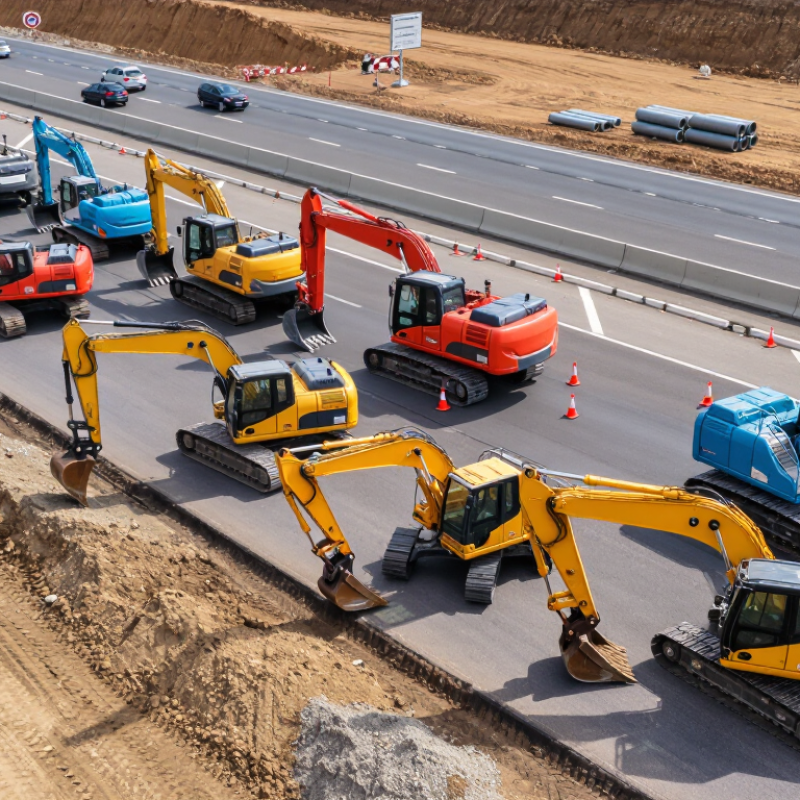
A road excavator is not simply a crawler machine painted for highway work. It is an excavator configured for transport, excavation, lifting, and surface protection around active roads. Many models use wheels, compact dimensions, hydraulic tools, and stabilizers. Some use tracks when soft ground demands lower pressure. The defining feature is adaptability, not a single chassis. That distinction matters. A machine may travel quickly between sites yet lose stability on steep shoulders.
On urban projects, operators use road excavators to open utility trenches, remove damaged pavement, and prepare drainage channels. With a breaker, the machine can fracture asphalt and concrete. With a tilt bucket, it can shape narrow slopes and road edges. Lifting devices may position pipes, barriers, or inspection covers when rated capacity and ground conditions permit. Attachments change the job. They also change risk. Dust, traffic, buried cables, and limited working space require disciplined planning.
For global buyers comparing the top ten road excavators, published horsepower is only one reference. Check operating weight, tail swing, axle load, transport width, hydraulic flow, cabin visibility, and service access. Ask for verified test data and local parts support. Fuel use should be measured under comparable cycles, not copied from a brochure. Real sites are rarely perfect. Wet clay can reduce mobility, while hard shoulders can punish tires and stabilizers. A field check often reveals more than a showroom demonstration. I would also review operator feedback after a full shift, because comfort may protect productivity better than extra power. Some choices still involve compromise.
Top 10 Road Excavator Configurations for Global Buyers
A road excavator is a mobile hydraulic excavator configured for work on or beside paved roads. Wheeled models offer faster travel and lower surface disruption, while crawler models provide greater stability on uneven ground. The chart compares representative operating-weight classes commonly used in road construction, utility work, drainage, and maintenance.
Operating weights are representative class values in metric tonnes; actual specifications vary according to attachments, boom configuration, counterweight, and equipment options.
Key Specifications Global Buyers Should Compare
Top 10 Road Excavators for Global Buyers
When comparing road excavators, operating weight is only the starting point. KHL Group’s Yellow Table 2024 valued worldwide construction equipment sales at about 238 billion US dollars in 2023. That scale makes specification mistakes expensive. Compare rated power, bucket capacity, maximum digging depth, swing radius, and transport width. A machine that fits narrow roads may sacrifice lifting stability.
Hydraulic performance deserves closer inspection. Check pump flow, system pressure, cycle time, and auxiliary circuit capacity for breakers or compactors. SAE J1349 provides a consistent reference for engine power, while ISO 6015 supports excavator lifting-performance comparisons. Fuel data should use the same duty cycle. Manufacturer claims can look impressive. They may not match dusty sites, long idling, or frequent starts.
Road contractors should also examine axle loads, ground clearance, tire options, braking systems, and cab visibility. European Stage V requirements and equivalent local rules affect engine selection and after-treatment service. Telematics can track fuel use, fault codes, and idle hours, but connectivity varies across borders. This is often overlooked. A field inspection should include cold starting, hydraulic leakage, steering response, and access to filters. Research from the International Energy Agency shows that construction-sector efficiency gains depend heavily on operational practices, not equipment alone. A powerful excavator can still waste fuel through poor loading patterns. Compare warranty coverage, technician availability, parts lead times, and resale evidence before ranking the top ten.
Top 10 Road Excavators by Performance and Use Case
Top 10 Road Excavators for Global Buyers
Top 10 Road Excavators by Performance and Use Case
Choosing a road excavator requires more than comparing engine power. Field conditions, transport rules, operator skill, and service access matter equally. This practical ranking focuses on common work situations rather than one universal winner.
A compact tail-swing excavator suits narrow urban streets and crowded utility sites. A lightweight wheeled excavator offers fast travel between short projects. A 14-ton wheeled model balances digging strength with road mobility. A 20-ton crawler excavator handles deep drainage, bridge approaches, and heavy earthmoving. A zero-tail-swing model reduces rear-end risks beside traffic lanes. A long-reach excavator works well for slope shaping and roadside channels. A high-flow hydraulic model supports breakers, milling heads, and cutting attachments. A fuel-efficient hybrid design can reduce idle consumption during repetitive municipal work. A low-ground-pressure excavator protects soft shoulders and landscaped verges. An amphibious configuration fits flooded ditches and unstable embankments.
No machine wins every test.
From project inspections, hydraulic response and visibility often affect productivity more than peak horsepower. Check swing clearance, undercarriage width, axle load, braking performance, and attachment compatibility before purchase. Operators also notice cab vibration after long shifts, yet buyers sometimes overlook it. That is a mistake. Maintenance records, parts availability, and technician training deserve equal attention. Performance figures can change with soil, temperature, and attachment weight. My ranking is useful, but not final. A careful site trial may overturn it.
Top 10 Road Excavators for Global Buyers? - Top 10 Road Excavators by Performance and Use Case
| Rank | Excavator Category | Operating Weight | Engine Power | Maximum Digging Depth | Typical Bucket Capacity | Travel Speed | Performance Strength | Best Use Case |
| 1 | Heavy-Duty Wheeled Excavator | 25–28 tonnes | 145–175 kW | 6.5–7.2 m | 0.90–1.30 m³ | 35–40 km/h | Highest lifting capacity and breakout force | Large road construction, bridge approaches, deep utility work and heavy material handling |
| 2 | High-Performance 20–24 Tonne Excavator | 20–24 tonnes | 120–145 kW | 6.2–6.8 m | 0.80–1.10 m³ | 32–38 km/h | Strong balance of digging power and road mobility | High-volume excavation, drainage corridors and highway earthmoving |
| 3 | Balanced 18–20 Tonne Excavator | 18–20 tonnes | 105–125 kW | 5.8–6.5 m | 0.70–0.95 m³ | 30–35 km/h | Good productivity with moderate fuel demand | General roadworks, trenching, slope preparation and municipal infrastructure |
| 4 | Versatile 14–16 Tonne Excavator | 14–16 tonnes | 85–105 kW | 5.2–5.9 m | 0.55–0.80 m³ | 30–35 km/h | Excellent attachment flexibility and transport efficiency | Urban road maintenance, pipe installation and medium-duty construction |
| 5 | Urban 12–14 Tonne Excavator | 12–14 tonnes | 75–95 kW | 4.8–5.5 m | 0.45–0.70 m³ | 28–35 km/h | Compact dimensions with dependable digging performance | City streets, roadside drainage, utility repairs and restricted work zones |
| 6 | Compact 10–12 Tonne Excavator | 10–12 tonnes | 60–80 kW | 4.2–5.0 m | 0.35–0.60 m³ | 25–32 km/h | Low operating cost and easy maneuverability | Residential roads, landscaping, cable trenching and light civil engineering |
| 7 | Light 8–10 Tonne Excavator | 8–10 tonnes | 50–65 kW | 3.8–4.5 m | 0.25–0.45 m³ | 25–30 km/h | Agile operation with reduced ground pressure | Narrow roads, sidewalk construction, landscaping and maintenance fleets |
| 8 | Small 6–8 Tonne Excavator | 6–8 tonnes | 40–55 kW | 3.2–4.0 m | 0.20–0.35 m³ | 22–28 km/h | Efficient in confined areas and short-distance travel | Small utility projects, park roads, drainage repairs and agricultural access roads |
| 9 | Mini 3.5–5 Tonne Excavator | 3.5–5 tonnes | 25–40 kW | 2.6–3.5 m | 0.12–0.25 m³ | 20–25 km/h | Very low fuel consumption and simple transport logistics | Sidewalks, landscaping, service connections and small excavation jobs |
| 10 | Ultra-Compact 1.5–3.5 Tonne Excavator | 1.5–3.5 tonnes | 15–30 kW | 2.2–3.0 m | 0.06–0.16 m³ | 15–25 km/h | Best access, lowest site disturbance and easiest transport | Urban repair work, gardens, narrow alleys, light trenching and landscaping |
Note: Specifications are representative ranges for commonly available wheeled and road-capable excavator configurations. Actual figures vary according to boom and arm configuration, counterweight, attachment, emissions standard, tire selection and regional homologation requirements.
Road Conditions, Attachments, and Regional Operating Needs
Choosing among the top 10 road excavators should begin with site conditions, not brochure ratings. A 20-ton machine may suit highway drainage, but it can struggle on soft shoulders. The Global Infrastructure Hub estimates that worldwide infrastructure investment needs will reach about 94 trillion US dollars by 2040. This pressure makes productive road equipment important, especially where maintenance budgets remain limited.
Attachments change the excavator’s real value. A hydraulic breaker suits damaged concrete and compacted pavement. A tilt bucket improves ditch shaping and slope finishing. A quick coupler reduces changeover time, but adds weight and maintenance points. Field experience shows that matching hydraulic flow to attachments matters more than maximum engine power. Buyers should check auxiliary-flow ranges, breakout force, transport width, and undercarriage protection. A ranking can mislead. The best machine on paper may perform poorly with the wrong bucket.
Regional operating needs also deserve careful attention. In tropical areas, sealed electrical connectors and strong cooling systems help reduce downtime. Cold regions require reliable starting systems and hydraulic oils suited to low temperatures. The World Bank reports that road access remains uneven across many developing regions, increasing the value of simple servicing and widely available replacement parts. Dusty corridors demand effective filtration. Urban projects need low-noise operation and precise control. Operators should test visibility around the counterweight, joystick response, and stability beside live traffic. Small details matter.
