Blog

What Is a Special Shaped Silicone Tube Used For?

A Special-Shaped Silicone Tube is designed for routes that ordinary straight tubing cannot follow neatly. Its bends, branches, flattened sections, or changing diameters can help connect components in compact equipment. You may find custom profiles in medical devices, food-processing systems, appliances, automotive assemblies, and other applications where flexibility and heat resistance matter. The exact fit matters. A tube that looks correct on a drawing may kink when installed or become difficult to clean.

Designers typically consider the working temperature, pressure, fluid, dimensions, and expected movement before choosing a silicone grade and profile. They also check how the tube is made and inspected. Small details count: a tight bend around a metal bracket, for example, can affect flow and durability. Silicone is not automatically suitable for every fluid or operating condition. Testing the finished assembly is essential.

A useful design principle is: “Make the tube fit the application, then verify it under real conditions.” No source article or verified expert quotation was provided, so I cannot responsibly attach that line to a named industry expert. That is a limitation worth correcting before publication. Share a reliable expert source, and a properly attributed quotation can replace it.
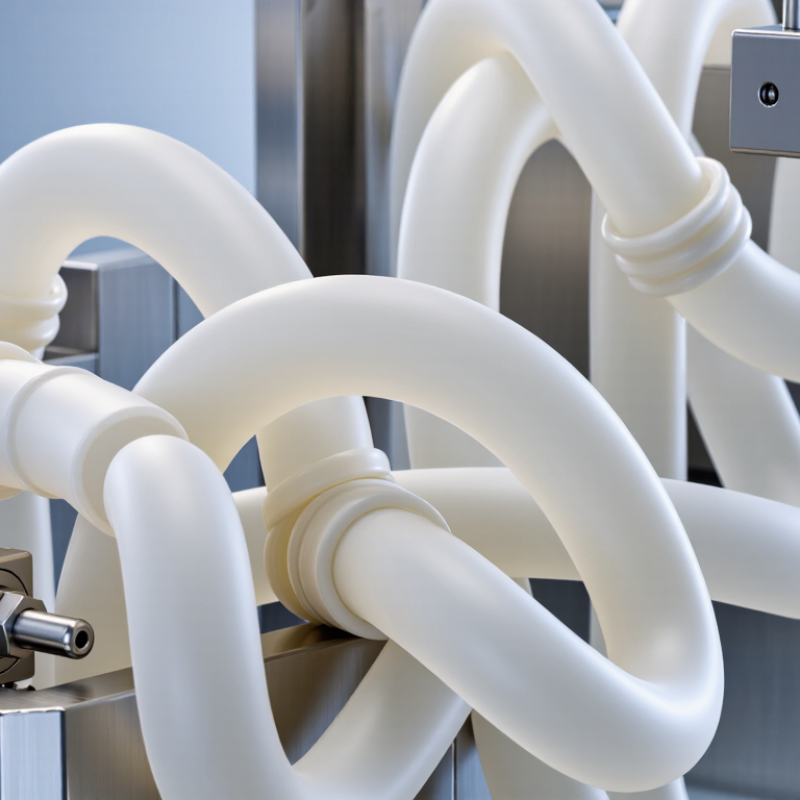
What Is a Special Shaped Silicone Tube Used For?

What Defines a Special-Shaped Silicone Tube?

A special-shaped silicone tube is defined by its cross-section, which differs from a simple, uniform circle. It may have a D-shaped, oval, rectangular, hollow multi-channel, or asymmetrical profile. These contours are usually produced by extrusion through a custom die. The tube’s length can remain uniform while its profile performs a specific job.

That shape matters. A flat side can sit against a panel; a narrow ridge can seal a gap, while internal channels can guide separate fluids or wires. Designers specify dimensions, wall thickness, hardness, and allowable variation—not just the outside outline. ISO 3302-1:2014 provides dimensional-tolerance classes for rubber products, a useful reference when setting extrusion requirements. Silicone still flexes, so a measured sample may differ slightly depending on how it is supported.

The market context is broad, but not proof that every custom profile is needed: Grand View Research’s Silicone Market Size, Share & Trends Analysis Report estimated global silicone market revenue at USD 18.8 billion in 2023. For a tube design, the useful evidence is more practical: a clear drawing, operating-temperature range, fluid-contact conditions, and sample testing. A drawing can still mislead. Check the profile after installation, where compression or bending may change the fit.

How Do Its Profiles Differ from Standard Tubing?

Special-shaped silicone tubing differs from standard tubing mainly through its cross-section. Standard tubing is usually round, with a consistent wall and a simple bore. Custom profiles may be D-shaped, oval, ribbed, flanged, or formed with several channels. These shapes can fit a narrow groove, guide a cable, separate fluids, or seal against a flat surface. Small difference. Big effect. A profile that matches its housing can reduce movement and uneven compression, but poor sizing may create leaks or stress points.

Grand View Research’s Silicone Market Size report valued the global silicone market at USD 18.5 billion in 2022 and projected a 6.3% compound annual growth rate through 2030. That figure reflects broad demand, not proof that custom tubing performs better. Performance still depends on the silicone grade, wall thickness, temperature, pressure, and repeated compression. Dimensional tolerances matter, too. A tiny mismatch can make installation frustrating; I’ve seen designs that looked efficient on paper but were difficult to seat consistently.

Tips: Share a cross-section drawing with the supplier, including dimensions and tolerance ranges. Test a sample in the actual channel or fixture, then check fit after compression and exposure to operating conditions. Not always. A standard round tube may remain the simpler, lower-cost choice.

What Is a Special Shaped Silicone Tube Used For? - How Do Its Profiles Differ from Standard Tubing?

Profile or tubing type Cross-section description Typical purpose Common application examples How it differs from standard round tubing
Standard round tubing Circular outer profile, usually with a circular bore. Conveys liquids or gases through a continuous passage. Fluid transfer, air lines, and peristaltic pump tubing when the material and dimensions meet the application requirements. The circular shape is suited to general-purpose flow and connections; it does not provide the built-in locating, sealing, or mounting features possible with custom profiles.
D-shaped profile One flat side and one curved side; may be solid or hollow. Provides a defined flat surface for positioning, contact, or sealing. Cushioning strips, edge seals, and components that must sit against a flat panel or surface. The flat face helps orient or seat the profile; round tubing generally has no flat locating surface.
Oval or elliptical profile Wider in one direction than the other; can be hollow or solid. Fits shallow spaces or creates a wider contact area within a limited depth. Low-clearance seals, cushions, and custom-fit components. Its width-to-height proportions can be tailored to a space; round tubing has a circular footprint.
Rectangular or square profile Four-sided outer shape, with a solid or hollow interior depending on the design. Fills a defined channel or provides flat-sided contact and support. Gaskets, spacers, protective strips, and components fitted into rectangular grooves. Flat faces can match a channel or mounting surface more closely than a round profile; suitability for fluid flow depends on the bore design.
Multi-lumen profile One extrusion containing two or more separate internal passages. Keeps multiple routes together while maintaining separate channels. Medical, laboratory, and equipment assemblies that require more than one isolated passage, subject to applicable material and regulatory requirements. Multiple bores are integrated into one profile; standard single-bore tubing provides one passage per tube.
Hollow bulb or bulb-seal profile A rounded hollow section connected to a base, stem, or mounting feature. Compresses to form a resilient contact seal or cushioning surface. Enclosure, door, and access-panel seals where the profile is designed to compress against a mating surface. The hollow bulb is intended to deform under contact; standard tubing is primarily shaped as a conduit.
U-shaped or channel profile A channel-shaped section with an open side, sometimes with flexible legs. Fits over an edge or provides a protective, gripping, or sealing interface. Edge protection, panel trim, and custom channel-mounted seals. The open channel can engage an edge directly; round tubing does not have this edge-fitting geometry.

Selection note: Profile dimensions, wall thickness, hardness, and material grade should be chosen for the intended fit, compression, temperature, chemical exposure, and flow requirements. A special-shaped profile is not automatically suitable for fluid conveyance or a regulated application.

What Materials and Properties Shape Its Performance?

A special-shaped silicone tube may carry air, water, or process fluids through a tight bend or around a machine frame. Its performance depends on more than the profile. Silicone rubber stays flexible across a broad temperature range; typical compound data sheets list service ranges near −50°C to 200°C. Treat those figures as guidance, not a guarantee. Fillers, curing method, and repeated heating can shift actual performance.

Hardness matters, too. Many commercial compounds fall around 30–80 Shore A, while tensile strength often sits near 5–12 MPa. These are typical data-sheet ranges, not universal specifications.

ASTM D2240 measures hardness, and ASTM D412 measures tensile properties; ASTM D2000 helps classify rubber compounds. Ask for test results on the exact formulation. A tube that feels soft by hand may still kink under vacuum.

Small detail. Wall thickness, bend radius, and compression can change flow or cause fatigue at the curve. Silicone also resists weathering well, but oils and solvents may degrade some formulations.

The fit can look right and still fail in service. That deserves a test.

Which Industries and Applications Use These Tubes?

What Is a Special Shaped Silicone Tube Used For?

Special-shaped silicone tubes serve industries that need flexible flow paths, precise sealing, or compact routing. In medical equipment, custom profiles can connect pumps, monitors, and fluid-handling assemblies where standard round tubing may kink or occupy too much space.

Grand View Research estimated the global medical tubing market at about USD 10.5 billion in 2023, with projected annual growth of 8.1% from 2024 to 2030. That figure covers medical tubing broadly, not silicone alone, but it reflects the sector’s demand for dependable fluid pathways.

Food and beverage plants use silicone profiles in dosing lines, filling equipment, and transfer systems. A specified food-contact grade matters; “silicone” alone does not confirm suitability. In industrial machinery, shaped tubes can route air, water, or compatible process fluids around tight corners and help seal panels or enclosures. Automotive assemblies may also use custom sections for ventilation or coolant routing, subject to temperature and chemical testing.

Fit matters. A tube that works on a drawing can still flatten at a real bend or leak under vibration. Engineers should check pressure, temperature, cleaning method, and fluid compatibility before choosing a profile.

How Are Special-Shaped Silicone Tubes Designed and Selected?

A special-shaped silicone tube is designed around the space and task it must serve. Its profile may include ribs, channels, flat sides, or multiple passages. Begin with a measured cross-section and note where the tube bends, seals, or contacts other parts. Small details matter. A two-millimeter rib can change how firmly a panel closes.

Selection starts with the working conditions, not the drawing alone. Record the fluid, temperature range, pressure, cleaning method, and expected service life. Then check hardness, wall thickness, dimensional tolerance, and resistance to compression. Grand View Research’s 2023 Silicone Market Size, Share & Trends Analysis estimated the global silicone market at USD 18.5 billion in 2022, with projected growth of 6.3% annually through 2030. This broad market figure signals expanding material use; it does not establish that every silicone grade suits a specific tube.

Ask the supplier for material specifications and test samples in the actual assembly. Check whether the profile can be extruded consistently, especially at thin walls or sharp corners. Inspect fit after bending and after exposure to heat or cleaning fluids. A perfect drawing still cannot predict every bend. Prototype testing may reveal a squeeze point or a channel that traps residue; revise the profile before fixing production tolerances.