Why Is Thermal Break Important for Global Buyers?
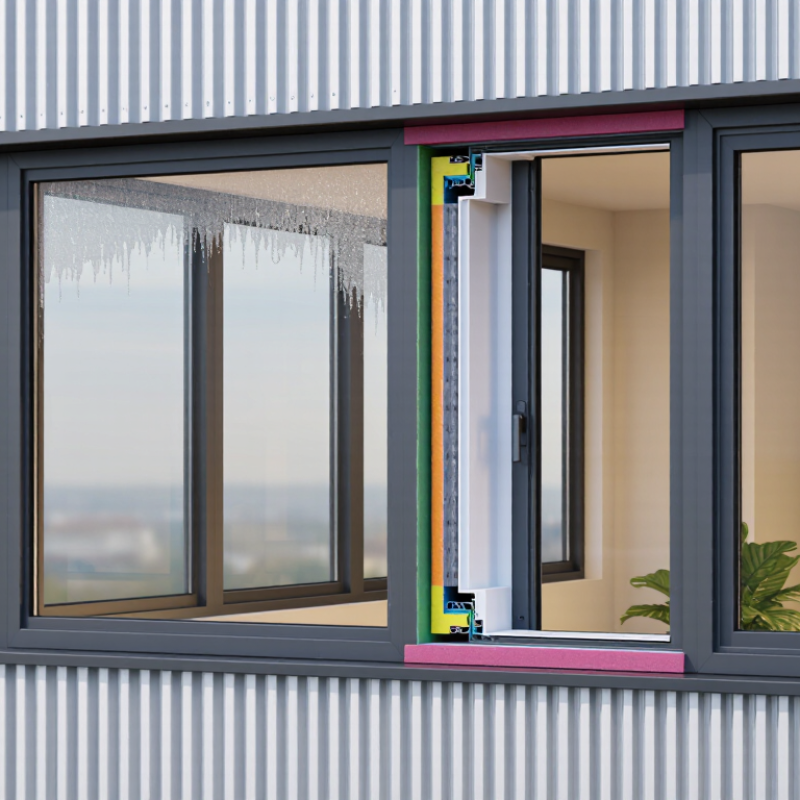
For global buyers, Thermal Break technology is more than a specification on a product sheet. It can influence indoor comfort, energy use, condensation risk, and long-term building performance. In aluminium windows, doors, and curtain wall systems, a thermal break separates the exterior metal from the interior frame. This reduces direct heat transfer through the material.
The difference becomes visible on a cold morning. Without adequate insulation, interior frames may feel cold or develop moisture near the glass edge. That moisture can damage finishes and encourage mould growth over time. A well-designed Thermal Break system helps maintain a more stable interior surface temperature. It also supports better heating and cooling efficiency in many climates.
However, buyers should not rely on the term alone. Thermal performance depends on profile design, glazing, seals, installation quality, and local weather conditions. Ask suppliers for tested U-values, laboratory reports, material details, and performance data for the complete assembly. Check whether testing follows relevant standards, such as EN, ISO, ASTM, or applicable regional requirements. Independent verification adds confidence.
Real projects can be less predictable. A strong profile may still underperform when installers leave gaps around the frame. Oversized windows, poor drainage, or incorrect glass selection can also reduce results. No product is perfect. Careful comparison matters.
Global procurement teams should evaluate performance, durability, certification, warranty terms, and technical support together. The cheapest option may create higher costs through heat loss, repairs, or occupant complaints. Thermal Break is therefore a practical decision, not merely a marketing phrase. It connects engineering choices with comfort, operating expenses, and building reliability.
Thermal Break Basics: Aluminum ~205 vs Polyamide 6.6 ~0.3 W/m·K
Why Is Thermal Break Important for Global Buyers?
Aluminum transfers heat quickly, with thermal conductivity near 205 W/m·K. Polyamide 6.6 is far lower, at approximately 0.3 W/m·K. That difference is about 680 times. These values are consistent with material data referenced in the ASHRAE Handbook—Fundamentals and European window calculation standards. The figures are not decorative. They explain why an untreated aluminum frame can create a cold path through an otherwise insulated building envelope.
A thermal break places polyamide 6.6 between interior and exterior aluminum sections. It interrupts conductive heat flow and reduces interior surface cooling. ISO 10077-2 evaluates window and door thermal transmittance through frame geometry, materials, and interfaces. Buyers should request tested U-values, not rely only on conductivity figures. A strong material can still perform poorly when the profile is thin, poorly joined, or incorrectly installed.
The detail matters.
In cold climates, weak frames may encourage condensation near glass edges and corners. In hot regions, they can increase unwanted heat gain and cooling demand. The International Energy Agency reports that buildings and construction consume roughly 30% of global final energy. Better frames cannot solve every efficiency problem, but they can remove a persistent thermal weakness. A thermal break is not magic. Its real value depends on continuity, moisture control, fabrication quality, and verified testing. That is where specifications often become less impressive.
Why Is Thermal Break Important for Global Buyers?
Thermal conductivity indicates how readily heat passes through a material. Aluminum conducts heat at approximately 205 W/m·K, while polyamide 6.6 is approximately 0.3 W/m·K, making it an effective insulating barrier in thermally broken aluminum systems.
Typical reference values at room temperature. Actual conductivity varies with alloy, moisture, reinforcement, temperature, and material grade. Lower values generally indicate better resistance to heat transfer.
Heat-Flow Mechanism: How Low-Conductivity Strips Reduce Thermal Bridging
Why Is Thermal Break Important for Global Buyers?
Heat-Flow Mechanism: How Low-Conductivity Strips Reduce Thermal Bridging
Heat follows the easiest path through a building envelope. Metal frames, anchors, and fasteners often create that path. These thermal bridges bypass insulation and move heat toward colder surfaces. A low-conductivity strip interrupts this route between interior and exterior components. It increases thermal resistance at the joint. The indoor surface then stays warmer, reducing condensation risk.
The UNEP Global Status Report for Buildings and Construction 2023 states that buildings used about 32% of global energy in 2022. Its findings also connect the sector with approximately 34% of global carbon dioxide emissions. Small junction losses deserve attention. ISO 10211 provides calculation methods for thermal bridges, including heat flow and surface temperatures. Buyers should request modeled Ψ-values, material conductivity data, and test conditions. A lower conductivity value helps, but it does not guarantee better performance. Installation gaps can quietly weaken the result.
Tips: Check the strip’s declared conductivity, thickness, compression behavior, and temperature range. Ask for independent test reports, not only a supplier datasheet. Review the complete frame assembly, because a strong strip cannot repair poor alignment. Consider climate differences between project locations. A solution suitable for a mild coastal building may underperform in a cold continental winter. The detail matters.
Performance Metrics: Uw Targets Below 1.4 W/m²·K for Efficient Windows
For global buyers, Uw is the practical measure of a window’s total thermal performance. It includes the glass, frame, spacer, and their junctions. A target below 1.4 W/m²·K can reduce heat transfer in many commercial and residential projects. It also supports more stable indoor temperatures near the window.
The U.S. Department of Energy reports that windows can represent 25–30% of residential heating and cooling energy use. This makes frame design commercially important, not merely technical. A thermal break separates interior and exterior aluminium sections with a low-conductivity polyamide barrier. Without it, cold frames can create interior condensation, especially beside warm rooms and humid kitchens. Small details matter.
Testing should verify the complete window, not only the glazing. ISO 10077-1 calculations help assess thermal transmittance, while EN 14351-1 supports product performance documentation in European markets. Buyers should request certified Uw values, test temperatures, spacer details, and installation assumptions. Below 1.4 is useful. It is not magic. Poor installation can still produce cold edges, air leakage, and disappointing energy results. A 1.3-rated window installed with gaps may perform worse than a properly fitted 1.5-rated unit. That uncomfortable comparison deserves attention.
Global Standards: How ISO 10077 and NFRC Define Thermal Transmittance
Thermal break design matters because a metal frame can conduct heat around otherwise efficient glazing. ISO 10077-1 provides calculation methods for window, door, and shutter thermal transmittance. It considers frames, glazing, and junctions under defined boundary conditions. ISO 10077-2 adds detailed methods for calculating frame heat transfer, including two-dimensional effects. These standards report U-values in W/m²K. Lower values indicate weaker heat flow.
NFRC 100 evaluates whole-product U-factor through approved calculation and simulation procedures. Its rating commonly includes glazing, frame, spacers, and edge conditions. This differs from quoting glass-only performance. A window marked at 1.1 W/m²K may perform differently after the frame and spacer are included. The conversion is practical: 1 W/m²K equals about 0.176 Btu/h·ft²·°F. Buyers should compare the same units and product boundaries.
The 2023 Global Status Report for Buildings and Construction reported that buildings consumed about 30% of global final energy in 2022. They also produced roughly 26% of energy-related emissions. A thermal break can reduce frame heat flow, condensation risk, and cold interior edges near a winter desk. In hot climates, it can slow unwanted heat entering through aluminum profiles. Still, the comparison is not perfectly clean. Different climates, installation gaps, and calculation assumptions can change results. That detail is easy to overlook. Project teams should request the complete NFRC or ISO calculation basis, not only one attractive number.
Buyer Verification: PA66 GF25, Air Leakage, Fire Tests, and Durability
For global buyers, thermal break verification starts with the material, not the brochure. PA66 GF25 usually means polyamide 66 reinforced with 25% glass fiber. Request the technical data sheet, batch records, and independent test reports. Check fiber content, dimensional stability, moisture behavior, and tensile performance. Small differences matter.
Ask how air leakage was measured. The report should identify the complete window or façade system, pressure levels, specimen size, and test duration. A good profile can still leak through weak seals, poor corners, or inaccurate installation.
Watch the joints. Request drawings and, when possible, inspect a production sample before approval. Laboratory results are useful, but they do not replace site evidence.
Fire performance needs careful interpretation. Polyamide, seals, insulation, and surrounding materials may react differently. Confirm the exact assembly, classification method, and destination-market requirements. Do not accept a generic “fire resistant” statement.
Durability testing should include heat, cold, humidity, ultraviolet exposure, and repeated opening or loading cycles. Ask whether the tested profile matches the supplied design. This step is often overlooked. It should not be.
We have seen attractive samples age differently after transport and installation. That uncomfortable possibility deserves a place in the purchasing decision.
Keep test dates, sample codes, and corrective actions traceable. Then compare every shipment against the verified specification.
