Blog

Why Use a Spy Camera Detector for Hotel Privacy?

A hotel room should feel private, but unfamiliar spaces can create quiet uncertainty. A Spy Camera Detector offers a practical way to inspect that space before unpacking. It can help identify unusual radio-frequency signals, infrared reflections, or hidden lenses near everyday objects. Check smoke alarms, air vents, chargers, clocks, mirrors, and decorative items. Small details matter.

Security technologist Bruce Schneier has said, “Security is a process, not a product.” That principle fits hotel privacy well. A detector is useful, but it is not magic. Its results depend on sensitivity, interference, battery power, and the device’s detection method. Wi-Fi congestion may create false alerts. A camera may also be inactive or disconnected from a network. That is the uncomfortable part.

Use the tool carefully and lawfully. Move slowly around the room, reduce nearby electronic interference, and read the manufacturer’s instructions. Look for tiny glass reflections when the lights are dim. Use a phone flashlight from different angles. Document only what is necessary. Do not touch unfamiliar wiring or damage hotel property.

Experience teaches restraint. One warning does not prove surveillance. Recheck the area, compare readings, and contact hotel management if something remains suspicious. A professional inspection may be appropriate when privacy risks are serious. The goal is not fear. It is informed confidence, supported by reasonable evidence and responsible judgment. Perhaps the detector will find nothing. That outcome still has value.
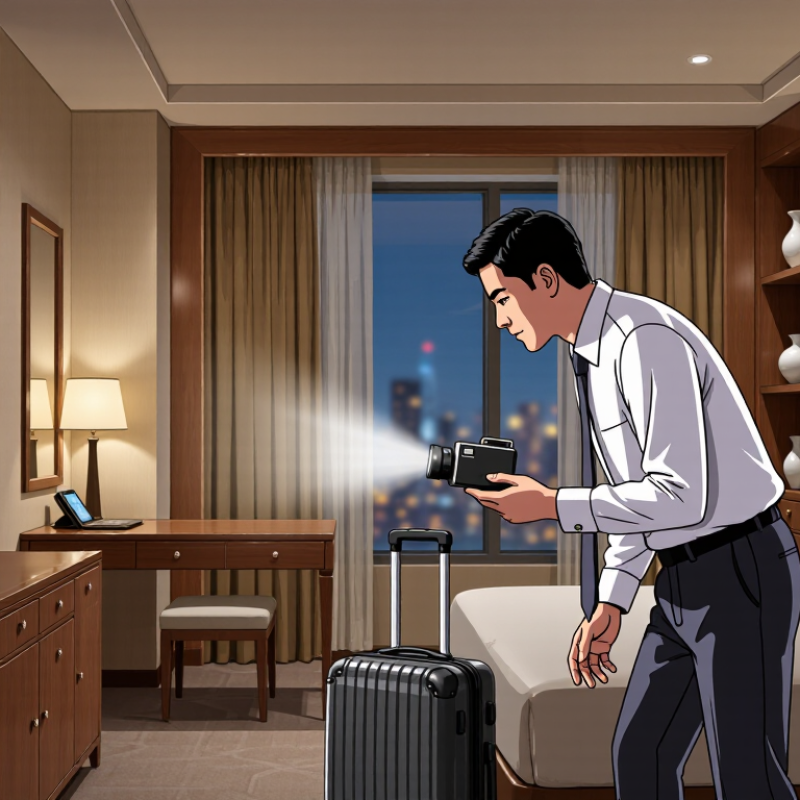
Why Use a Spy Camera Detector for Hotel Privacy?

What Is a Spy Camera Detector and How Does It Work?

A spy camera detector checks for clues that a small camera may be present. Most handheld models use radio-frequency scanning, lens reflection, or both. An RF scanner listens for signals from transmitting devices; a lens finder shines light through a viewfinder, making a camera lens reflect as a bright point. Some models also sense magnetic fields near certain electronics. Each method has limits.

The concern is not purely hypothetical. In a 2019 IPX1031 survey of 2,000 U.S. travelers, 58% said they worried about hidden cameras in vacation rentals, while 11% reported finding one. These figures describe survey respondents, not the rate of cameras in hotel rooms. Still, they explain why some guests use a detector as an extra check.

Look closely. A practical scan means checking smoke-detector-like fixtures, alarm clocks, chargers, and objects facing the bed or bathroom. Move slowly, dim the lights for lens reflection, and scan for RF signals from several spots. Nearby phones, routers, and televisions can trigger false alerts. A camera that is switched off, wired, or not transmitting may escape an RF scan. No detector proves a room is private; it can only help identify clues worth checking carefully. A little uncertainty remains.

Why Hotel Rooms May Present Hidden-Camera Privacy Risks

Hotel rooms can feel private, yet unfamiliar spaces may contain devices you did not install. A hidden camera could be placed inside an ordinary clock, charger, smoke alarm, or decorative vent. Small details matter: an unusual hole, a loose panel, or a lens-like reflection deserves attention. The risk is not universal, but it is real enough to justify a careful check.

A spy camera detector adds a practical layer of screening. Optical detection may reveal lens reflections, while radio-frequency scanning can identify some transmitting devices. Neither method is perfect. A detector may miss a camera that stores footage locally, and nearby Wi-Fi equipment can create false alerts. In my experience, the best check combines slow visual inspection with sensible device testing. Do not trust one flashing signal. Vary the room lighting, inspect objects from several angles, and record only details needed for a clear report.

Privacy checks should remain respectful and lawful. Do not dismantle fixtures or handle unfamiliar wiring. If something seems suspicious, leave it in place, document its location, and contact hotel management or the appropriate local authority. I once assumed an odd blinking light indicated surveillance; it was only a router indicator. That mistake was useful. It showed me that caution must include skepticism, not panic. A detector supports judgment, but it cannot replace it.

Why Hotel Privacy Checks Matter: Hidden-Camera Concerns

A 2019 survey of U.S. adults reported that 58% were concerned about hidden cameras in Airbnb rentals, while 11% said they had found one. These figures describe vacation-rental survey responses—not the prevalence of cameras in hotel rooms—and should not be treated as a hotel-room risk estimate.

Source: IPX1031, 2019 survey of 2,000 U.S. adults.

How to Inspect a Hotel Room with a Spy Camera Detector

A hotel room can look ordinary while a small camera remains easy to miss. I use a spy camera detector as one part of a careful privacy check. Before unpacking, I close the curtains and turn off unnecessary lights. Then I inspect smoke alarms, clocks, chargers, mirrors, vents, and decorative objects. A detector may identify wireless signals or lens reflections. However, it cannot find every camera. Some devices may be inactive, wired, or hidden outside its detection range.

I move slowly around the room and scan from different heights. In a dim room, a lens-finding light can reveal a tiny reflection. I check unusual holes, dark glass, and objects facing the bed or bathroom. An RF detector can react to phones, routers, televisions, or other normal equipment. A strong signal is not proof of surveillance. I mark the location mentally and rescan after switching off nearby electronics. That reduces confusion, though it does not eliminate false alarms.

My experience is that patience matters more than expensive equipment. I once overlooked a small charger because it looked completely ordinary. That mistake changed my inspection routine. I now compare the detector’s reading with a visual check and the room’s layout. I avoid opening electrical fixtures or handling suspicious objects. If something remains concerning, I leave the area, document what I observed, and contact hotel management or appropriate local services. The detector helps, but judgment still matters.

How to Interpret Detector Signals and Confirm Suspicious Devices

A spy camera detector is useful only when its signals are interpreted carefully. A rising RF reading may indicate wireless activity, but it can also come from a phone, router, smart television, or hotel access point. Some cameras store footage locally and transmit nothing.

No signal does not mean no device.

Start by switching off your own wireless devices, then scan slowly near clocks, smoke alarms, vents, chargers, and facing mirrors. Watch for a reading that remains strong after you change position. Optical detectors can reveal lens reflections in dark rooms, but shiny screws and glass may create false alerts. Confirm suspicious points from several angles. Check whether the object has an unexplained power cable or a clear view of the bed or bathroom.

Do not dismantle fixtures.

The 2024 Verizon Data Breach Investigations Report analyzed 30,458 security incidents, showing why exposed devices and credentials deserve careful attention. It does not measure hidden cameras, but it reinforces one practical lesson: verify before trusting a device.

Pew Research Center reported in 2023 that 81% of Americans felt potential privacy risks outweighed the benefits of data collection. That concern is reasonable, though detector readings alone are weak evidence.

Record the location and time, avoid touching the device, and contact hotel management or local security personnel. If the explanation feels incomplete, request another room. My own weak point is assuming a familiar object is harmless. Room layouts change, and detectors are imperfect.

What to Do After Discovering a Possible Hidden Camera

Finding a suspicious device in a hotel room can feel confusing and invasive. Stay calm, and do not touch, unplug, or dismantle it. A detector alert is only a lead, because routers, sensors, and other electronics may create false signals. Check the object from a safe distance. Note its location, appearance, and any unusual wires.

Record clear photos or video without moving anything. Include the room layout, nearby furniture, and visible device details. Write down the time and your observations. Avoid posting the evidence publicly, since it may expose personal information or damage an investigation. If the device appears active or points toward a bed or bathroom, leave the room if you feel unsafe. Trust that feeling.

Contact the hotel manager through an official channel and request a written record of your report. Ask for a room change or alternative accommodation. You can also contact local authorities, following the laws where you are staying. Preserve booking details, messages, and receipts. Do not confront a suspected person yourself. That could create risk and weaken the evidence. I would also review my first reaction afterward: I once assumed every unusual light was a camera, but some were ordinary sensors. Careful observation matters.

Why Use a Spy Camera Detector for Hotel Privacy? — What to Do After Discovering a Possible Hidden Camera

Step Situation Recommended Action Why It Matters Priority
1 A detector or visual check suggests a suspicious object Treat the result as a possible lead, not proof. Do not dismantle, unplug, cover, or handle the object. Consumer detection tools can produce false positives, and disturbing an object could damage potential evidence or create a safety risk. Immediate
2 You need to record what you found From a safe distance, photograph or video the object in place. Note the room location, date, time, and what prompted your concern. A clear, undisturbed record can help hotel staff or authorities assess the report. Immediate
3 The object is in a private area, such as a bathroom or sleeping area Stop using the room, gather essential belongings if safe, and move to a private location. Avoid discussing sensitive information in the room. This limits further exposure while you decide how to report the concern. High
4 You are ready to report the concern Contact hotel management or the front desk. Describe the location and your observations, and request a different room or alternative accommodation. Management can arrange a response and help you leave the room. Keep the conversation factual and retain a record of the report. High
5 You believe the device may be an unauthorized recording device Contact local law enforcement or the appropriate local authority for guidance. Share your photos and notes, and follow instructions about preserving the scene. Rules and investigative procedures vary by location; authorities can assess the situation under applicable local law. High
6 You need to preserve a record of the incident Save photographs, messages, booking details, and the names or roles of people you spoke with. Keep copies in a secure place. A dated record can make follow-up with the hotel, authorities, or your booking provider more straightforward. As soon as practical
7 You want to request a refund, relocation, or formal review Contact the booking provider or relevant consumer-protection authority, provide a concise timeline, and ask what documentation is needed. Available options depend on the booking terms and local rules, so avoid assuming a particular outcome. Follow-up
8 You are choosing whether to use a detector in the future Use a detector only as one part of a cautious visual check. Follow its instructions and do not rely on a negative result as proof that a room is free of recording devices. Detection tools have limitations and may not identify every device or distinguish every electronic signal from ordinary equipment. Before and during travel