Blog
What Is the Best Industrial Shelving for Warehouses?
Choosing the best industrial shelving begins with the warehouse’s real operating conditions, not a product photograph. A system must fit load weights, carton sizes, aisle widths, picking frequency, and future growth. It should also support safe access and clear product identification.
Industry evidence reinforces this practical view. MHI’s 2024 Annual Industry Report found that 83% of respondents considered supply chain innovation a competitive advantage. That pressure reaches storage design. WERC’s 2024 DC Measures report continues to benchmark distribution centers through measures such as inventory accuracy, labor productivity, and order-picking performance. Shelving affects each measure. A poorly arranged bay can add seconds to every pick. Across thousands of daily orders, those seconds become labor costs.
The best solution may be boltless shelving, long-span shelving, or a heavy-duty adjustable system. The answer depends on the inventory profile. Small packaged goods may need dense, hand-accessible levels. Steel parts may require reinforced beams and labeled load limits. High-turnover cartons might perform better near packing stations, while slow-moving stock can occupy higher levels.
There is no universal winner. That is easy to say, yet frequently ignored. Cost alone can mislead. The cheapest frame may create congestion, awkward lifting, or expensive reconfiguration later. A reliable evaluation should compare usable capacity, installation effort, safety features, adjustability, and total ownership cost. The following guide examines these factors through operational experience, recognized industry benchmarks, and a careful question: what will this shelving still do well five years from now?
Warehouse Storage Needs and Industrial Shelving Requirements
What Is the Best Industrial Shelving for Warehouses?
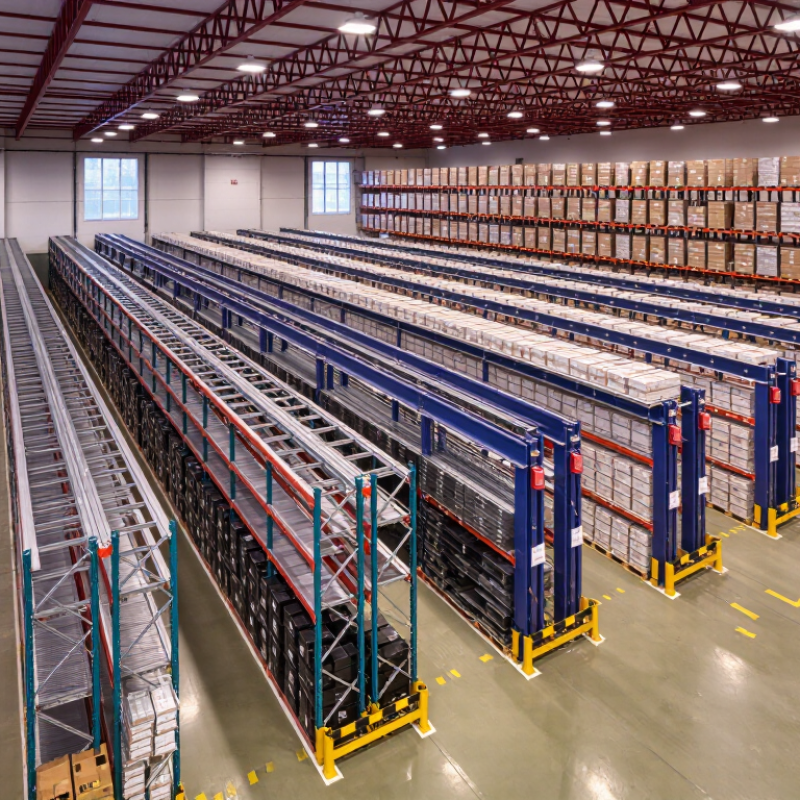
The best industrial shelving begins with the warehouse’s actual storage needs, not a catalog photograph. Measure pallet, carton, and bin dimensions before choosing a frame. Record each load’s weight, center of gravity, and handling frequency. A shelf holding small cartons needs different spacing from one supporting steel components. Keep clear aisles for forklifts, workers, and emergency access. Often missed.
Adjustable steel shelving suits changing inventories, while fixed designs may work for stable stock. Use reinforced beams and decking when loads are heavy or uneven. Posts should stand level, remain anchored where required, and resist accidental impact. In humid areas, protective finishes and raised storage help limit corrosion. Check the floor’s capacity too; strong shelves cannot correct a weak slab. That assumption causes trouble.
Reliable selection also depends on daily behavior. Label every bay with its safe working load, and train staff to read it. Inspect loose bolts, bent uprights, damaged decks, and overloaded levels on a scheduled basis. Follow documented engineering data and applicable local safety requirements. Separate fast-moving stock from slow inventory to reduce reaching and congestion. I would not call a system perfect after installation. Traffic patterns change, and workers sometimes improvise. Review the layout after peak seasons, equipment changes, or a near miss.
What Is the Best Industrial Shelving for Warehouses?
Warehouse shelving should be selected according to load requirements, access frequency, product size, and available floor space. The chart compares representative midpoint capacities for common industrial storage systems.
Higher-capacity systems are suitable for heavier goods, while lighter systems are often more practical for hand-loaded inventory and frequently accessed items.
Main Types of Industrial Shelving for Warehouse Use
What Is the Best Industrial Shelving for Warehouses?
Main Types of Industrial Shelving for Warehouse Use
Industrial shelving works best when it matches the load, aisle space, and picking routine. In warehouse assessments, I measure carton weight, shelf depth, and available vertical clearance before choosing a system. A shelf that looks strong may still deform under uneven loading.
Easy to miss.
Boltless shelving suits hand-picked cartons, spare parts, and small containers. Its adjustable levels support changing inventory, and assembly usually requires limited equipment.
Long-span shelving handles wider or heavier boxes without a center post blocking access. Steel shelving offers firm levels for tools, files, and dense components. It performs well in clean, organized storage rooms.
For heavier loads, pallet racking is usually more appropriate than ordinary shelving. Selective pallet racking gives direct access to each pallet but consumes more aisle width. Drive-in systems improve storage density, though stock rotation becomes less flexible.
Cantilever shelving supports long materials such as pipes, timber, and metal profiles. It needs stable anchoring and balanced loading across each arm. Mezzanine-supported shelving adds storage levels, but structural review and safe access are essential.
Use clear load ratings and inspect frames regularly.
In practice, trial layouts often reveal weaknesses that drawings hide.
How to Compare Shelving Capacity, Materials, and Durability
Choosing industrial shelving starts with the load, not the appearance. Measure each carton, container, and pallet carefully. Then calculate the total weight for every shelf level. A system rated for 500 kilograms may fail if that rating applies only to evenly distributed loads. Uneven boxes create pressure points. Check the manufacturer’s tested capacity, shelf span, beam spacing, and required safety factors. Leave practical clearance between stored items and sprinkler systems, lights, and forklifts.
Material affects performance in different warehouse conditions. Cold-rolled steel offers strong structural support and consistent dimensions. Galvanized steel suits areas exposed to moisture, while powder-coated surfaces can resist ordinary abrasion and corrosion. Plastic shelving may work for light, clean storage, but it often performs poorly under heavy loads or temperature changes. Look closely at connectors, braces, posts, and shelf decks. Weak fittings can undermine otherwise strong steel.
Durability also depends on daily handling. Forklift contact, repeated loading, vibration, and careless repositioning gradually damage frames. Anchoring matters. So does a level floor. Inspect bent uprights, loose bolts, rust spots, and overloaded shelves at planned intervals. Keep load labels visible. During warehouse assessments, I have seen tidy racks hiding damaged braces behind cartons. That mistake is easy to repeat. A capacity chart may look precise, yet real operations rarely stay perfectly balanced. Allow room for changing inventory, rushed shifts, and occasional human error. Shelving should remain stable when the warehouse is busy, not only when it is empty.
What Is the Best Industrial Shelving for Warehouses? - How to Compare Shelving Capacity, Materials, and Durability
| Shelving Type | Typical Shelf Capacity | Typical Bay Capacity | Common Materials and Finish | Durability and Load Behavior | Adjustability | Best Warehouse Applications |
|---|---|---|---|---|---|---|
| Light-Duty Boltless Shelving | 150–400 lb per shelf 68–181 kg |
750–2,000 lb 340–907 kg |
Cold-rolled steel frames with particleboard, wire, or steel shelves; commonly powder-coated | Good for light, evenly distributed loads. Powder coating helps resist everyday abrasion and surface rust in dry indoor areas. | Usually adjustable in approximately 1–2 inch increments without bolts | Small cartons, maintenance supplies, packaging materials, retail back stock, and office-storage areas |
| Medium-Duty Clip-In Steel Shelving | 400–800 lb per shelf 181–363 kg |
2,000–4,000 lb 907–1,814 kg |
Formed steel uprights, beams, and panels; powder-coated or baked-enamel finish | More resistant to deflection and repeated loading than light-duty systems when loads are evenly distributed and within the rated capacity. | High; shelf levels commonly adjust in small vertical increments | General warehouse inventory, component storage, tools, bins, and boxed goods with moderate weight |
| Heavy-Duty Longspan Shelving | 800–1,500 lb per shelf 363–680 kg |
4,000–7,500 lb 1,814–3,402 kg |
Heavy-gauge steel posts and beams with steel, wire, or reinforced wood shelves | Designed for large, bulky loads and frequent handling. Beam strength, shelf span, and center loading strongly affect performance. | High; levels can generally be repositioned to suit different carton heights | Automotive parts, industrial components, large cartons, machinery accessories, and bulky non-palletized inventory |
| Rivet Shelving | 500–1,000 lb per shelf 227–454 kg |
2,500–5,000 lb 1,134–2,268 kg |
Structural steel posts and beams with particleboard, plywood, or steel decking | Strong and stable for manual loading. Wood decking provides a solid surface but should be protected from moisture and impact damage. | Moderate to high; beams typically use keyhole or rivet connections | Bulk storage, archive boxes, hand-loaded inventory, and warehouse areas requiring wide shelf spans |
| Wire Shelving | 350–800 lb per shelf 159–363 kg |
1,750–4,000 lb 794–1,814 kg |
Chrome-plated, zinc-plated, or epoxy-coated steel wire shelves and posts | Good airflow, visibility, and resistance to dust accumulation. Wire decking can deform if concentrated loads are placed between supports. | Very high; shelves commonly adjust along grooved or numbered posts | Clean storage areas, food-service support, parts rooms, garment storage, and inventory requiring visibility or ventilation |
| Mobile Aisle Shelving | 500–1,000 lb per shelf 227–454 kg |
2,500–5,000 lb 1,134–2,268 kg |
Steel shelving mounted on mechanically or electrically driven mobile bases | Can provide high storage density, but the floor, drive system, seismic conditions, and installation quality are critical to safe performance. | High; shelving levels are adjustable, while access is controlled by movable aisles | High-value inventory, records, spare parts, and warehouses where floor space is limited |
| Galvanized or Stainless Steel Shelving | 400–900 lb per shelf 181–408 kg |
2,000–4,500 lb 907–2,041 kg |
Galvanized steel or stainless steel components; corrosion-resistant construction | Better protection against humidity, washdown, and corrosive environments than standard painted steel. Material grade determines corrosion performance. | High on most modular systems | Cold rooms, damp facilities, food-processing support areas, laboratories, and coastal warehouses |
Capacity figures are typical working-load ranges for evenly distributed loads on properly assembled systems. Actual ratings vary with shelf dimensions, beam span, material gauge, connection design, floor conditions, anchoring, and the manufacturer’s engineering specifications.
Safety, Accessibility, and Space Efficiency Considerations
The best industrial shelving balances safety, accessibility, and space efficiency. Safety starts with load design, not shelf height. Measure every carton, pallet, and handling path before selecting a system. Rated capacity must include uneven loading and repeated impacts.
OSHA states that forklifts cause about 85 deaths and 34,900 serious injuries yearly in the United States. That figure makes clearance, guardrails, and pedestrian separation practical requirements. Do not treat them as optional accessories.
Accessibility depends on daily movement. Keep fast-moving cartons between knee and shoulder level when possible. Provide clear aisles for turning, lifting, and emergency access. Adjustable shelves support changing inventory, but frequent adjustment can create mistakes. Clear labels, visible stock locations, and routine inspections help workers find items without climbing or overreaching. I would still question any layout that looks tidy but forces repeated twisting.
Space efficiency comes from using vertical height carefully, not simply filling every gap. Tall frames need stable anchoring, back stops, and documented load limits. Narrow aisles may increase capacity, yet they require compatible handling equipment and disciplined traffic control. MHI’s 2024 Annual Industry Report found that 67% of respondents planned to increase supply-chain technology investment. Simple scanning and location tracking can improve slotting decisions. However, technology cannot fix poor shelf placement. Leave working clearance around sprinkler systems and structural columns. A few unused inches may prevent a costly operational compromise.
Selecting the Best Shelving System for Different Warehouse Operations
What Is the Best Industrial Shelving for Warehouses?
Selecting the best shelving system starts with warehouse behavior, not shelf appearance. The U.S. Census Bureau reported that e-commerce represented 15.4% of total retail sales in 2023. That share increases pressure on picking speed, SKU variety, and replenishment accuracy. For fast-moving cartons, carton-flow shelving can shorten walking routes. Selective pallet racking suits mixed inventory and direct forklift access. Drive-in racking saves space, but it offers less product selectivity. That trade-off matters.
Measure the operation before choosing equipment. Record pallet dimensions, load weights, daily order lines, forklift turning space, and product rotation. MHI’s 2024 Annual Industry Report found that 55% of supply chain leaders expected to adopt robotics or automation within one to two years. Shelving should support future equipment, not block it. Open aisles, consistent beam heights, and clearly protected columns help automated and manual workflows. Small details matter.
Safety needs practical verification. Check every bay’s rated capacity, floor condition, anchoring method, and impact protection. OSHA requires stored materials to remain stable and secure. Do not rely on a catalog load rating alone. Real floors are uneven. Pallets are rarely identical. A cheaper layout may create congestion during peak shifts. That assumption can be wrong. Reassess the design after seasonal demand, product changes, or new handling equipment. Shelving selection is operational engineering, not simple storage purchasing.
Related Posts
-
Top 10 Racking System Solutions for Optimal Warehouse Efficiency
-
10 Essential Tips for Effective Racking Shelves Setup and Organization?
-
Why Choose Storage Racking for Your Warehouse?
-
What Are the Top Warehouse Racking Manufacturers in China?
-
How to Choose the Right Industrial Racking for Your Warehouse Needs
-
Why Heavy Duty Racking is Essential for Efficient Warehouse Storage Solutions