Blog
Best Industrial Shelving Manufacturers in China
Choosing the best industrial shelving manufacturers in China requires more than comparing prices and product photos. A dependable supplier must understand storage demands, workplace safety, manufacturing consistency, and long-term service. This guide examines manufacturers that produce warehouse racks, boltless shelving, heavy-duty units, and customized storage systems.
The evaluation focuses on practical evidence. Can the factory provide clear load ratings, material specifications, and inspection records? Are welds even and secure? Does the powder coating resist scratches, moisture, and daily handling? These details matter when shelves hold cartons, tools, spare parts, or metal components for years. Factory experience also deserves attention. A manufacturer serving logistics centers may offer different strengths from one supplying retail stores or industrial workshops.
Real verification remains essential.
Supplier websites rarely show every limitation. A polished catalog cannot confirm production capacity or quality control. Buyers should request samples, review drawings, inspect packaging, and clarify replacement procedures before placing large orders. Independent audits and recognized certifications can support trust, but they should not replace direct questioning. Even experienced buyers can overlook assembly time, floor conditions, or changing load requirements.
This article introduces leading Chinese manufacturers and compares their product ranges, customization abilities, quality systems, export experience, and customer support. It also considers practical concerns, including communication delays, inconsistent finishes, and unclear warranty terms. No shortlist is perfect. The right choice depends on your storage layout, budget, operating environment, and tolerance for future maintenance. A careful decision begins with evidence, not attractive promises.
Industrial Shelving Manufacturing in China: An Industry Overview
China’s industrial shelving sector is shaped by a large metalworking base and strong logistics demand. The China Federation of Logistics and Purchasing reported China’s total social logistics volume at RMB 352.4 trillion in 2023, up 5.2% year on year. This scale supports suppliers for cold-rolled steel, welding, powder coating, and automated forming. Manufacturing quality still varies. Low prices can hide thinner uprights, uneven beams, or weak corrosion protection.
The World Bank’s 2023 Logistics Performance Index ranked China 19th among 139 economies. This result reflects capable transport and supply networks, but it does not prove every shelving factory performs equally. Reliable manufacturers should provide load calculations, steel specifications, coating thickness, and batch inspection records. They should also test stability under uneven loading, not only display a maximum capacity. A useful caution remains: market reports often combine light shelving, pallet racking, and warehouse automation. Their forecasts may not describe industrial shelving precisely.
Tips: Request a sample bay before placing a large order. Measure beam deflection, weld consistency, surface finish, and assembly fit. Ask whether load ratings cover distributed or point loads. Factory visits help, but one visit cannot replace independent inspection.
Industrial shelving systems in China are commonly specified by load capacity. Light-duty shelving is typically used for hand-loaded parts, medium-duty systems for warehouse storage, heavy-duty shelving for bulkier components, and pallet racking for high-load logistics applications. The figures shown are representative standard capacities per level and are not company-specific data.
Key Types of Industrial Shelving Made by Chinese Manufacturers
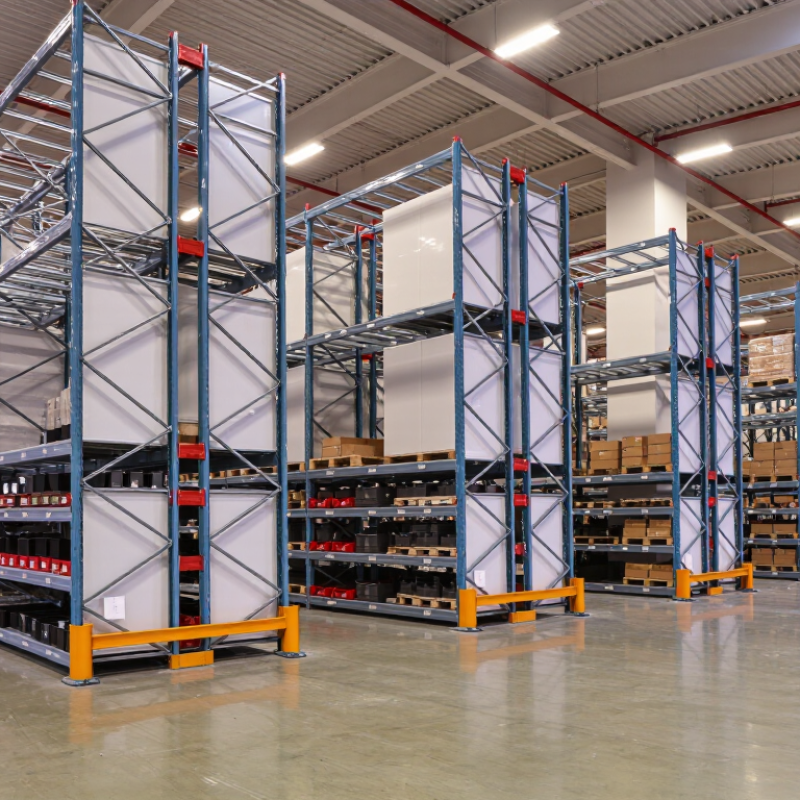
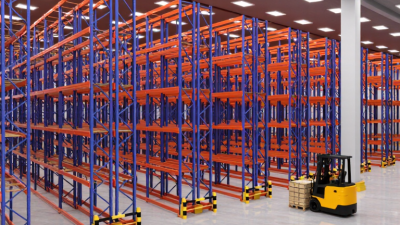
Chinese manufacturers produce several industrial shelving types for different storage conditions, load levels, and handling methods. Pallet racking suits warehouses using forklifts. Its upright frames, horizontal beams, and adjustable levels support dense storage of cartons, drums, or palletized goods. Selective pallet racks provide direct access, while drive-in systems improve density but reduce retrieval flexibility.
Boltless shelving works well for workshops, archives, and small-parts rooms. Its clip-in structure allows faster assembly and easy level adjustment without welding at the installation site. Heavy-duty steel shelving handles boxes, tools, and spare parts more securely. Wire shelving offers better airflow and visibility, which helps in clean storage areas or facilities with changing temperatures.
Cantilever racking is designed for long products, including pipes, timber, and metal profiles. Its open front makes loading easier, but the base must be properly anchored. Mobile shelving moves along floor rails and can increase usable capacity in controlled environments. It needs accurate flooring and careful maintenance. One detail is often missed: published load ratings depend on beam spacing, shelf depth, and installation quality. Ask for material thickness, testing records, corrosion protection details, and clear assembly instructions. Powder coating is common, but it is not automatically suitable for humid or chemically exposed areas. A practical layout check may reveal that maximum density slows daily picking. That trade-off deserves honest review.
| Industrial Shelving Type | Typical Load Capacity | Common Structural Materials | Typical Dimensions and Configuration | Best-Fit Storage Applications | Key Advantages | Important Selection Factors |
|---|---|---|---|---|---|---|
| Light-Duty Boltless Shelving | Approximately 80–300 kg per shelf | Cold-rolled steel uprights, beams and shelves; powder-coated or galvanized finish | Height: 1,500–2,400 mm Depth: 300–600 mm Adjustable levels | Hand-loaded cartons, tools, spare parts, archives and small-parts storage | Fast assembly, flexible shelf adjustment and economical installation without extensive anchoring | Actual load rating, shelf deflection, floor flatness, corrosion environment and required bay width |
| Medium-Duty Longspan Shelving | Approximately 300–800 kg per shelf | Rolled steel frames, reinforced beams, steel panels or chipboard/laminated decking | Height: 1,800–3,000 mm Depth: 450–900 mm Wide-span bays | Warehouse cartons, e-commerce inventory, components and manually handled bulk goods | Greater span and storage volume than light-duty systems while retaining manual access | Beam profile, deck type, uniformly distributed load, aisle width and compatibility with picking equipment |
| Heavy-Duty Pallet Racking | Approximately 1,000–5,000 kg per beam level; project-specific design required | High-strength roll-formed or structural steel frames, pallet beams and wire mesh decking | Height: 2,000–12,000+ mm Depth: 900–1,200 mm Selective access | Palletized goods handled by forklifts in distribution centers, factories and logistics warehouses | Direct access to individual pallet positions, scalable layouts and high vertical storage utilization | Forklift type, pallet size, floor load, seismic conditions, rack anchoring and local safety regulations |
| Drive-In and Drive-Through Racking | Commonly 500–1,500 kg per pallet position; engineering verification required | Heavy steel uprights, guide rails, support rails and impact protection components | High-density blocks Limited aisles Forklift entry channels | Large quantities of the same or similar SKU, cold storage and high-density pallet warehousing | Reduces aisle space and increases pallet density compared with selective pallet racking | FIFO or LIFO operating method, pallet quality, forklift clearance, channel depth and impact protection |
| Cantilever Racking | Approximately 200–2,500 kg per arm; capacity varies with arm length and column height | Structural or roll-formed steel columns, horizontal arms, braces and optional decking | Single- or double-sided Adjustable arms Open front design | Steel bars, pipes, timber, profiles, furniture panels and other long or irregular loads | Unobstructed front access and adjustable storage levels for long products | Load center, arm length, product overhang, column spacing, floor anchoring and handling method |
| Carton Flow Racking | Approximately 30–150 kg per carton lane or shelf level, depending on the roller system | Steel frames with inclined roller tracks, flow rails, dividers and carton stop bars | Inclined FIFO lanes Manual picking height Multiple SKU lanes | Order picking, fast-moving consumer goods, spare parts and assembly-line replenishment | Supports FIFO rotation, improves picking speed and separates picking and replenishment activities | Carton dimensions, carton weight, roller pitch, lane depth, replenishment frequency and SKU turnover |
| Mobile Shelving | Approximately 100–800 kg per shelf, depending on the base and shelving system | Steel shelving mounted on mechanically or electrically driven mobile bases and floor rails | Moveable aisles High space utilization Manual or powered operation | Archives, tools, spare parts, records, medical supplies and compact inventory rooms | Can reduce fixed aisle requirements and increase storage density within the same floor area | Floor strength, rail installation, safety sensors, access frequency, emergency egress and power requirements |
| Mezzanine and Multi-Tier Shelving | Approximately 300–1,000 kg per square metre on platforms; design-specific verification required | Steel columns, beams, joists, decking panels, handrails, stairs and safety gates | One or more elevated levels Built-to-suit footprint Manual access or goods lift | Small-parts storage, workshops, e-commerce fulfillment and production-support areas | Uses vertical space to create additional storage or working levels without expanding the building footprint | Building height, slab capacity, fire protection, evacuation routes, guardrails, stairs and permit requirements |
Note: Load capacities and dimensions are typical planning ranges for industrial shelving systems manufactured in China. Final specifications should be confirmed through a structural calculation based on the actual load, storage equipment, floor conditions and applicable local safety standards.
How to Evaluate China’s Industrial Shelving Manufacturers
Evaluating industrial shelving manufacturers means inspecting evidence, not admiring a polished catalog. Ask for the factory address, production photos, and a live video walkthrough. Check whether steel coils, beams, and panels are made in-house or outsourced. Request drawings showing upright thickness, beam profiles, hole spacing, and allowable loads. A serious supplier explains these details without vague phrases. I have learned that “heavy duty” means little without test conditions.
Request a sample bay before placing a large order. Measure its dimensions and inspect every connection. Have workers assemble it using ordinary tools. Watch for uneven holes, sharp edges, unstable locking pins, and thin powder coating. Ask for load testing with documented weights, not only computer diagrams. Verify material reports, coating standards, weld inspections, and quality-control records. Certificates deserve independent checking. Paperwork alone is not proof.
Compare manufacturers by total delivered cost, not unit price. Include packaging, spare parts, installation guidance, replacement lead times, and inspection fees. Ask for references from warehouses with similar pallet weights and aisle conditions. Evaluate communication through a small pilot order. Delayed replies during sampling may become serious after payment. I once favored a lower quote and underestimated packaging damage. That mistake changed my checklist. Still, no checklist catches everything. Random pre-shipment inspection remains useful.
Manufacturing Standards, Materials, and Quality Control
Best Industrial Shelving Manufacturers in China
Manufacturing quality begins with steel selection, not surface appearance. China produced about 1.019 billion tonnes of crude steel in 2023, according to World Steel Association data. This large supply base supports competitive sourcing, but material traceability remains essential. Buyers should request mill certificates, grade details, thickness records, and heat numbers for every production batch.
Reliable manufacturers design shelving against recognized requirements, such as ANSI MH16.1 for steel storage racks, while applying documented engineering calculations. Common materials include cold-formed steel, welded structural sections, zinc coatings, and powder-coated finishes. Coating thickness should be measured, not guessed. Welds need visual inspection, dimensional checks, and, where risk justifies it, non-destructive testing. Load tests should reflect actual beam spacing, shelf depth, and working conditions.
Quality control should cover incoming steel, forming accuracy, welding, coating, assembly, and final packing. The ISO Survey 2023 recorded more than 1.26 million ISO 9001 certificates worldwide, showing how widely formal quality systems are used. Certification alone proves little without production records and corrective-action evidence. A factory can pass a visual inspection and still produce uneven frames. No system is flawless. Audits should examine rejected parts, calibration dates, operator training, and shipment samples. Photos help, but measured data is stronger.
Sourcing, Customization, and Export Considerations
China offers a broad industrial shelving supply base, but sourcing requires more than comparing prices. A dependable manufacturer should provide factory details, material specifications, production photos, and recent test records. Ask about steel thickness, beam capacity, surface coating, and welding quality. Request a physical sample when dimensions or load requirements are critical. Small differences in steel gauge can affect safety and long-term cost.
Customization usually begins with warehouse drawings, pallet sizes, aisle widths, and forklift access. Share clear measurements and expected loads. A professional engineering team can review these details and suggest practical adjustments. Confirm hole spacing, column dimensions, decking type, color, and assembly instructions before production. Keep written approval records. Verbal promises can disappear.
Export planning needs equal attention. Confirm packaging for sea transport, moisture protection, carton marks, and spare hardware. Discuss inspection points before shipment, including quantity, dimensions, coating thickness, and visible defects. Clarify Incoterms, lead time, payment stages, and responsibility for export documents. Verify the HS classification with a qualified customs professional. Requirements differ by destination.
A low quotation may look attractive. It may also hide thinner steel, weak packaging, or unclear testing. That mistake is expensive. Use an independent inspection when order value is significant, especially for customized systems. Leave time for corrections. Factories can produce quickly, but rushed approvals often create avoidable problems. Reliable sourcing is not perfect; it improves through documented checks and direct, technical communication.
Related Posts
-
Top Benefits of Heavy Duty Racking System for Industrial Storage Solutions?
-
Why Choose Industrial Storage Solutions for Your Business?
-
How to Choose the Right Commercial Racking System for Your Business Needs
-
How to Choose the Right Warehouse Shelving for Your Needs?
-
China Top 10 Industrial Racking Manufacturers?
-
Why Choose Storage Racking for Your Warehouse?