
Blog
What Is Pallet Shelving and How Does It Work?
Pallet shelving is a practical storage system designed to hold palletized goods on elevated horizontal beams. It creates vertical capacity while keeping inventory visible, accessible, and organized. In warehouses, operators typically place pallets with forklifts, while upright frames transfer the load safely to the floor. Each beam level requires a rated capacity, suitable pallet dimensions, and controlled clearance.
The system sounds simple. It is not always simple.
MHI’s 2024 Annual Industry Report highlights continuing investment in warehouse technology, automation, and operational resilience. Those trends make pallet shelving increasingly important, because storage design affects picking speed, labor use, safety, and future expansion. A well-planned layout can reduce unnecessary travel between receiving docks and picking locations. A poorly planned layout can create blocked aisles, unstable loads, and expensive handling delays.
Industry guidance from the Occupational Safety and Health Administration emphasizes stable stacking, clear aisles, and safe material handling practices. The Rack Manufacturers Institute’s ANSI MH16.1 standard also provides engineering requirements for steel storage racks in North America. These references matter. Marketing claims alone are not enough.
This guide explains what pallet shelving is, how its frames and beams work, and where common configurations fit. Selective systems offer direct access to individual pallets. Drive-in designs increase density but may reduce selectivity. FIFO and LIFO requirements can change the best choice.
Small details matter: pallet weight, forklift turning radius, floor condition, and seismic exposure. Even experienced teams can overlook one. The right system balances density, accessibility, safety, and measured growth—not maximum capacity alone.
Definition and Core Purpose of Pallet Shelving
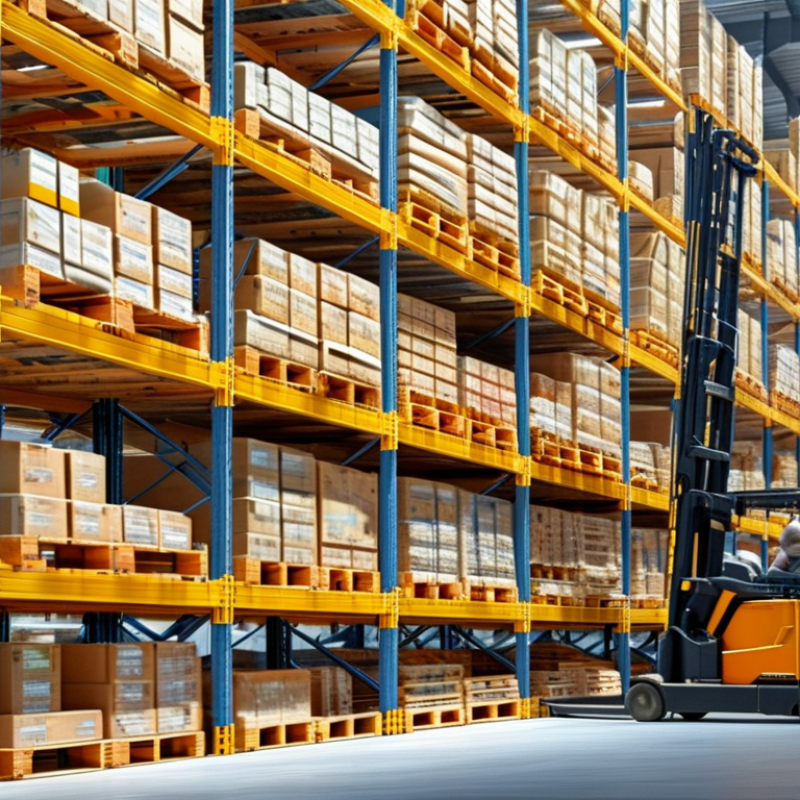
Pallet shelving is a storage system designed for palletized goods. It uses upright frames, horizontal beams, and load levels to organize products above the floor. Forklifts place and retrieve pallets from each level. Its core purpose is simple: use vertical warehouse space while keeping inventory visible and accessible.
The system supports stock control, safer movement, and faster order handling. However, the definition can sound easier than real operations. A rack may hold heavy pallets, but its capacity depends on beam length, frame height, pallet weight, and floor conditions. MHI’s 2024 Annual Industry Report found that 83% of supply chain leaders view technology and innovation as a competitive advantage. Pallet shelving remains a physical foundation for that progress. Digital tracking cannot correct a poorly planned aisle.
Tips: Match every rack level to the actual pallet load, not an estimated average. Keep clear labels at eye level. Leave enough aisle space for turning and emergency access. Inspect frames, beams, anchors, and guards regularly. Small damage matters. The U.S. Bureau of Labor Statistics continues to report significant injury risks in material-moving work, which makes layout and training essential. One practical weakness is often ignored: workers may bypass a sensible system when picking feels slow. Observe their movements, then adjust the design. A perfect layout on paper may fail beside a busy loading door.
What Is Pallet Shelving and How Does It Work? - Definition and Core Purpose of Pallet Shelving
| Data Dimension | Typical Value or Specification | How It Works | Operational Purpose |
|---|---|---|---|
| Definition | Industrial storage system for palletized goods | Horizontal load beams support pallets at multiple vertical levels within a steel frame. | Uses warehouse height to store more goods without expanding the floor area. |
| Primary Storage Method | One pallet position deep for selective systems | Each pallet can normally be reached directly from the warehouse aisle. | Provides fast access and supports frequent picking or replenishment. |
| Main Structural Parts | Upright frames, horizontal beams, base plates, and safety pins | Uprights transfer vertical loads to the floor, while beams carry pallet loads between frames. | Creates a stable, adjustable, and modular storage structure. |
| Typical Pallet Capacity | Approximately 500–2,000 kg per pallet position | Capacity depends on beam length, frame height, pallet type, load distribution, and rack design. | Allows storage of medium- to heavy-duty unit loads when the system is correctly engineered. |
| Common Beam Length | Approximately 1,800–3,600 mm | Beam length is selected to suit the pallet dimensions and the number of pallets stored per bay. | Determines the number of pallet positions across each rack bay. |
| Typical Vertical Adjustment | Often adjustable in increments of about 50–100 mm | Beam connectors lock into perforations in the upright frame at selected heights. | Accommodates different pallet heights and improves vertical space utilization. |
| Storage Levels | Commonly 2–6 pallet levels, depending on ceiling height | Additional beams are installed above the floor level while maintaining required clearances. | Increases storage density by using available vertical space. |
| Typical Pallet Footprint | Common formats include 1,200 × 800 mm and 1,200 × 1,000 mm | Rack depth and beam spacing are designed around the pallet dimensions and load overhang limits. | Ensures stable placement and efficient use of each storage bay. |
| Material Handling Equipment | Forklifts, reach trucks, or pallet trucks | Equipment lifts pallets from the floor and places them onto or removes them from the beams. | Supports loading, unloading, replenishment, and order fulfillment operations. |
| Aisle Requirement | Typically about 2,400–3,600 mm for conventional forklift operation | Aisle width is determined by the turning radius, lift height, and operating requirements of the equipment. | Provides enough clearance for safe vehicle movement and pallet handling. |
| Access Method | Direct access to individual pallet locations | Operators can remove a selected pallet without moving pallets stored in front of it. | Reduces handling steps and supports stock keeping unit variety. |
| Inventory Rotation | Well suited to FIFO with organized loading and picking | Different pallet positions can be assigned to receiving, storage, and dispatch activities. | Helps manage stock age when warehouse procedures and labeling are properly controlled. |
| Load Distribution | Loads should be centered and evenly distributed on the pallet | Balanced loading reduces point pressure and helps keep the pallet stable on the beams. | Improves structural performance and reduces the risk of falling or damaged goods. |
| Safety Features | Beam safety locks, upright guards, row spacers, and back guards where required | These components help prevent beam disengagement, frame impact, and unsafe load movement. | Reduces risks to personnel, stored products, and the storage structure. |
| Floor Requirement | Level, load-bearing industrial floor | Base plates distribute the frame loads, while anchors may secure the rack to the floor. | Supports rack stability and helps maintain alignment during operation. |
| Inspection Frequency | Routine visual checks plus formal inspections according to local requirements | Operators look for bent frames, damaged beams, missing safety pins, and overloaded positions. | Identifies damage early and supports safe, compliant warehouse operation. |
| Best-Fit Applications | Warehouses with many product types and frequent pallet access | Adjustable bays can be configured for different load sizes and inventory categories. | Balances storage density, flexibility, and direct product accessibility. |
| Core Limitation | Lower storage density than drive-in or mobile systems | Dedicated aisles are needed to reach individual pallet positions. | Provides accessibility and selectivity at the expense of some floor-space efficiency. |
Note: Dimensions and capacities are typical planning ranges rather than universal specifications. Final rack design must be based on the actual pallet size, load weight, building conditions, handling equipment, and applicable safety standards.
Related Posts
-

What Are the Top Warehouse Racking Manufacturers in China?
-
How to Choose the Right Pallet Racking for Your Warehouse?
-
Best Industrial Racking Solutions for Global Buyers?
-
Top 5 Benefits of Using Warehouse Pallet Racks for Maximum Storage Efficiency
-

2026 Top Trends in Pallet Racking Innovations and Solutions?
-
Ultimate Tips for Choosing Warehouse Racking Systems?