Why Is Warehouse Shelving Important for Global Buyers?
For global buyers, warehouse shelving is more than a storage purchase. It shapes inventory access, worker movement, space utilization, and long-term operating costs. A poorly selected system may leave cartons trapped behind other cartons. It may also create unused vertical space, awkward picking routes, and expensive modifications.
Dr. John J. Bartholdi III, a respected warehouse design researcher, emphasizes a practical principle: “The purpose of a warehouse is to support the flow of goods.” This idea explains why international buyers should examine shelving beyond its price or appearance. Beam capacity, shelf depth, aisle width, loading methods, and product turnover all influence daily performance. A pallet rack for automotive parts will not serve small electronics equally well. The details matter.
Warehouse shelving must also match local operating conditions. Buyers should confirm load ratings, corrosion resistance, floor strength, forklift clearance, and installation requirements. Seismic exposure and humidity can change the suitable design. Reliable suppliers should provide technical drawings, testing information, installation guidance, and traceable material specifications. These documents are not decoration. They help buyers compare systems fairly and reduce avoidable risk.
Still, no shelving plan is perfect. Forecasts change. Product sizes change. Even experienced teams sometimes overestimate future capacity. A reflective buyer leaves room for adjustment rather than filling every available bay. The answer is not always more steel. Sometimes, clearer labeling and shorter travel paths create greater value. For global buyers, the strongest warehouse shelving decision combines safety, flexibility, evidence, and practical experience.
What Is Warehouse Shelving and Why Does It Matter?
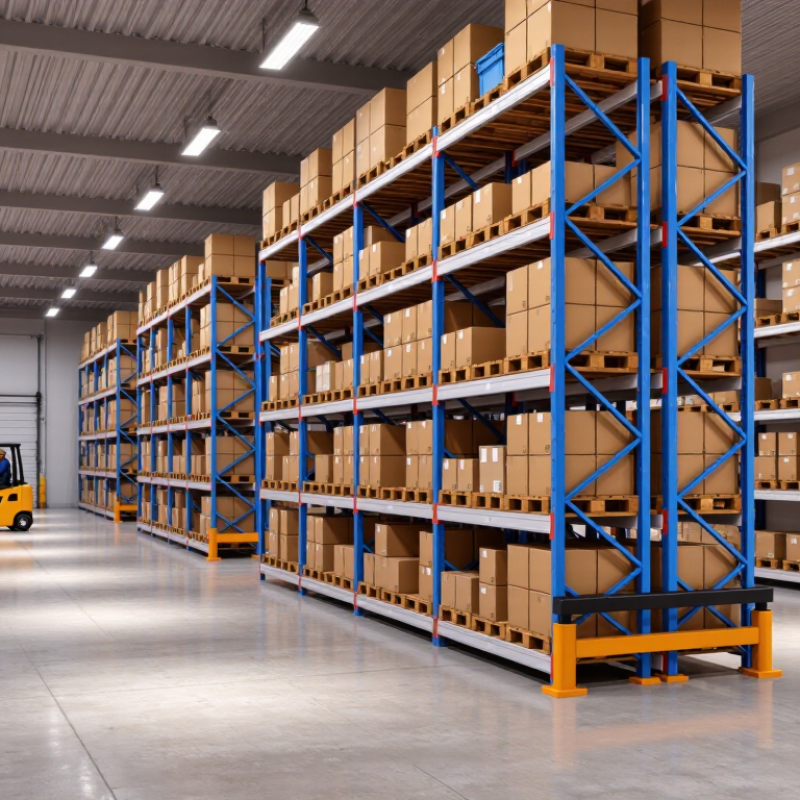
Warehouse shelving is the structural framework that turns an empty building into a working inventory system. It supports cartons, bins, pallets, and human movement while defining how quickly goods can be found. A well-planned shelf row keeps fast-moving items near packing stations and heavier cartons below waist level.
Small details matter. Labels should face the aisle. Uprights must stay visible. Damaged beams need immediate inspection, not a hopeful glance.
The 2024 MHI Annual Industry Report found that 74% of supply chain leaders planned to increase technology and innovation investment.
Shelving supports that investment by creating predictable locations for scanning, counting, and automated picking. However, technology cannot repair poor storage logic. The U.S. Bureau of Labor Statistics continues to report higher injury rates in transportation and warehousing than in many private-industry sectors, making stable loads, clear aisles, and proper shelf access operational concerns.
For global buyers, this also affects import planning. Different facilities may use metric dimensions, local load standards, and different pallet footprints. A specification that works in one country can fail quietly in another.
A perfectly optimized layout rarely stays perfect. Product sizes change, demand shifts, and temporary stock often becomes permanent. Shelving should therefore allow adjustment, inspection, and future expansion rather than simply filling today’s available floor space.
How Warehouse Shelving Improves Storage Capacity and Organization
Warehouse shelving is a practical foundation for higher storage capacity and better inventory control. In daily warehouse operations, adjustable shelving can use vertical space without blocking aisles. It also creates clear locations for cartons, spare parts, and fast-moving goods. A well-planned bay keeps labels visible at eye level. That small detail reduces search time and picking mistakes.
A taller rack is not automatically better. Shelf depth must match carton size, handling equipment, and worker reach. Poorly designed storage can waste space and create unsafe congestion. The 2024 MHI Annual Industry Report found that 55% of supply-chain professionals increased technology investment. Shelving should support that investment through clear location coding and barcode scanning. For example, a picker can move from aisle B03 to shelf B03-04 without checking several mixed boxes. Simple systems often work best.
Industry benchmarks also show why organization matters. The Warehousing Education and Research Council measures inventory accuracy, order-picking speed, and dock-to-stock performance as core distribution indicators. Shelving directly influences each one by separating products and shortening travel paths. Yet warehouse teams should review the layout regularly. Demand changes. Seasonal stock can make yesterday’s efficient design feel crowded today.
Why Is Warehouse Shelving Important for Global Buyers? - How Warehouse Shelving Improves Storage Capacity and Organization
| Shelving or Racking Type |
Typical Load Capacity |
Typical Height Range |
Storage Density |
Access Method |
Best-Fit Inventory |
Organization Benefit |
| Boltless Shelving |
Approximately 150–900 kg per shelf |
1.5–3.0 m |
Medium |
Manual picking from the front |
Cartons, tools, spare parts, and mixed SKUs |
Adjustable levels support changing product sizes and reduce floor-level clutter. |
| Longspan Shelving |
Approximately 200–1,000 kg per shelf |
1.8–3.5 m |
Medium to high |
Manual picking from accessible bays |
Bulky cartons, containers, and medium-sized components |
Wide shelf spans create clear product zones and simplify visual stock checks. |
| Selective Pallet Racking |
Approximately 900–2,300 kg per beam level |
3.0–12.0 m |
High |
Forklift or reach-truck access |
Palletized goods and high-volume inventory |
Direct access to each pallet position supports accurate stock rotation and retrieval. |
| Mobile Shelving |
Approximately 100–500 kg per shelf |
1.8–2.5 m |
Very high |
One movable aisle opened when needed |
Small parts, documents, archive boxes, and slow-moving stock |
Reduces the number of permanent aisles and can increase storage density in the same footprint. |
| Carton Flow Shelving |
Approximately 100–300 kg per shelf |
1.8–2.5 m |
High |
Load from the rear and pick from the front |
Fast-moving cartons and order-picking items |
First-in, first-out movement improves stock rotation and reduces picker travel. |
| Cantilever Racking |
Approximately 250–1,500 kg per arm level |
2.4–6.0 m |
Medium to high |
Forklift or manual access |
Long loads such as pipes, timber, profiles, and metal bars |
Open front access prevents long materials from being stacked randomly on the floor. |
Note: Capacity and height figures are typical planning ranges for warehouse shelving and racking. Actual safe working loads depend on the design, material, beam spacing, installation method, floor conditions, and local safety regulations.
How Shelving Quality Affects Safety, Durability, and Operating Costs
Why Is Warehouse Shelving Important for Global Buyers?
Shelving quality directly affects worker safety, product protection, and operating costs.
Weak beams may bend under uneven loads. Poorly anchored frames can shift after forklift contact. The U.S. Occupational Safety and Health Administration reports about
85 annual forklift fatalities and 34,900 serious injuries.
Shelving does not cause every incident, but damaged storage increases exposure to falling-load hazards.
Capacity labels must match real operating conditions. Buyers should check beam deflection, frame thickness, floor anchoring, and corrosion resistance. A practical inspection also examines loose connectors and impact marks.
Small damage matters.
Regular inspections support OSHA recommendations for safe material handling and equipment maintenance. However, thicker steel is not automatically better. Poor design, incorrect installation, or overloaded levels can still create failures.
Durable shelving can reduce replacement, downtime, and labor costs over its service life.
Adjustable levels also help warehouses adapt to changing carton sizes. The 2024 MHI Annual Industry Report found that
55% of supply-chain leaders increased technology investment.
This trend makes accurate location data and compatible shelving more valuable. Yet automation cannot correct unstable racks or unclear load limits. Buyers should compare total cost, including installation, inspections, repairs, and future expansion. The cheapest quotation may become expensive after one avoidable failure. That judgment is easy to get wrong.
What Should Global Buyers Consider Before Choosing Warehouse Shelving?
Why Is Warehouse Shelving Important for Global Buyers?
Global buyers should evaluate warehouse shelving beyond its purchase price. The right system must match product weight, carton sizes, aisle width, and handling equipment. Measure the storage area carefully, including ceiling height, columns, doors, and fire-safety access. A small measurement error can reduce usable capacity or delay installation.
Material quality also matters. Steel thickness, surface treatment, weld consistency, and load ratings affect daily safety and service life. Buyers should request load tests, inspection records, drawings, and clear installation instructions. Regional humidity and temperature deserve attention too. Shelving for a coastal warehouse may need stronger corrosion resistance than shelving for a dry inland facility. Local building requirements, delivery terms, spare parts, and technical support should be checked before payment. A low quote can become expensive after shipping, customs, assembly, and maintenance.
Tips: Compare total cost, not only unit price. Ask whether the supplier can provide replacement parts and remote guidance. Confirm that every load rating is documented, not simply mentioned in a sales conversation. Keep photographs and measurements for approval records.
A perfect rack rarely exists. Buyers may need to compromise between density, flexibility, and budget. Adjustable shelves are useful when inventory changes, but they can reduce maximum capacity. Fixed layouts may store more today and create problems later. Reviewing real product samples, packaging changes, and future growth plans can prevent an attractive but impractical decision. Even experienced teams should revisit their assumptions before ordering.
Why Is Warehouse Shelving Important for Global Buyers?
Pallet dimensions differ across markets. Selecting shelving that matches the pallet footprint helps global buyers improve storage density, handling safety, and compatibility with forklifts and warehouse layouts.
Before choosing warehouse shelving, confirm the pallet length and width used at each destination, then verify beam capacity, clearance, aisle width, loading equipment, and local safety requirements. The dimensions shown are established pallet footprints commonly used in different markets; actual usage should be confirmed with the logistics provider and warehouse operator.