Blog
10 Best Pallet Shelving Systems for Global Buyers?
Choosing the right pallet shelving system can shape warehouse safety, storage density, and daily operating costs. Global buyers face more than a simple price comparison. They must assess load capacity, beam dimensions, upright strength, forklift access, corrosion resistance, and installation requirements. A system that performs well in a dry European warehouse may need different protection in a humid coastal facility. Details matter.
This guide reviews ten pallet shelving systems for international purchasing teams, warehouse managers, distributors, and industrial contractors. Each option should be examined through verified specifications, material quality, testing records, warranty terms, and supplier experience. Buyers should request load tables, drawings, surface-treatment details, and clear packaging information before placing an order. Local building conditions also deserve attention. Seismic exposure, floor quality, aisle width, and fire-protection planning can influence the final choice. Fit matters.
No ranking is perfect. A lower-priced system may reduce the initial budget but create higher installation or maintenance costs later. Conversely, a premium design may exceed the needs of a small warehouse. The most reliable decision balances safety, accessibility, expansion potential, delivery practicality, and total ownership cost. Supplier claims should be checked against independent documentation whenever possible. Even experienced buyers can overlook small details, such as damaged corner guards or unclear replacement-part policies. This comparison aims to support careful decisions, not replace professional engineering review or local compliance checks.
How to Evaluate Pallet Shelving Systems for Global Warehouse Needs
10 Best Pallet Shelving Systems for Global Buyers?
How to Evaluate Pallet Shelving Systems for Global Warehouse Needs
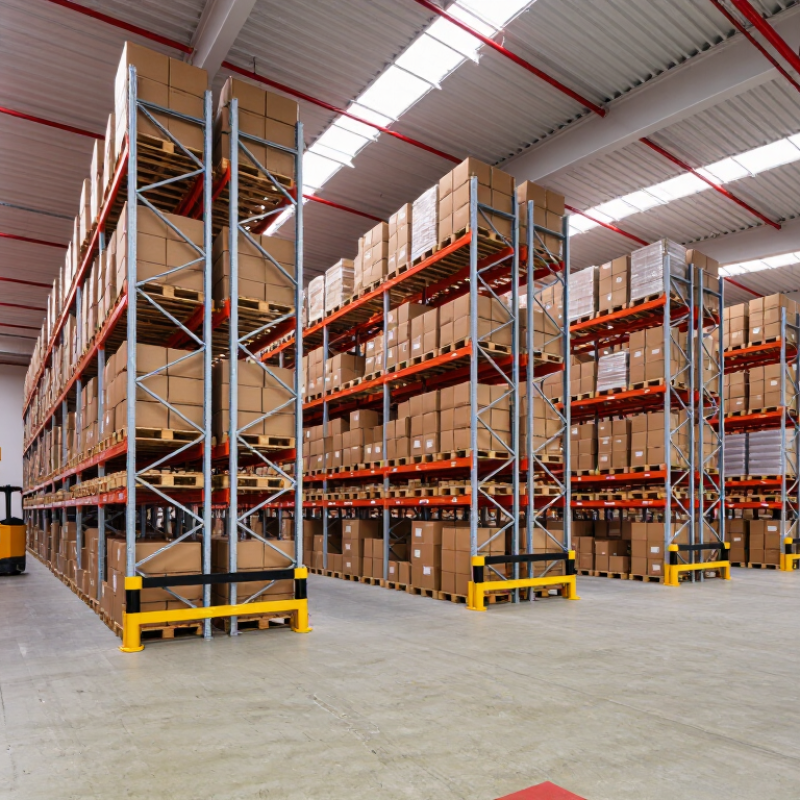
Global pallet shelving requires more than a strong steel frame. A reliable system must match pallet dimensions, load weights, aisle widths, and handling equipment. Measure the heaviest pallet first. Leave clearance above every load. Confirm beam capacity with documented engineering data, not sales estimates.
Field inspections often reveal expensive planning mistakes. Check floor flatness, column protection, anchor points, and corrosion risks near humid ports. A system for cold storage may need different finishes and materials than one used in a dry warehouse. Forklift turning space also matters. Small clearances become serious problems during busy shifts.
Review the supplier’s inspection records, installation guidance, replacement parts, and maintenance procedures. Traceable test reports support safer purchasing decisions across countries. Local engineering review can identify seismic, fire protection, and building requirements before installation. Do not rely on one universal layout. It rarely fits every facility. One overlooked pallet height can reduce usable capacity and create unsafe handling. That happens. Recheck the design after a trial installation, then record changes with photographs and load labels.
10 Best Pallet Shelving Systems for Global Buyers
How to Evaluate Pallet Shelving Systems for Global Warehouse Needs
The chart uses a transparent 100-point evaluation model for global warehouse purchasing. The score combines load safety, storage density, layout flexibility, selectivity, installation practicality, expansion potential, maintenance needs, and compatibility with regional safety requirements. Buyers should confirm structural calculations, seismic requirements, corrosion protection, and local regulations before specifying a system.
Essential Specifications for Safety, Capacity, and Operational Efficiency
When comparing the 10 best pallet shelving systems, global buyers should judge measurable specifications, not attractive photos.
Load capacity must match pallet weight, beam span, and storage height. Request a verified load chart for every configuration. Do not rely on a generic figure. Uprights need suitable steel thickness, stable base plates, and properly anchored frames. Safety pins should lock beams visibly. Guardrails and end protectors reduce damage from forklifts, especially in narrow aisles. Small details matter.
Capacity calculations should reflect real operations. Measure clear aisle width, pallet overhang, floor tolerance, and future inventory changes. A system that holds heavy pallets may still waste space if beam levels block sprinkler clearance or handling equipment. Use adjustable levels carefully. Operators need a safe working height and clear access to labels. Published ratings must include the number of beam levels and the loading pattern. Ask whether values apply to evenly distributed or concentrated loads. That distinction is often overlooked.
Operational efficiency depends on more than storage density. Choose layouts that shorten travel paths without creating blind corners. Inspect frames, beams, anchors, and floor conditions on a scheduled basis. Replace bent components. Training should cover loading sequence, forklift speed, and damaged-pallet handling. From practical warehouse reviews, the weakest point is often inconsistent discipline, not the rack itself. Even a well-engineered system can fail when staff improvise. A qualified storage engineer should verify the final design, although real warehouse behavior may still require later adjustments.
Ten Pallet Shelving Systems for Different Storage Environments
10 Best Pallet Shelving Systems for Global Buyers?
Ten Pallet Shelving Systems for Different Storage Environments
Different warehouses need different pallet shelving systems. Selective racking suits mixed products and frequent picking. Drive-in racking supports dense, low-SKU storage. Push-back racking improves access while preserving depth. Pallet-flow racking fits first-in, first-out inventory. Double-deep racking increases capacity, but needs compatible handling equipment. Narrow-aisle racking saves floor space. Mobile racking uses movable bases for high-density cold rooms. Cantilever racking handles long goods, such as pipes and timber. Mezzanine-supported pallet storage adds vertical capacity where ceilings are high. Automated storage and retrieval systems suit stable volumes, controlled processes, and stronger capital budgets.
MHI’s 2024 Annual Industry Report states that 83% of supply chain leaders plan to increase technology and innovation investment. It also reports that 55% expect workforce growth. These figures support flexible designs, not automatic buying decisions. In practical warehouse reviews, aisle width, pallet weight, turnover, floor quality, and fire protection often decide performance. A system may look efficient on paper. It can still create congestion during peak receiving periods. I would test travel paths with real pallet dimensions before approval. OSHA warehouse guidance also stresses rack inspection, load limits, and protection from impact.
Tips: Match the rack to inventory behavior, not only storage density. Mark beam capacities visibly. Inspect frames after forklift contact. Leave clearance around sprinklers and emergency routes. Pilot one zone before expanding. The cheapest option can become expensive when picking time rises. Forecasts can be wrong, especially with seasonal products. Be willing to revise the layout.
How to Match Shelving Designs with Forklifts, Pallets, and Facility Layouts
Choosing among the 10 best pallet shelving systems requires more than comparing load ratings. The right design must fit the forklift, pallet, and building.
Begin with the pallet itself. Record its length, width, height, entry direction, and loaded weight. A narrow pallet may sit safely on beams, while a damaged or flexible pallet needs stronger support bars. Allow room for deflection and uneven loading. Measure twice.
Forklift geometry also controls rack selection. Counterbalance forklifts need wider aisles and larger turning areas. Reach trucks can work in narrower aisles but require accurate placement. Check lift height, mast clearance, fork length, and overhead obstacles before ordering. A rack that looks efficient on paper may slow every movement on the floor.
Facility layout adds another layer. Align rack rows with travel paths, emergency exits, columns, lighting, and loading doors. Protect corner uprights near busy intersections. Keep pedestrian routes visibly separate from forklift traffic. In practical warehouse assessments, small clearance errors often create daily damage and delays. We once found that shifting one row by less than a meter improved turning space significantly. That result was useful, but not universal. Each site deserves a fresh review. Floor condition, temperature, expansion plans, and local engineering requirements can change the safest solution.
10 Best Pallet Shelving Systems for Global Buyers? – How to Match Shelving Designs with Forklifts, Pallets, and Facility Layouts
| Pallet Shelving System | Best-Fit Facility Layout | Typical Pallet Position | Recommended Forklift | Typical Clear Aisle | Typical Load Range | Selectivity | Main Design Consideration |
|---|---|---|---|---|---|---|---|
| Adjustable Selective Pallet Racking | General warehouses with multiple SKUs and frequent picking access | One or two pallets deep per bay; common pallet widths include 1,000–1,200 mm | Counterbalance forklift or reach truck | Approximately 3.0–3.7 m, depending on truck type | Typically 1,000–4,500 kg per level | Very high | Set beam height, frame depth, and aisle width around pallet dimensions, load center, and forklift turning radius. |
| Double-Deep Pallet Racking | Medium-throughput storage where more density is needed than selective racking | Two pallets deep; requires compatible load-support equipment | Reach truck with double-deep attachment or telescopic reach capability | Approximately 3.2–3.8 m | Typically 1,000–4,000 kg per level | Medium | Allow for reduced access to rear pallets and verify the forklift can safely reach the second position. |
| Drive-In Pallet Racking | Large blocks of uniform products with low SKU variety and high storage density | Multiple pallets deep in storage lanes; usually last-in, first-out flow | Counterbalance forklift or reach truck designed for guided entry | External aisle commonly 3.5–4.0 m; internal lane clearance varies by pallet and truck | Often 500–1,500 kg per pallet position | Low | Check upright protection, rail spacing, pallet quality, and overhead clearance before selecting lane depth. |
| Drive-Through Pallet Racking | High-volume facilities requiring loading from one side and unloading from the other | Multiple pallets deep with access through both ends of each lane | Counterbalance forklift or reach truck with suitable lane maneuverability | Approximately 3.5–4.0 m at each operating side | Often 500–1,500 kg per pallet position | Medium | Requires two-sided traffic planning, aligned floor levels, and consistent pallet dimensions. |
| Pallet Flow Racking | First-in, first-out operations such as food, beverage, and dated inventory | Multiple pallets deep on gravity rollers or wheel tracks | Counterbalance forklift, reach truck, or powered pallet truck at the loading face | Approximately 3.0–3.7 m at the replenishment face | Typically 500–1,500 kg per pallet position | Medium to high | Confirm pallet bottom-board design, roller capacity, lane pitch, braking, and separator requirements. |
| Push-Back Pallet Racking | High-density storage for several pallets of the same SKU with last-in, first-out rotation | Usually two to six pallets deep on nested carts or inclined rails | Reach truck or counterbalance forklift | Approximately 3.2–3.8 m | Typically 500–1,500 kg per pallet position | Medium | Maintain consistent pallet weights and inspect cart, rail, and backstop clearances for safe product movement. |
| Pallet Shuttle Racking | High-density, repetitive storage with limited forklift travel inside lanes | Deep lanes served by a powered shuttle vehicle | Counterbalance forklift, reach truck, or stacker for shuttle loading and retrieval | Approximately 3.0–3.7 m outside the rack; lane dimensions depend on shuttle design | Commonly 500–1,500 kg per pallet position | Medium | Provide charging, transfer, safety, and maintenance zones while confirming pallet flatness and load stability. |
| Mobile Pallet Racking | Cold stores or space-constrained warehouses where maximum floor utilization is required | Selective rack rows mounted on powered mobile bases | Reach truck or counterbalance forklift; one operating aisle opens at a time | One active aisle commonly 3.0–3.7 m | Typically 1,000–4,500 kg per level | High | Assess slab load capacity, rail installation, emergency egress, seismic conditions, and operating cycle frequency. |
| Narrow-Aisle Pallet Racking | Tall warehouses with high storage utilization and systematic order picking | Single-deep pallet positions, often arranged in long straight aisles | Turret truck or articulated narrow-aisle truck | Approximately 1.6–2.0 m, subject to equipment specifications | Typically 1,000–3,000 kg per level | High | Use guided travel, accurate floor tolerances, suitable mast height, and adequate top-beam clearance. |
| Very Narrow Aisle Automated Racking | High-bay distribution centers with stable product profiles and repetitive movements | Single- or double-deep positions served by automated storage equipment | Rail-guided stacker crane or automated pallet shuttle | Often 1.5–2.0 m for crane aisles; system-specific | Commonly 500–1,500 kg per pallet position | High | Coordinate rack geometry with automation, fire protection, floor flatness, controls, maintenance access, and pallet tolerances. |
Planning note: Capacity, aisle width, and pallet compatibility are indicative industry ranges. Final specifications must be verified against the actual pallet size, total load, load center, forklift data plate, building code, seismic requirements, fire protection system, and rack supplier calculations.
Global Buying Factors: Standards, Shipping, Installation, and After-Sales Support
10 Best Pallet Shelving Systems for Global Buyers?
Global buyers should compare pallet shelving by standards, not appearance alone. Ask for load tables, steel grades, beam testing, and corrosion protection details. Regional requirements may reference EN 15635, ANSI/RMI guidance, or other local standards. Confirm which rules apply to the installation site. A clear drawing should show bay widths, upright spacing, floor loads, and anchoring points. Do not accept a generic “heavy-duty” claim.
Shipping can quietly change the project cost. Request packed dimensions, total weight, container plans, and delivery terms before ordering. Check whether posts arrive nested and beams are bundled safely. Moisture-resistant wrapping helps during sea transport, but it is not perfect. Inspect every bundle for bent frames, damaged coatings, and missing hardware immediately after delivery. Photograph the pallet labels. Keep the records.
Installation quality matters as much as steel strength. The floor should be checked for levelness and concrete condition before drilling anchors. Trained installers must follow torque values and the approved layout. A final inspection should verify plumb frames, beam locks, guards, and warning labels. Some buyers overlook aisle clearance. That mistake can affect daily handling. After-sales support should include spare-part lists, assembly instructions, inspection schedules, and a reachable technical contact. Ask how quickly replacement beams or connectors can be identified and shipped. Support promises sound useful, yet written response times are safer.
Related Posts
-
What Is Pallet Shelving and How Does It Work?
-
Top Warehouse Pallet Racks for Global Buyers?
-
What Are the Top Warehouse Racking Manufacturers in China?
-
Best Pallet Rack Beams for Global Buyers in China?
-
2026 Best Industrial Pallet Racks for Efficient Warehouse Storage Solutions?
-
Top 5 Benefits of Using Warehouse Pallet Racks for Maximum Storage Efficiency