Blog

10 Best Commercial Racking Systems for Your Warehouse?

A warehouse rack is more than steel uprights and beams. It shapes storage capacity, picking routes, forklift movement, and daily safety checks. The right commercial racking system can make a busy aisle work smoothly. The wrong one can leave valuable space unused. Details matter: pallet dimensions, load weights, ceiling height, and the turning room needed by lift trucks.

Industry data makes the investment question hard to ignore. MHI’s 2024 Annual Industry Report found that 55% of surveyed supply chain professionals planned to increase technology investment. Racking is not software, of course. Still, the finding points to wider pressure to improve warehouse performance and resilience. MHI CEO John Paxton has described supply chain innovation as essential to meeting fast-changing demands. His message is relevant here: storage decisions should support the operation, not just fill the building.

This guide compares ten commercial racking options, from selective pallet racks to drive-in and cantilever systems. Each serves different loads, inventory patterns, and access needs. Some offer excellent density but slower access. Others make every pallet easy to reach, while using more floor space. There is no universal winner. A practical choice starts with real warehouse measurements and a clear view of what moves through each aisle. Even then, plans can miss the mark; review them against actual workflows before committing.
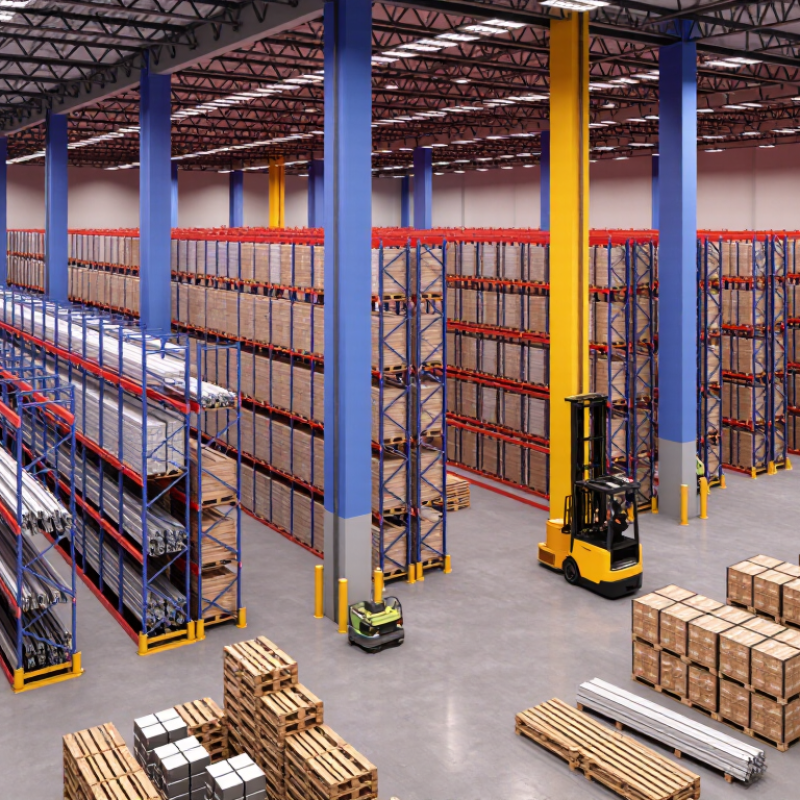
10 Best Commercial Racking Systems for Your Warehouse?

How Commercial Warehouse Racking Systems Store and Organize Inventory

Commercial warehouse racking turns vertical space into assigned locations, keeping pallets off the floor and inventory easier to find. Selective pallet racks let workers reach each pallet directly, which suits warehouses with many product types and changing order volumes. For dense storage of similar goods, drive-in layouts reduce aisle space, but access becomes less direct. Shelving works better for cartons, small parts, and hand-picked orders. Clear aisle labels matter.

Each bay should be planned around pallet dimensions, expected loads, forklift turning room, and the goods’ movement rate. Heavy, fast-moving stock often belongs at lower, accessible levels; slower items can occupy less convenient positions when safe. Location codes on beams and matching digital records help staff confirm what was received, stored, or picked. Rotation rules, such as first-in, first-out, can reduce aging when product dates matter. But the rack alone cannot keep records accurate. A bent upright or overloaded beam can undermine a tidy system; inspect racks and observe posted load ratings. Even good plans need adjustment. Measure real picking patterns after installation; a layout that looks efficient on paper may create awkward turns or extra travel.

Key Factors for Choosing a Warehouse Racking System

Choosing a warehouse racking system starts with the inventory, not the catalog. Measure pallet width, depth, and loaded height, then include any overhang. Record the heaviest load and how often each product moves. Small details matter. A pallet that clears a beam on paper may still be awkward to handle with a real forklift.

Next, match storage density to access needs. Selective racks make individual pallets easy to reach, while denser layouts may reduce aisle space and slow picking. Check aisle widths against the actual turning radius of your equipment. Confirm beam and frame capacities using documented load ratings, and have the layout reviewed by a qualified professional. Plan for floor condition, clearances, sprinkler access, and visible load notices. These are easy to miss during a fast installation plan.

Growth deserves attention, but overbuilding can waste floor space and money. Leave room for likely inventory changes, not every imagined future scenario. There is no perfect layout; a tidy drawing can still fail when replenishment and picking compete for the same aisle. Walk the proposed routes with warehouse staff before committing. Their feedback may expose a blind spot—or complicate an otherwise simple plan.

10 Best Commercial Racking Systems for Your Warehouse? - Key Factors for Choosing a Warehouse Racking System

Racking system Storage density Pallet selectivity Best suited for Typical equipment or operation Key benefit Main consideration
Selective pallet racking Low to medium Very high Warehouses handling many SKUs with frequent pallet access Counterbalance or reach trucks; each pallet position is accessed from an aisle Simple layout and direct access to each pallet Aisles use floor space that could otherwise hold storage positions
Double-deep pallet racking Medium to high Medium Warehouses with multiple pallets per SKU and moderate turnover Deep-reach truck or suitable attachment; pallets are stored two positions deep More storage positions per aisle than single-deep selective racking The rear pallet is less directly accessible, and truck requirements may change
Drive-in racking High Low Large quantities of a limited number of SKUs, often with predictable rotation Forklift enters the storage lane to place or retrieve pallets; commonly operated LIFO Reduces the number of operating aisles Pallet access is less selective; forklift operation inside lanes requires care
Drive-through racking High Low High-volume products that benefit from loading at one end and retrieval at the other Forklifts enter lanes from either end; suitable operating procedures can support FIFO flow Two-sided access can separate replenishment and picking activity Requires access at both ends and careful lane-level inventory control
Push-back racking High Low to medium Several pallets per SKU where dense storage and quick loading matter Forklift loads pallets onto nested carts or inclined rails; typically operates LIFO Multiple pallet positions can be served from a single aisle face Pallets within a lane are not individually accessible; compatible pallet sizes are important
Pallet flow racking High Low to medium High-throughput products requiring first-in, first-out rotation Pallets travel along gravity rollers or wheels from the loading face to the picking face Separates replenishment from picking and supports FIFO rotation Pallet condition, load consistency, and flow-lane maintenance affect performance
Carton flow racking Medium to high High at carton or tote level Piece-picking operations with fast-moving cartons, totes, or small items Cartons or totes move forward on gravity-fed lanes; replenishment is usually from the rear Keeps pick faces replenished and can support FIFO rotation Lane design must suit the dimensions and movement characteristics of the items
Cantilever racking Medium for long loads High by item or bundle Long, bulky, or irregular goods such as lumber, pipe, and sheet material Forklift or other handling equipment selected for the load and aisle layout Open-front design makes long goods easier to load and retrieve Arm spacing, load length, and load rating must be matched to the goods
Mobile pallet racking High High, with one working aisle open at a time Sites seeking dense pallet storage while retaining access to individual pallet locations Racking moves on powered or manually operated mobile bases to open an access aisle Reduces the number of permanent aisles compared with conventional selective layouts Access depends on aisle movement; floor, controls, and safety systems need careful planning
Automated storage and retrieval system (AS/RS) Medium to very high, depending on design System-dependent; can provide controlled access to stored loads Operations with high storage throughput, repeatable loads, or a need to reduce manual travel Automated cranes or other retrieval equipment integrated with warehouse controls Automates storage and retrieval tasks and can make use of high-bay space Requires significant system planning, integration, maintenance, and capital investment

Note: Storage density and suitability are relative and depend on warehouse dimensions, aisle widths, load sizes, handling equipment, inventory turnover, and required stock rotation.

10 Types of Commercial Racking Systems and Their Uses

Selective pallet racks provide direct forklift access to each pallet, which suits warehouses storing many product types. Double-deep racks store pallets two positions deep, increasing density but requiring compatible handling equipment. Drive-in racks let forklifts enter the rack structure, making them useful for large batches of similar goods. Drive-through racks allow entry from both ends, supporting loading from one side and retrieval from the other.

Push-back racks use inclined carts to move pallets forward as loads are removed. They suit several pallets of each product. Pallet-flow racks use rollers and gravity for first-in, first-out rotation. Carton-flow racks apply a similar approach to hand-picked cartons. Cantilever racks support long, awkward items such as timber or metal sections. Measure carefully. Uneven loads can create real problems.

For smaller items, industrial shelving keeps cartons and components within easy reach. Mobile racks move along floor rails, reducing fixed aisle space while opening access where needed. Each system changes picking speed, storage density, and equipment needs. A tidy layout drawing can still mislead if it ignores turning space, pallet sizes, or replenishment routes. Check actual load dimensions and daily workflows before choosing; the densest option may not be the easiest to operate safely.

10 Commercial Racking Systems: Typical FIFO/LIFO Compatibility

This chart compares common inventory-flow configurations. A value of 1 indicates the flow method is typically supported; 0 indicates it is not typical. Actual compatibility depends on rack layout and operating procedures.

How to Match Rack Design to Warehouse Layout and Equipment

Choosing a rack system starts with the building, not a catalog. Measure clear height, column spacing, door locations, sprinkler lines, and floor condition. Then map the travel paths used by forklifts and pallet jacks. A rack that fits on paper may still pinch a turning aisle. Small details matter.

Match rack depth and aisle width to equipment turning radius, load length, and lift height. Counterbalance trucks often need wider aisles than reach trucks. Narrow-aisle machines, meanwhile, need consistent pallet positions and suitable floor conditions. Check mast height against the highest beam and overhead obstructions. Leave room for loading, inspection, and damaged-pallet removal. Clearance is not optional.

Choose the storage pattern around inventory movement. Selective racks suit varied SKUs and frequent access; drive-in or push-back layouts can increase density for predictable product groups. But density can slow replenishment, and high bays may complicate maintenance. Verify beam capacities, upright protection, anchoring, and slab suitability with qualified professionals using real load data. Review the plan with operators before installation. Their workarounds may reveal a missed corner or blind spot. A tidy drawing alone does not prove the layout will work.

Installation, Load Safety, and Ongoing Rack Inspection

Commercial racking is only as safe as its installation. Before loading, verify that the floor can support the system, frames are plumb, anchors are fitted, and beams lock fully into place. OSHA standard 29 CFR 1910.176(b) requires stored materials to be secured against sliding or collapse. Post each bay’s load capacity where operators can see it. A missing label is not a small detail.

During installation, compare the approved layout with the actual aisle width and sprinkler clearance. Check beam connectors and anchor locations before pallets arrive. BLS reported a 4.8 recordable-injury rate per 100 full-time workers in warehousing and storage in 2022, compared with 2.7 across private industry. That gap makes routine controls worth the effort. Even careful crews can miss a detail.

Inspect racks on a set schedule and after any impact. Look for bent uprights, cracked welds, loose anchors, displaced beams, and fresh floor damage. A forklift strike can leave a subtle twist. Small clues matter. Record the bay, damage, date, and corrective action; isolate unsafe areas until assessed. RMI guidance supports regular rack inspections by trained personnel, while OSHA’s storage rule reinforces secure stacking. Inspection logs are imperfect, and a checklist cannot replace judgment. Review recurring damage with operators and adjust traffic routes or procedures where needed.