Blog
Which Pallet Rack Shelving Is Best in 2026?
Choosing pallet rack shelving in 2026 is not just a question of price or appearance. The right system must match the goods, equipment, floor plan, and pace of daily work. A pallet of bottled drinks places different demands on a rack than cartons of lightweight parts. Forklift turning space matters, too. A few inches can change how safely and smoothly an aisle operates.
Selective racks offer direct access to individual pallets. Drive-in systems can store more pallets in less space, but reduce selectivity. Push-back and pallet-flow designs suit different inventory patterns. Each option has trade-offs. There is no universal winner.
Before choosing, check pallet dimensions, loaded weights, beam capacity, aisle width, and expected expansion. Inspect the floor and existing rack condition. Ask suppliers for load data and installation details, then have a qualified professional verify the proposed layout. Labels and drawings help, but they do not replace an on-site assessment. That detail is easy to overlook.
A named expert’s quotation should be verified against a reliable original source. No source was supplied here, so attributing a quote would risk inventing evidence. That would undercut a useful comparison. This guide instead weighs practical criteria, including storage density, access, adaptability, and safety. The best pallet rack shelving is the system that fits your actual operation—not simply the one with the highest advertised capacity or lowest initial cost. Before committing, compare how each option handles a typical shift, a busy receiving day, and future changes. The answer may be less tidy than expected.
What Pallet Rack Shelving Is and How It Works
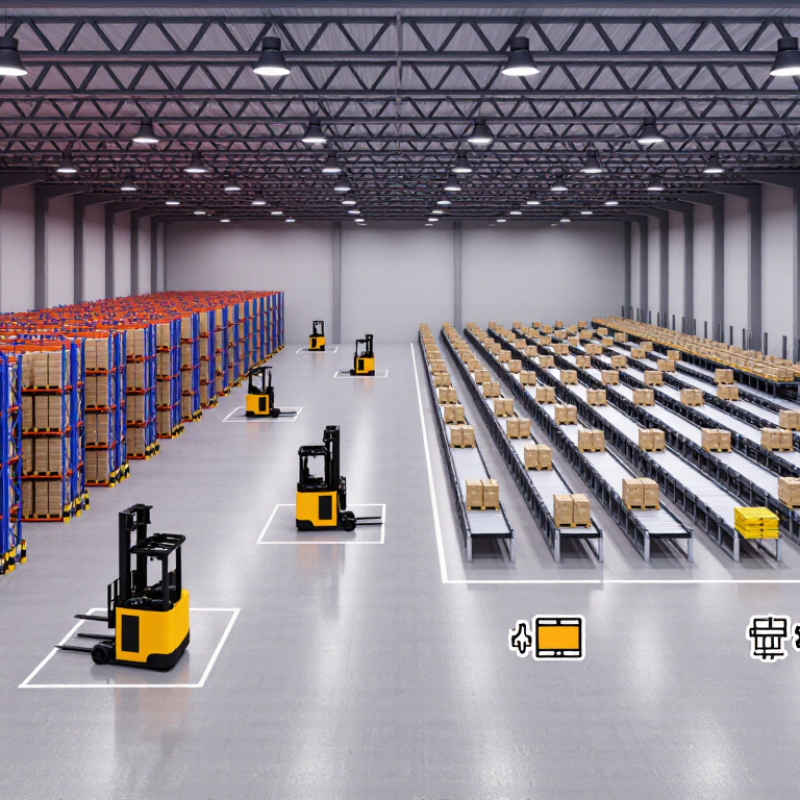
Pallet rack shelving is a steel storage system that holds palletized goods above the floor. Upright frames carry vertical loads, while horizontal beams support each pallet. The load travels through the frames to the floor, so rack capacity depends on the whole system—not just one beam. Forklifts place and retrieve pallets from the aisles. In selective rack, each pallet position is directly accessible, which suits varied stock but uses more aisle space than some dense-storage layouts.
Rack layouts can be single-deep, double-deep, or configured for high-density storage. The right choice depends on pallet size, inventory turnover, forklift reach, and clear building height. MHI’s 2024 Annual Industry Report found that 55% of surveyed supply-chain leaders expected to adopt robotics and automation within five years. That trend makes clear aisle dimensions and compatible handling equipment increasingly important. Still, automation is not a cure-all: a poorly matched layout can create bottlenecks, even in a new warehouse.
Tips: Measure loaded pallets, not just empty ones. Check beam and frame capacities against the actual load, and keep capacity labels visible. The ANSI MH16.1 rack-design standard is a useful technical reference; have a qualified professional assess site-specific conditions. A neat drawing can miss uneven floors or changing inventory. Recheck the plan when loads or equipment change.
The Main Types of Pallet Rack Shelving in 2026
Pallet rack shelving in 2026 ranges from simple selective racks to high-density systems. Selective rack gives direct access to every pallet, making it practical for warehouses with many stock-keeping units. Double-deep rack stores more pallets per aisle, but needs compatible equipment and careful slot planning. Drive-in rack suits larger batches of similar products; forklifts enter its lanes, so operators need clear procedures. Push-back systems store pallets several positions deep, while pallet-flow racks use rollers to move loads forward. Flow systems can support first-in, first-out rotation. Long, awkward items may need cantilever racks instead.
The best choice depends on inventory turnover, pallet dimensions, handling equipment, and floor space. MHI’s 2024 Annual Industry Report found that 55% of surveyed supply-chain professionals planned to increase technology investment. That figure is not a rack-selection rule, but it underlines a useful point: storage design should work with the warehouse’s wider operating systems. Before specifying a system, measure aisle widths and check floor conditions, load ratings, and sprinkler clearance. These details are easy to overlook. They matter.
Tips: Map fast-moving stock before choosing rack depth. Verify beam and frame ratings with a qualified rack professional, and inspect for damage regularly. A denser layout can save space, but it may slow picking.
How to Compare Rack Systems by Capacity, Space, and Access
Choosing pallet rack shelving in 2026 starts with the load, not the catalog. Record each pallet’s weight, dimensions, and overhang, then check the heaviest mixed bay. Capacity is not one number. Beam ratings, upright frames, slab condition, and load placement all matter; confirm the complete configuration with a qualified rack professional. Leave margin for uneven loads and future changes.
Space comparisons should include aisles, columns, sprinklers, and turning room for the equipment you actually use. A drawing can mislead. Measure loaded pallets and test turning paths on the floor before fixing aisle widths. Narrower aisles may add storage positions, but only if your lift equipment can operate there safely and consistently. Also account for staging areas; a rack plan that fills every corner can slow receiving.
Access affects picking speed and stock rotation. Selective racks offer direct access to each pallet, while denser systems trade some access for more storage positions. Consider how often each item moves, and whether staff need to reach specific pallets without shifting others. A high-density layout may look efficient, yet become awkward for a varied inventory. That trade-off is easy to underestimate. Revisit your assumptions after mapping real order patterns, not just peak capacity.
Matching Pallet Rack Shelving to Warehouse Needs
Matching pallet rack shelving to warehouse needs begins with the pallet, not the product brochure. Record pallet dimensions, loaded weight, SKU count, and daily picks. Selective rack gives direct access to each pallet, which suits varied stock and frequent picking. Drive-in rack stores more pallets in a smaller footprint, but forklifts travel into the lanes. That trade-off matters.
MHI’s 2024 Annual Industry Report found that 55% of surveyed supply-chain leaders planned to increase investment in technology and innovation. The figure signals changing warehouse priorities; it does not identify one best rack. Measure clear height, aisle width, floor condition, and sprinkler clearance before planning a layout. Check rack design against applicable engineering standards, including ANSI MH16.1, and have qualified professionals verify load capacities. Measure twice.
Dense storage can look efficient on a plan and still slow replenishment when fast-moving pallets sit deep in a lane. Walk the proposed routes with the actual forklift and pallet sizes. Leave room for turning, damaged-pallet handling, and seasonal inventory shifts. No layout stays perfect. Review it after a few weeks of real picking, then adjust where congestion appears.
| Rack System | Best Suited To | Pallet Access | Storage Density | Typical Handling Needs | Key Planning Considerations |
|---|---|---|---|---|---|
| Selective pallet rack | Warehouses with many product lines, frequent picking, or varied pallet turnover. | Direct access to each pallet position from the aisle. | Moderate; aisles are needed between rack rows. | Conventional forklifts, selected according to aisle width and lift height. | Offers high selectivity and straightforward stock rotation, but generally uses more floor space for aisles than dense-storage systems. |
| Double-deep rack | Facilities holding several pallets of each product where some selectivity can be traded for added density. | Two pallet positions deep; the rear pallet is accessed after the front position is cleared. | Higher than selective rack in many layouts. | Reach trucks or forklifts equipped for double-deep access. | Plan for compatible equipment, consistent pallet dimensions, and inventory controls that account for reduced access to rear positions. |
| Drive-in rack | High-volume storage of relatively few product lines, with multiple pallets per lane. | Forklifts enter the rack lanes; access is typically from one end. | High, because fewer aisles are required. | Forklifts capable of entering the storage lanes and placing loads on guide rails. | Commonly operated on a last-in, first-out basis. Lane depth, pallet condition, load consistency, and safe driving clearances need careful planning. |
| Drive-through rack | Bulk storage where loads can be handled from opposite ends of a lane. | Access from both ends of the rack lane. | High, with fewer aisles than selective rack. | Forklifts that can enter the lanes from either side. | Can support first-in, first-out rotation when loading and unloading are managed from opposite ends. Traffic flow and lane discipline are important. |
| Push-back rack | Medium- to high-volume storage with several pallets per product line and limited aisle space. | Loads are placed and retrieved from the aisle; pallets move along inclined carts. | High compared with selective rack. | Forklifts suited to the rack layout and the system’s loading sequence. | Typically operates on a last-in, first-out basis. Confirm pallet compatibility, lane capacity, and operating procedures with the system designer. |
| Pallet flow rack | High-throughput operations, order picking, or products requiring first-in, first-out rotation. | Loads are replenished at one end and retrieved at the other. | High, with deep lanes and separate loading and picking aisles. | Forklifts for replenishment; operators or picking equipment at the discharge face. | Gravity rollers or wheels move pallets through each lane. Pallet quality, load consistency, flow speed, and braking or control features need evaluation. |
Selection note: The best system depends on SKU count, pallets per SKU, inventory-rotation rules, order-picking method, available building height, floor conditions, and material-handling equipment. Have rack capacity, clearances, anchoring, and seismic requirements reviewed for the specific site and loads.
Evaluating Safety, Compliance, and Long-Term Adaptability
In 2026, the best pallet rack is not simply the one with the highest stated capacity. It is the system that matches actual loads, equipment, floor conditions, and daily handling practices. ANSI MH16.1 sets engineering requirements for industrial steel storage racks; confirm the applicable edition and local building requirements with a qualified professional. Then verify beam and frame capacities against the heaviest pallet, including its contents. A load plaque helps, but only if it reflects the installed configuration.
Safety depends on what happens after installation, too. The U.S. Bureau of Labor Statistics reported 2.6 million nonfatal workplace injuries and illnesses in private industry during 2023. That figure is not specific to rack failures, but it underscores why clear aisles, trained operators, and routine damage checks matter. Look closely at upright bases, anchors, and beam connections. A bent upright is not a cosmetic issue. Isolate damaged sections and have them assessed; do not assume a quick patch restores capacity.
Long-term adaptability means choosing compatible beam levels and layouts that can change as pallet sizes and inventory shift. MHI’s 2024 Annual Industry Report found that 55% of surveyed organizations expected to increase supply-chain technology investment. That is a signal to plan for evolving workflows, not a reason to overbuy automation. A rack plan can look flexible on paper and still fail when forklifts need more clearance. Measure real equipment, review load data, and revisit the layout after operational changes. Some assumptions will be wrong. Check them.
Which Pallet Rack Shelving Is Best in 2026?
A practical comparison of typical pallet access and stock rotation characteristics—not a safety certification or a substitute for a site-specific engineering review.
How to read this: 1 means the characteristic is typically provided by the rack design; 0 means it is not. Selective rack gives direct access to each pallet position. Pallet-flow rack typically supports FIFO rotation; drive-in and push-back systems typically operate LIFO. These are general design characteristics, not guarantees for every configuration. OSHA requires stable storage and safe material handling (29 CFR 1910.176(b) and 1910.178(o)(1)); rack capacity, damage controls, anchoring, inspections, and code compliance must be verified for the specific installation.
Related Posts
-
What Is Pallet Shelving and How Does It Work?
-
10 Best Pallet Shelving Systems for Global Buyers?
-
Top 10 Types of Pallet Shelving for Warehouses
-

2026 Top Trends in Pallet Racking Innovations and Solutions?
-
2026 Best Heavy Duty Pallet Racks for Industrial Storage Solutions?
-
Best Pallet Rack Beams for Global Buyers in China?