Blog
Top 10 Heavy Duty Racking Systems for Warehouses
Choosing the right heavy duty racking system can transform warehouse capacity, safety, and daily workflow. A well-designed rack stores more pallets without blocking forklift routes or emergency access. Yet the strongest-looking frame is not always the most suitable choice.
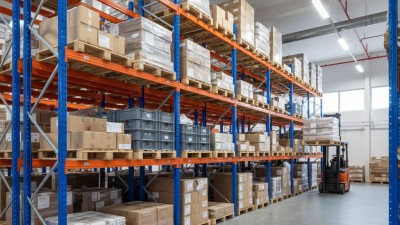
This guide examines ten proven racking systems for demanding warehouse environments. It considers load capacity, pallet dimensions, ceiling height, aisle width, and handling equipment. Selective pallet racking supports quick access and flexible stock rotation. Drive-in racking increases density but may reduce product accessibility. Cantilever systems suit long materials, while push-back and pallet flow designs improve storage efficiency.
Real warehouse decisions require more than catalogue photographs. Engineers should verify beam ratings, upright protection, floor conditions, and anchoring requirements before installation. Manufacturer specifications and qualified inspections remain essential. A rack holding 1,000 kilograms per level still needs balanced loading and regular checks. Small dents can become expensive problems.
Practical details matter.
The top ten options in this article are compared through a professional, experience-based lens. Their advantages, limitations, maintenance needs, and ideal applications are clearly explained. No ranking fits every building. A cold-storage facility, automotive warehouse, and spare-parts room will demand different solutions. Even experienced teams can overlook clearance around sprinklers or forklift turning space. That is why careful measurement should come before any purchase. The best system is not necessarily the tallest or densest. It is the one that supports safe movement, reliable inventory access, and future operational changes.
Heavy-Duty Warehouse Racking: Purpose, Structure, and Core Features
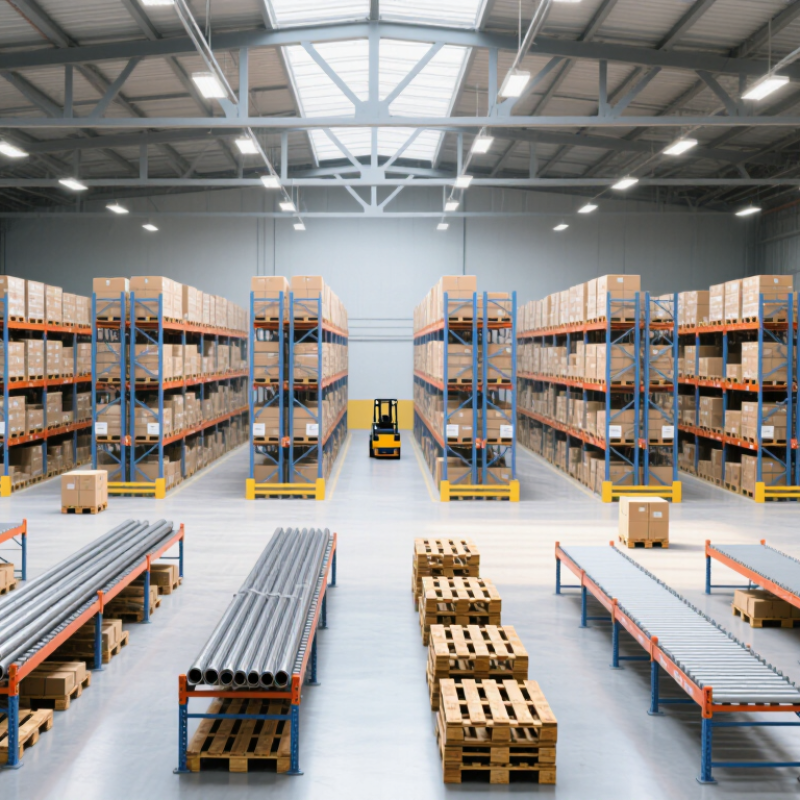
Heavy-duty warehouse racking is more than steel shelving. It creates a controlled vertical structure for pallets, cartons, and long loads. Its purpose is simple: increase usable cube while keeping products reachable and traceable. MHI’s 2024 Annual Industry Report says 83% of supply-chain leaders expect robotics and automation adoption within five years. That forecast makes rack geometry increasingly important. A rack must support people and technology together.
The structure usually combines upright frames, horizontal beams, braces, base plates, and anchors. Beam levels define pallet positions; frames transfer load into the floor. Wire decking can reduce falling-object exposure, but it does not replace engineering review. OSHA’s 29 CFR 1910.176(b) requires stored materials to remain stable and secure. Load plaques should show bay capacity, beam capacity, and safe operating limits. Small omissions become expensive. Real facilities also need flue spaces, impact protection, and clear forklift aisles. Spacing depends on pallets, equipment, seismic conditions, and fire protection design.
The U.S. Bureau of Labor Statistics recorded 2.6 million nonfatal private-industry workplace injuries and illnesses in 2023. That figure is not a racking statistic, but it reinforces a practical lesson: access and housekeeping matter. Among the top ten heavy-duty systems, selective pallet racking offers direct access, while drive-in designs trade access for density. Cantilever racks suit long goods; push-back and shuttle layouts need tighter inventory discipline. I would not choose by capacity alone. I would inspect damaged uprights, uneven floors, and changing pallet weights every week. A perfect layout on paper can fail during a rushed shift.
How to Classify the Ten Main Heavy-Duty Racking Systems
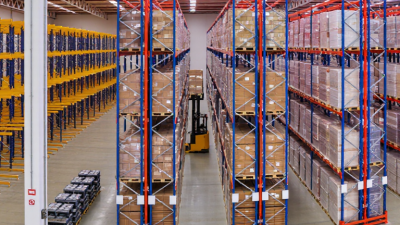
Heavy-duty racking systems should be classified by access, storage density, load type, and operating method. Selective pallet racking gives direct access to every pallet. Double-deep racking stores pallets behind one another, improving density but reducing access. Drive-in racking supports high-density storage for similar goods. Drive-through racking allows loading from both ends.
Push-back racking uses nested carts and suits products with several pallets per item. Pallet flow racking uses rollers and supports first-in, first-out movement. Shuttle racking uses powered carts inside deep lanes, reducing forklift travel. Cantilever racking serves long goods such as pipes, timber, and metal profiles. Mobile racking moves along floor rails and saves aisle space. Automated storage and retrieval systems combine racks, software, and machines for controlled high-volume handling. These ten systems are not interchangeable. A warehouse handling mixed cartons may regret choosing a dense system designed for uniform pallets.
Tips: Check floor capacity, pallet dimensions, load ratings, and aisle widths before selection. Keep damaged uprights out of service. Use trained inspectors and record every repair. In my experience, layout drawings often look efficient until real forklifts turn inside them. A small clearance mistake can create daily delays. Local engineering requirements should also be reviewed before installation, because rack performance depends on the building, equipment, and operating habits.
Top 10 Heavy-Duty Racking Systems for Warehouses
How to Classify the Ten Main Heavy-Duty Racking Systems
Top 10 Heavy-Duty Racking Systems and Their Warehouse Applications
Heavy-duty racking should match product weight, turnover, and handling equipment. Selective pallet racks suit mixed inventory and direct forklift access. Double-deep racks increase density, but they need reach trucks and careful stock planning. Drive-in racks store large batches with limited stock-keeping units. Drive-through racks support loading from both sides and can improve first-in, first-out rotation.
Push-back racks work well for medium-turnover products and multiple pallet depths. Pallet-flow racks use gravity rollers for controlled stock rotation. Shuttle racks increase storage density while reducing forklift travel. Cantilever racks support long materials, such as pipes, timber, and metal profiles. Mobile racks create compact storage by moving entire rack rows. Automated storage and retrieval systems provide high-density storage with accurate inventory control.
Tips: Check slab capacity, beam deflection, aisle width, and forklift reach before installation. Leave enough clearance around sprinklers and emergency routes. Use visible load labels. Inspect frames, anchors, and beams regularly. A small impact can weaken a structural member.
The perfect layout rarely exists. A dense system may slow picking. A fast system may waste valuable floor space. Warehouse audits often reveal overlooked travel paths and uneven loading habits. I would recheck seasonal demand before choosing a fixed design. Qualified engineers should verify the final configuration against local safety requirements.
Top 10 Heavy-Duty Racking Systems and Their Warehouse Applications
| Rank | Racking System | Typical Configuration | Typical Load Capacity | Storage Density | Access and Selectivity | Inventory Rotation | Best Warehouse Applications |
|---|---|---|---|---|---|---|---|
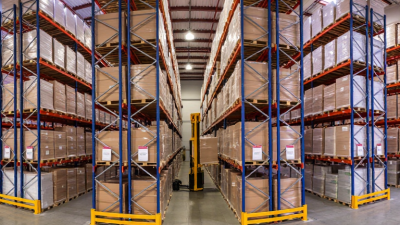
| 1 | Selective Pallet Racking | Single- or double-entry frames with adjustable beam levels and dedicated pallet locations | Approximately 500–4,000 kg per pallet position, depending on beam length and design | Low to medium | Direct access to every pallet; highest selectivity among conventional pallet systems | Suitable for FIFO or LIFO when combined with appropriate inventory controls | General distribution centers, spare-parts warehouses, retail stockrooms, and operations with many SKUs |
| 2 | Double-Deep Pallet Racking | Two pallet positions stored one behind another, normally served by reach trucks with extended forks | Approximately 800–3,000 kg per pallet position | Medium to high | Access to the front pallet is immediate; rear pallet access requires moving the front pallet | Generally LIFO for each lane; best for products with multiple pallets per SKU | High-volume storage where more density is needed than selective racking while retaining reasonable accessibility |
| 3 | Drive-In Pallet Racking | Forklifts enter storage lanes supported by rails; loading and retrieval usually occur from one side | Approximately 500–1,500 kg per pallet position | Very high | Limited selectivity; pallets are handled in lane sequence | Primarily LIFO | Cold stores, seasonal inventory, and large quantities of identical or low-variation products |
| 4 | Drive-Through Pallet Racking | Deep storage lanes with forklift access from both ends of the rack | Approximately 500–1,500 kg per pallet position | Very high | Both-side access improves lane flexibility compared with drive-in layouts | Can support FIFO when one side is dedicated to loading and the opposite side to unloading | High-volume food, beverage, chemical, and temperature-controlled storage with predictable product flow |
| 5 | Push-Back Pallet Racking | Nested carts or wheeled platforms allow pallets to be loaded and pushed backward within each lane | Approximately 500–1,500 kg per pallet position | High | Front-facing access to several pallets per lane; better selectivity than drive-in systems | Typically LIFO | Medium- to high-volume warehouses storing multiple pallets per SKU with limited aisle space |
| 6 | Pallet Flow Racking | Inclined roller lanes move pallets by gravity from the loading side toward the picking side | Approximately 500–1,500 kg per pallet position | High | Separate loading and unloading faces provide organized lane management | Strong FIFO capability | Perishable goods, food and beverage distribution, pharmaceutical storage, and date-sensitive inventory |
| 7 | Pallet Shuttle Racking | Motorized shuttle carriers move pallets through deep lanes while forklifts remain near the lane entrance | Approximately 500–1,500 kg per pallet position | Very high | Good lane-level selectivity with reduced forklift travel inside the rack | Supports FIFO or LIFO according to lane design and operating procedure | High-density cold storage, high-throughput warehouses, and facilities with repetitive pallet movements |
| 8 | Cantilever Racking | Vertical columns with projecting arms and no front columns, designed for long or irregular loads | Approximately 250–2,000 kg per arm level; total capacity depends on column design | Medium | Open-front access supports easy loading of long materials | Not normally governed by FIFO or LIFO | Steel service centers, lumber yards, pipe storage, furniture warehouses, construction materials, and profiles |
| 9 | Mobile Pallet Racking | Racking aisles mounted on powered bases that open only where access is required | Approximately 500–3,000 kg per pallet position | Very high | One or more movable aisles provide selective access while reducing permanently open aisle space | Supports FIFO or LIFO depending on the storage layout and handling process | Archive storage, cold rooms, high-value inventory, and facilities where floor area is expensive |
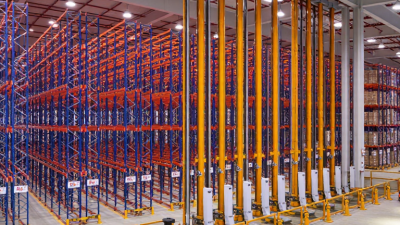
| 10 | Automated Pallet Storage and Retrieval System | Computer-controlled cranes or shuttles place and retrieve pallets from tall storage aisles | Approximately 500–1,500 kg per pallet position; system-specific designs may differ | Very high | Automated location control provides accurate, repeatable access with limited manual forklift operation | FIFO, LIFO, batch, and expiry-date rotation can be programmed | High-throughput distribution centers, manufacturing plants, controlled environments, and operations requiring strong inventory accuracy |
Capacity figures are typical planning ranges rather than guaranteed ratings. Actual capacity, rack height, aisle width, seismic requirements, and equipment compatibility must be confirmed through a site-specific structural and operational design.
How to Select the Right Racking System for Load, Space, and Workflow
Top 10 Heavy Duty Racking Systems for Warehouses
How to Select the Right Racking System for Load, Space, and Workflow
Choosing heavy duty racking begins with the load, not the price. Record pallet weight, dimensions, center of gravity, and loading frequency. Selective pallet racking suits varied stock and direct access. Drive-in systems increase density but reduce product rotation. Double-deep, push-back, pallet flow, cantilever, and automated systems serve different workflows. Mezzanine, mobile, and carton-flow designs can recover valuable floor space. Do not treat them as interchangeable.
MHI’s 2024 Annual Industry Report reported that 55% of surveyed supply-chain professionals currently use cloud computing. This suggests that rack selection should connect with inventory data and warehouse controls. A high-density layout may look efficient, yet longer travel paths can slow picking. Measure travel distance, replenishment time, aisle clearance, and forklift turning radius before approving drawings. Small mistakes become expensive.
Safety requires engineering evidence. Rack frames, beams, anchors, floors, and seismic conditions must match the intended load. OSHA 29 CFR 1910.176(b) requires stored materials to remain stable and secure against sliding or collapse. ANSI/RMI MH16.1 provides structural design guidance for steel storage racks. In practice, labels are often missing or outdated. That is a warning sign. Recheck actual loads after product changes, because the original design may no longer reflect daily operations.
Installation, Safety, Inspection, and Maintenance Requirements
Top 10 Heavy Duty Racking Systems for Warehouses require disciplined installation, inspection, and maintenance.
Selective pallet racks, drive-in racks, push-back racks, cantilever racks, and multi-tier systems need different load plans. Every upright, beam, anchor, and safety barrier must match the approved design. Never assume a similar bay has the same capacity.
Installation starts with a level floor and verified slab strength. Installers should check plumbness, anchor torque, beam locks, and aisle clearances. Labels must show rated loads at visible positions.
OSHA reports approximately 85 annual forklift fatalities and 34,900 serious injuries involving powered industrial trucks.
Forklift traffic therefore deserves physical separation, speed controls, and trained operators. Small impacts matter.
Inspections need both routine attention and documented expertise. Staff should check damaged frames, missing pins, leaning uprights, overloaded beams, and loose anchors during each shift. EN 15635 recommends at least an annual expert inspection for steel storage equipment.
OSHA’s warehousing guidance also emphasizes maintaining clear aisles and stable storage. BLS reported 1,050 fatal work injuries in transportation and warehousing during 2023.
That figure includes broader workplace risks, but it still demands caution. A checklist can miss hidden slab movement or repeated forklift contact. Let engineers reassess unusual damage, altered layouts, and new loads before repairs begin.
Maintenance records should include photos, dates, corrective actions, and the person who verified completion. Percentage-based housekeeping targets sound useful, yet a blocked emergency aisle needs immediate action, not a monthly score.