
Blog
7 Best Heavy Duty Racking Systems for Warehouses?
A warehouse rack can look solid and still be wrong for the job. Beam height, pallet dimensions, forklift clearance, floor condition, and load weight all matter. One misjudged bay can leave valuable space unused—or create a daily handling problem. Choosing a heavy duty racking system is therefore more than comparing steel frames. It means matching storage design to real inventory, equipment, and work patterns.
The 2024 MHI Annual Industry Report found that 55% of surveyed supply-chain professionals planned to increase investment in robotics and automation. That figure is not specific to racking, but it signals a changing warehouse environment: storage must work alongside evolving equipment and workflows. Dr. James A. Tompkins, a warehouse-design specialist and author of The Warehouse Management Handbook, emphasizes the importance of aligning facility design with material flow. In practical terms, that means considering how pallets enter, turn, and leave each aisle—not just how many fit on a drawing.
There is no universal best rack. Not even close. Selective pallet racks offer direct access to many SKUs, while drive-in, push-back, pallet-flow, cantilever, and mezzanine systems serve different loads and space constraints. This guide compares seven options, with attention to capacity, selectivity, layout, and everyday usability. Treat the figures as starting points, not promises; actual capacity depends on the rack configuration, installation, and load conditions. A careful site review may take longer. It can also reveal the detail that a polished product sheet misses.
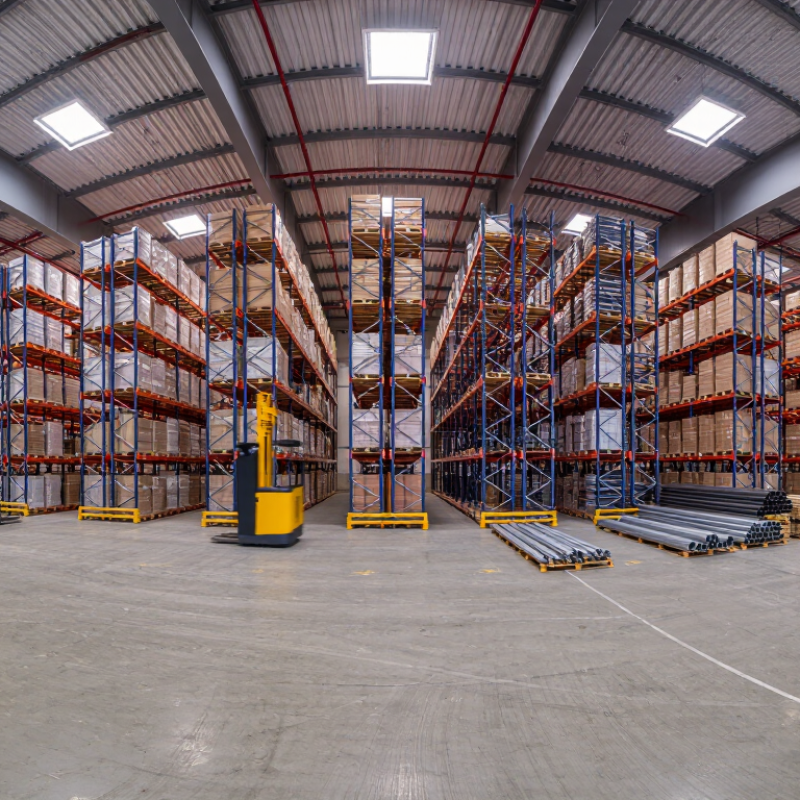
What Heavy-Duty Warehouse Racking Systems Are and How They Work
Heavy-duty warehouse racking is a steel framework designed to store palletized goods above the floor. Upright frames carry the vertical load, while horizontal beams support pallets at chosen heights. Beam connectors transfer weight into the uprights and, ultimately, the floor. The rack is not a shelf. Each bay has a rated capacity, and loads must stay within it.
Forklifts typically place pallets onto the beams and retrieve them from the aisles. Workers set beam levels to fit the cargo, leaving enough clearance for safe handling. In selective racking, each pallet position is directly accessible, which helps when inventory changes often. Other layouts can store more pallets in less space, but may require forklifts to enter the rack lanes. That trade-off matters.
Safe operation starts with suitable floor conditions, correctly installed frames, and secure anchoring where the design requires it. Pallets should sit evenly across the beams, not hang over an edge or rest on damaged supports. Check the system’s rated loads and inspect for bent uprights, loose connections, or impact damage. A small beam-height mismatch can make handling awkward; it is easy to overlook during a busy shift.
7 Best Heavy-Duty Racking Systems for Warehouses: What They Are and How They Work
| Racking System | How It Works | Best Suited For | Storage Density | Selectivity | Key Considerations |
|---|---|---|---|---|---|
| Selective Pallet Racking | Loads rest on beams between upright frames. A forklift accesses each pallet directly from an aisle. | Warehouses with many SKUs, varied pallet sizes, and frequent picking. | Low to medium; aisles are required between rack rows. | Very high: every pallet is directly accessible. | Flexible and easy to reconfigure, but uses more aisle space than high-density systems. |
| Double-Deep Racking | Two pallet positions are placed one behind the other on each side of an aisle. A deep-reach forklift retrieves the rear pallet. | Operations storing multiple pallets of the same SKU with moderate turnover. | Medium to high; fewer aisles are needed than with selective racking. | Moderate: the front pallet must be moved to reach the rear position. | Requires compatible reach equipment and careful inventory planning, often using a last-in, first-out approach within each lane. |
| Drive-In Racking | A forklift enters a supported storage lane and places pallets on rails, typically loading and retrieving from the same end. | Large quantities of a small number of SKUs, such as seasonal or batch-stored goods. | High: storage lanes reduce the number of access aisles. | Low: pallets within a lane are not individually accessible from the aisle. | Usually operates on a last-in, first-out basis. Forklift clearance, lane depth, and rack protection need careful planning. |
| Drive-Through Racking | A forklift enters one end of a lane and exits the other. Loading and retrieval can take place from opposite sides. | High-volume storage where stock rotation is important and loads can be organized by lane. | High: the system stores pallets in deep lanes with fewer aisles. | Low to moderate: access is lane-based rather than pallet-by-pallet. | Can support first-in, first-out flow when loading and unloading are managed from opposite ends; requires access at both ends. |
| Push-Back Racking | Each pallet sits on a nested cart or roller carriage. Loading a new pallet pushes earlier pallets farther back along the lane. | Several pallets per SKU where compact storage and access from a single aisle are desirable. | High: multiple pallet positions are stored behind each aisle-facing position. | Moderate: each lane is typically managed on a last-in, first-out basis. | Moving carts or rollers need routine inspection; compatible pallet dimensions and controlled loading are important. |
| Pallet Flow Racking | Pallets are loaded at the higher end of a sloped lane and move by gravity on rollers toward the picking face. | High-throughput goods that benefit from stock rotation, including date-sensitive products. | High: deep lanes provide multiple pallet positions while separating loading and picking aisles. | Lane-based, with first-in, first-out movement through each lane. | Requires suitable pallets, controlled flow, and regular checks of rollers, brakes, and lane conditions. |
| Heavy-Duty Cantilever Racking | Horizontal arms project from upright columns to support loads without front columns obstructing the storage face. | Long, bulky, or irregular items such as steel sections, timber, pipe, and sheet materials. | Varies by layout; arms can be arranged on one or both sides of the uprights. | High for items stored along accessible rack faces. | Arm capacity depends on the load position and system design. Loads should be distributed and secured according to the rack specification. |
Capacity and safety note: Actual load limits depend on the rack design, beam and upright configuration, pallet dimensions, load distribution, floor conditions, and installation. Confirm rated capacities with a qualified rack designer, follow posted load notices, and inspect the system regularly.
Related Posts
-
What Is Pallet Shelving and How Does It Work?
-
What Are the Top Types of Warehouse Racking Systems?
-
Top 10 Warehouse Pallet Racks for Maximizing Storage Efficiency?
-
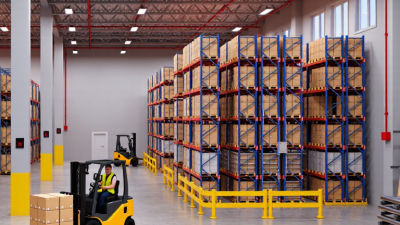
Top 10 Types of Pallet Shelving for Warehouses
-
China Best Warehouse Racking System Suppliers?
-
Why Is Warehouse Racking Important for Your Business?