Blog
What Are the Top Types of Warehouse Racking Systems?
The source articles were not included, so I can’t responsibly verify an industry report statistic or an expert’s exact quotation. Please provide the articles or the expert and report sources, and I can write the requested introduction without inventing citations.

Rack Design Basics: ANSI MH16.1 and OSHA 29 CFR 1910.176(b)
ANSI MH16.1 sets engineering criteria for industrial steel storage racks, including design, testing, and use. Rack capacity depends on the complete configuration, not just the beam rating. Upright frames, beam connections, anchors, load placement, and floor conditions all matter. A change in beam height or stored load can alter the system’s performance.
OSHA 29 CFR 1910.176(b) requires stored materials to remain stable and secure against sliding or collapse. It does not replace rack engineering. The two references address related but distinct concerns: ANSI MH16.1 informs rack design, while OSHA’s rule addresses safe material storage. That distinction matters. In practice, keep loads within posted limits, place pallets evenly, and promptly inspect visibly bent or damaged components. A capacity sign helps, but it cannot correct a poor load plan.
The U.S. Bureau of Labor Statistics reported a 2022 recordable injury and illness rate of 4.8 cases per 100 full-time workers in warehousing and storage, compared with 2.7 across private industry (BLS, Survey of Occupational Injuries and Illnesses). These figures do not isolate rack-related incidents, but they underscore why routine checks matter. Look closely at aisle ends, where forklift impacts may go unnoticed, and at pallets that overhang beams. One weak point is easy to miss. A careful inspection still depends on good judgment, and judgment deserves a second look.
| Racking System | Typical Storage Method | Selectivity | Space Use | Common Applications | Key Design and Safety Considerations |
|---|---|---|---|---|---|
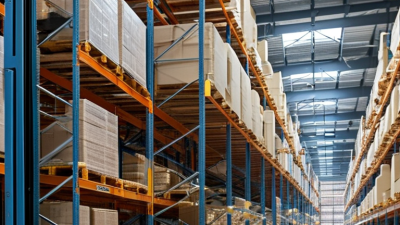
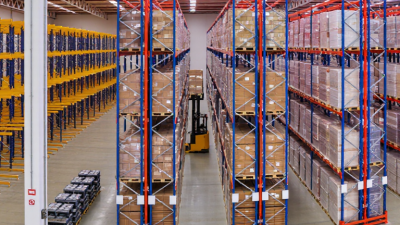
| Selective pallet rack | Each pallet is stored in an individual accessible position, usually on horizontal beams. | High; each pallet position is generally accessible without moving another pallet. | Moderate; aisles are needed between rack rows for forklift access. | Warehouses with many product types, mixed inventory, or frequent picking. | Design the rack for the specified loads and configuration. Protect exposed frames where vehicles may strike them, and keep loads within the rack’s rated limits. |
| Double-deep rack | Pallets are stored two positions deep, typically accessed with equipment designed for deeper reach. | Medium; the front pallet can restrict access to the pallet behind it. | Higher storage density than single-deep selective rack, with fewer access aisles in some layouts. | Operations with multiple pallets of the same product and suitable handling equipment. | Account for reach-truck requirements, load placement, aisle dimensions, and the effect of the deeper arrangement on rack design and operation. |
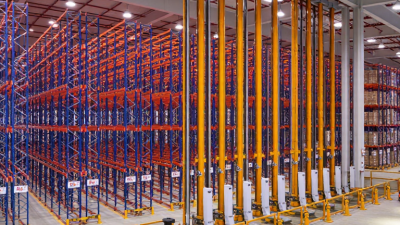
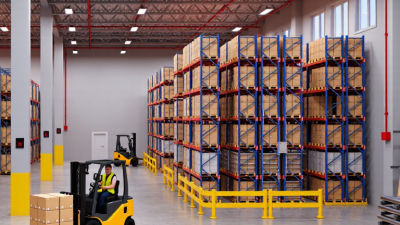
| Drive-in / drive-through rack | A forklift enters a storage lane to place or retrieve pallets on support rails. Drive-in is normally accessed from one end; drive-through can be accessed from both ends. | Low to medium; pallets within a lane are commonly handled in sequence. | High; lanes reduce the number of access aisles. | High-volume storage of similar products, often where storage density is more important than direct access to every pallet. | Specify the intended loading sequence and forklift clearances. Pallet and rail compatibility, careful vehicle operation, and protection from impact are important. |
| Push-back rack | Pallets are placed on nested carts or inclined tracks; adding a pallet pushes the previous one farther back. | Medium; each lane typically stores a sequence of pallets handled from the same face. | High; multiple pallet positions can be stored behind one aisle-facing opening. | Multiple pallets per product, with replenishment and retrieval generally managed on a last-in, first-out basis. | Use compatible pallets and follow the system’s loading and unloading sequence. Track, cart, and rack components must be designed for their intended loads. |
| Pallet-flow rack | Pallets move by gravity along inclined roller or wheel lanes from the loading side toward the retrieval side. | Lane-based; individual pallets are generally retrieved in sequence. | High; storage and retrieval can occur at opposite ends of a lane. | High-throughput operations using first-in, first-out inventory rotation. | Consider pallet condition, lane slope, flow-control components, and loading practices. Keep lanes and operating areas clear and use the system as designed. |
| Cantilever rack | Long or irregular items rest on horizontal arms attached to upright columns, without front columns obstructing access. | High for accessible arms and stored items. | Variable; layout depends on item length, arm spacing, and handling equipment. | Lumber, pipe, bar stock, panels, and other long or bulky materials. | Design arms, columns, and bracing for the intended load and its distribution. Secure items against rolling, sliding, or falling as appropriate. |
| Carton-flow rack | Cartons or totes move along slightly inclined tracks from a replenishment side to a picking side. | High at the picking face; products are accessed from designated flow lanes. | Can improve use of picking space by supporting replenishment from behind the pick face. | Piece-picking and case-picking areas with repeatable carton or tote sizes. | Confirm that containers are compatible with the flow track and that the structure and supports are suitable for the intended loads. |
| Mobile aisle rack | Rack rows move on powered or manually operated bases to open an access aisle where needed. | High when the required aisle is open; only selected aisles may be accessible at a time. | High; reduces the number of permanent aisles. | Storage areas where floor space is limited and access frequency allows aisle sharing. | Plan for operating controls, safety devices, floor capacity and flatness, and clear access routes. Follow the system’s operating procedures. |
| Rack design and safety basics: ANSI MH16.1 provides design, testing, and utilization requirements for industrial steel storage racks within its scope. OSHA 29 CFR 1910.176(b) requires stored materials to be secured against sliding or collapse and storage areas to be kept free of hazards. Neither reference replaces a site-specific assessment: rack configuration, loads, anchorage, floor conditions, handling equipment, and local requirements should be reviewed by qualified professionals. Do not exceed posted load limits, and address damaged rack components promptly. | |||||