
Blog
10 Best Warehouse Racking Systems for Global Buyers?
Choosing a warehouse racking system is not just a matter of fitting more pallets into a building. The right design affects picking speed, stock visibility, aisle access, and safe daily operations. A narrow aisle can save floor space, for example, but may require suitable handling equipment and careful traffic planning. Small details matter.
This guide compares 10 warehouse racking systems for global buyers, including selective pallet racks, drive-in racks, push-back racks, and cantilever options. Each serves different storage needs. Selective racks offer direct access to many pallet positions, while denser systems can suit facilities holding larger quantities of fewer products. No single design is best for every warehouse. That point is easy to overlook.
When evaluating warehouse racking, buyers should consider pallet dimensions, load weights, inventory turnover, ceiling height, and the equipment already in use. Local installation practices and applicable safety requirements also deserve attention; specifications should be confirmed with qualified professionals before purchase. Ask suppliers for clear load ratings, layout drawings, material details, and installation support. Compare these against real operating conditions, not only a quoted price.
The article highlights practical strengths and trade-offs, helping readers build a shortlist before requesting proposals. A rack may look efficient on paper, yet create awkward turns or slow replenishment once workers use it. That happens. Careful planning, accurate measurements, and honest discussion with suppliers can reduce costly surprises and support a system that works beyond the showroom.
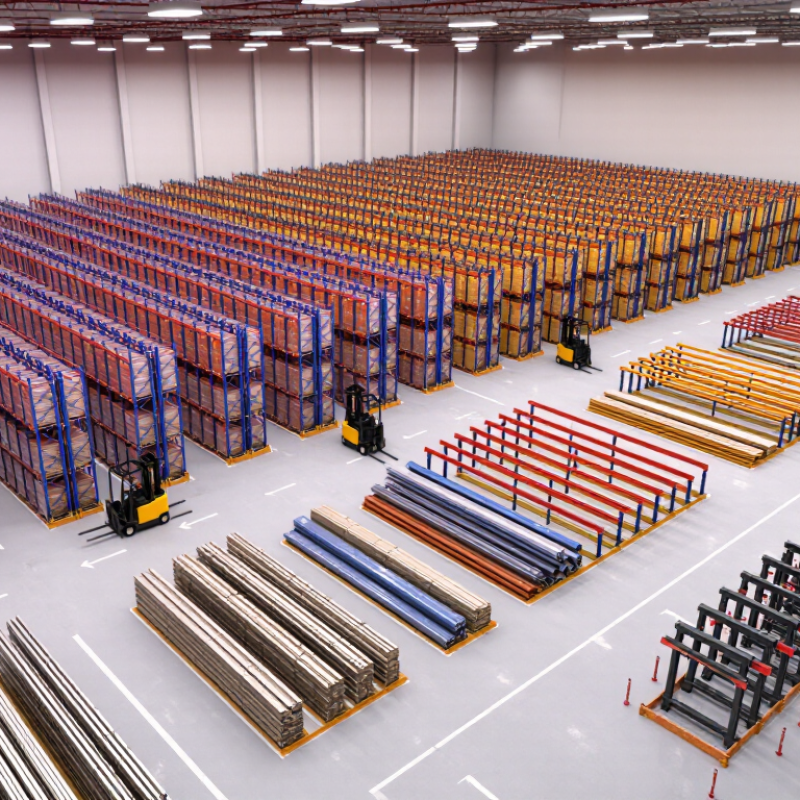
Warehouse Racking Basics: Pallet Access, Load Capacity, and Storage Density
Warehouse racking works best when pallet access matches the rhythm of daily operations. Selective racks let forklifts reach each pallet directly, which suits varied products and frequent picking. Drive-in layouts can store more pallets in a smaller footprint, but forklifts must enter the rack lanes. That changes how carefully operators need to work. Consider aisle width, turning space, and the actual equipment used—not just the floor plan.
Load capacity needs close attention. Check the rated capacity for each beam level and upright frame, then compare it with the heaviest pallet load. A pallet holding dense cartons may look smaller than a bulky, lighter load. Weight still matters. Loads should sit evenly on the beams, and damaged uprights or loose connections deserve prompt inspection. Capacity figures depend on the rack configuration, so altered beam heights can change what a system safely supports.
Higher storage density can reduce wasted floor space, but it may also slow access or make stock rotation harder. Map fast-moving items near picking areas and confirm that sprinkler clearance, lighting, and forklift reach remain practical. Measure sample pallets, including any overhang. A few centimeters can affect clearances. It is tempting to maximize every aisle and beam level; in practice, leaving room for safe handling often proves more useful. Recheck the layout when pallet sizes or inventory patterns change.
10 Best Warehouse Racking Systems for Global Buyers? - Warehouse Racking Basics: Pallet Access, Load Capacity, and Storage Density
| Racking system | Pallet access | Indicative design load per position | Relative storage density | Typical applications | Key planning consideration |
|---|---|---|---|---|---|
| Selective pallet racking | Direct access to every pallet from the aisle | Often designed around 1,000–2,500 kg | Low to medium | Warehouses with many SKUs, mixed stock, and frequent picking | Offers high selectivity but requires more aisle space than deep-lane systems. |
| Double-deep racking | Access from the aisle to the front pallet; rear pallet requires a deep-reach truck | Often designed around 1,000–2,000 kg | Medium to high | Operations holding several pallets per SKU | Check truck reach, aisle layout, and inventory rotation requirements. |
| Drive-in racking | Forklift enters storage lanes; typically managed as last-in, first-out (LIFO) | Often designed around 800–1,500 kg | High | Large quantities of similar products with relatively low SKU variety | Lane depth and forklift operating clearances are critical to safe operation. |
| Drive-through racking | Forklift can enter from either end; can support first-in, first-out (FIFO) workflows | Often designed around 800–1,500 kg | High | Bulk storage where stock rotation is important | Requires access aisles at both ends, which affects the floor-space calculation. |
| Push-back racking | Front-aisle access; pallets move on carts within each lane, usually LIFO | Often designed around 800–1,500 kg | High | Multiple pallets per SKU with more selectivity than drive-in storage | Confirm pallet uniformity, lane depth, and suitability for the handling equipment. |
| Pallet-flow racking | Loading and picking occur at opposite ends; typically FIFO | Often designed around 800–1,500 kg | High | High-turnover products, including date-sensitive stock | Roller tracks, pallet condition, and flow-control features need to suit the load. |
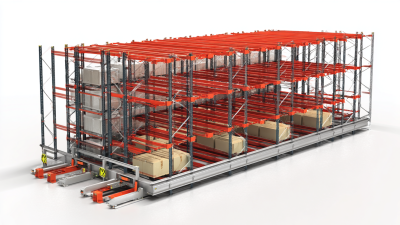
| Mobile racking | Direct access to a selected aisle, opened by moving rack bases | Often designed around 800–2,000 kg | High | Sites seeking high storage density while retaining access to stored pallets | Consider floor flatness, traffic patterns, access time, and safety controls. |
| Pallet shuttle racking | Shuttle carries pallets within deep lanes; forklift loads and retrieves at lane ends | Often designed around 800–1,500 kg | High to very high | High-volume, deep-lane storage with many pallets per SKU | System layout, shuttle availability, lane management, and operating method affect throughput. |
| Cantilever racking | Open-front access to long or bulky items | Rated per arm or bay; not directly comparable to pallet-position loads | Medium for long goods | Timber, pipe, profiles, panels, and other non-palletized long loads | Arm capacity depends on load distribution, arm spacing, and upright configuration. |
| Automated storage and retrieval system (AS/RS) | Automated equipment retrieves loads from storage locations | Often designed around 500–1,500 kg for pallet-load applications | High to very high | Operations requiring automated handling, controlled access, or high storage utilization | Assess building height, automation integration, maintenance, and required throughput. |
Load-capacity note: Figures are broad planning examples, not certified ratings or universal limits. Actual capacity must be specified and verified for the complete rack configuration and site conditions, including beam span, upright frame, pallet dimensions, load distribution, floor capacity, seismic requirements, and applicable local standards. Always follow the supplier’s engineered drawings and posted load notices.
Related Posts
-
Best Industrial Shelving Manufacturers in China
-
What Is Pallet Shelving and How Does It Work?
-
Top 10 Types of Pallet Shelving for Warehouses
-

Why Choose Storage Racking for Your Warehouse?
-
Top 10 Racking System Solutions for Optimal Warehouse Efficiency
-

What Are the Top Warehouse Racking Manufacturers in China?